
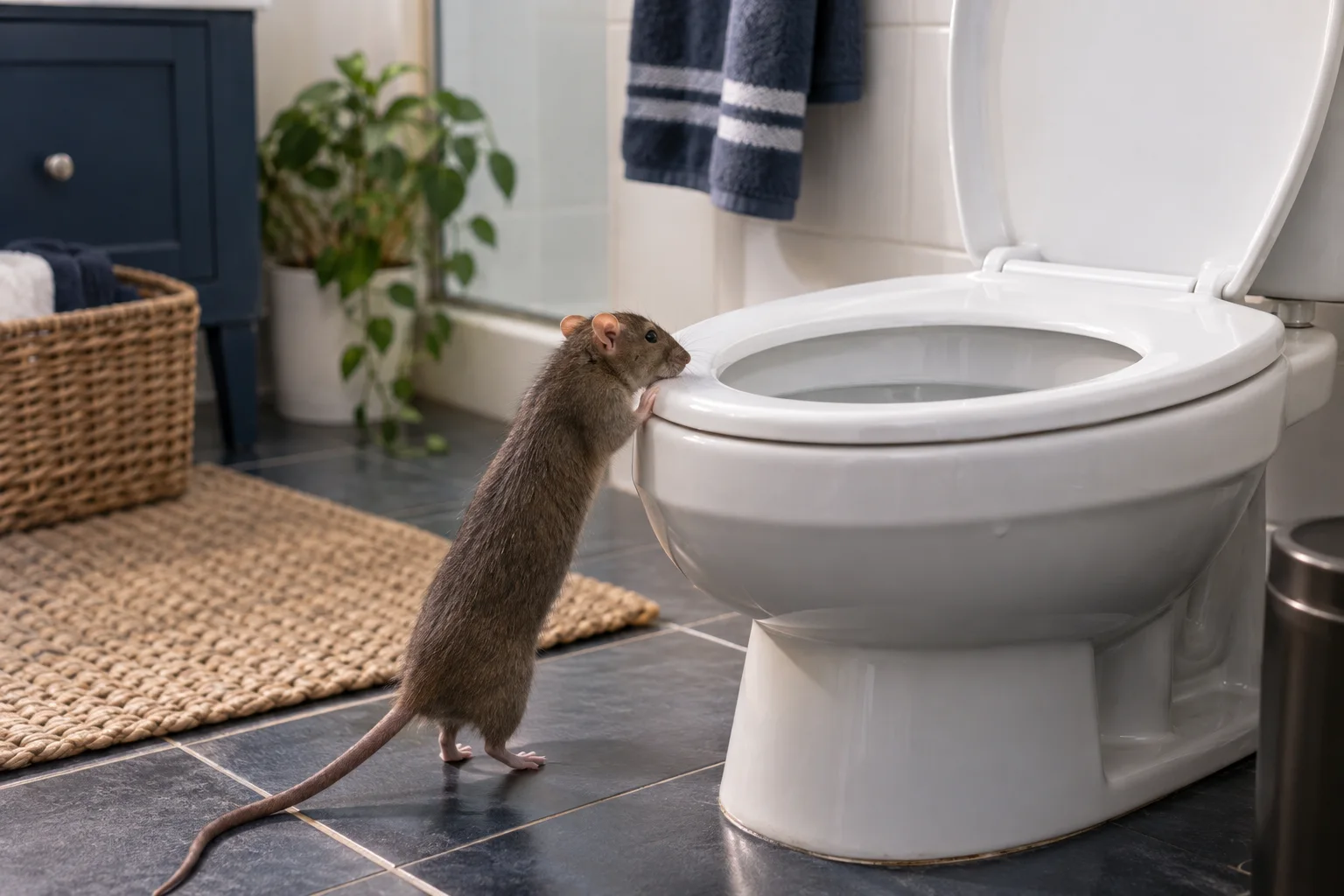
AI-generated illustration
Yes, a toilet can be a route
A rat in a toilet is unusual, but it is possible. Public Health Seattle & King County explains that rats can travel through sewer pipes and emerge through a toilet bowl. The event is not proof that a rat has been living in the bathroom, and it does not mean every household drain is large enough to provide a route. It does mean the situation should be handled as a contained animal encounter and, afterward, as a possible sewer or building-maintenance question.
The first job is to contain the situation. Stay calm, keep the toilet lid down, and close the bathroom door so the animal cannot move into the rest of the home. Keep children and pets out. Do not reach into the bowl, try to grab the animal, pour chemicals into the toilet, or take apart plumbing. Those responses create more risk and can turn a contained situation into a loose rat in the house or a plumbing problem.
Use a simple, controlled response
King County’s public-health guidance advises keeping the lid down and flushing; it notes that dish soap can reduce surface tension and may help the rat go back down when the toilet is flushed. Follow local guidance if your utility or health department provides it. If the animal does not leave, keep the lid closed and contact a pest-control professional. If it escapes, close the bathroom door and use a protected, deliberate removal plan rather than chasing it from room to room.
Avoid making a home chemistry experiment out of the toilet. Do not use fuel, pesticides, mothballs, concentrated cleaners, or a mixture of products to try to force an animal out. They are not a controlled removal method and may damage plumbing, create fumes, or expose people and pets. A toilet is part of a drainage system, so any substance sent into it should be appropriate for that system and used according to its label or local instructions.
How the route can work
The relevant path is the sanitary sewer system, not a rat climbing through the small plumbing line directly from a kitchen sink. King County explains that food washed down drains can attract rats into sewers and that old side sewers or plumbing defects can increase a home’s risk. Flooding or heavy rain can also alter where rats travel. A rat exploring a sewer line may follow the route toward a toilet bowl when it cannot continue toward smaller kitchen pipes.
This does not mean that one toilet incident proves a broken side sewer. A single event needs context: the age and condition of the property’s line, recurring yard burrows, plumbing backups, leaks, odors, and any history of sewer work. Treat the observation as a reason to document what happened and inspect the system logically. Guessing from the bowl alone can send a homeowner toward an expensive repair that does not address the actual route.
Document clues around the property
After the immediate event is resolved, write down the date, the toilet involved, weather conditions, and anything else you observed. Look outside for fresh ground disturbance or a burrow that repeatedly reopens near the home, but do not poke into it or pour substances into it. King County notes that recurring reopening can sometimes be a sign of rats using a sewer route. That is a clue for a professional inspection, not a do-it-yourself diagnostic test.
Also pay attention to plumbing symptoms that have an independent reason for investigation: repeated backups, unexplained wet spots, sewer odors, or a change in drainage. These signs can have several causes, so do not attribute them to rats automatically. Take clear photographs from a safe distance and keep a brief chronology. A sewer contractor or utility program can use that information along with its own inspection methods to decide whether the side-sewer connection needs attention.
Prevent repeat access by maintaining the system
Keep food and grease out of drains as part of ordinary kitchen care. Rinse the sink, catch food waste rather than sending it down the drain, and avoid pouring cooking oils into plumbing. These actions support both drain maintenance and a less appealing sewer environment. They are useful habits, but they cannot correct a cracked line, failed connection, or other underground defect. If an inspection finds a fault, use a qualified, licensed contractor for the recommended repair.
A homeowner should also maintain the ordinary rat barriers above ground. CDC recommends inspecting gaps around foundations, vents, doors, and utility lines, then making durable repairs with suitable materials. This work will not change a toilet’s internal trap or fix a sewer lateral, but it reduces the chances that rodents can enter the building from the exterior after reaching the property. Keep sewer questions and building-entry questions separate so each gets the right repair.
Know whom to call
For a rat that remains in the toilet or has escaped into the house, a pest-control professional can provide removal. For a suspected defect in the side sewer, contact the local sewer utility or a sewer inspection company. Some communities operate sewer-rat programs or can explain whether the property owner, utility, or another party is responsible for portions of the line. This is local infrastructure, so the right contact and rules vary by area.
Call a plumber or appropriate emergency service for an active sewer backup, leak, overflow, or other urgent plumbing condition. Do not delay a health or property emergency while trying to confirm how a rat traveled. Once the immediate situation is under control, ask for a plain-language explanation of the inspection findings, the part of the system involved, and the purpose of any proposed repair. A calm record and the right specialist are more useful than a dramatic assumption about a one-time toilet encounter.