
AI-generated illustration
Follow the evidence, then inspect the building
A rat inspection is a search for connected routes: a place an animal can reach, an opening it can use, and a sheltered space on the other side. Finding one hole is helpful, but it is not the same as understanding the whole problem. A rat may travel through several spaces before reaching the room where you hear it. The strongest inspection combines observations indoors with a careful review of the exterior, then records which findings are confirmed and which are only possibilities.
Before moving anything, note the date and exact location of fresh signs. Photographs of damaged packages, droppings, gnaw marks, or a visible opening help establish a baseline. Do not handle waste to test its age. Color and texture can be misleading, and disturbing contaminated material introduces unnecessary exposure. If you can safely observe from a clean area, record what you see and leave contaminated spaces for an appropriate inspection and cleanup plan.
Start with doors and ground-level openings
Walk around the building in a consistent direction so you do not repeatedly inspect the obvious side and miss another wall. Look at the lower corners of exterior doors, garage-door seals, thresholds, and areas where siding or cladding meets the foundation. A door can look closed from outside while leaving a gap at one corner. Inspect it in the position in which it is normally left, including any worn or distorted weather seals.
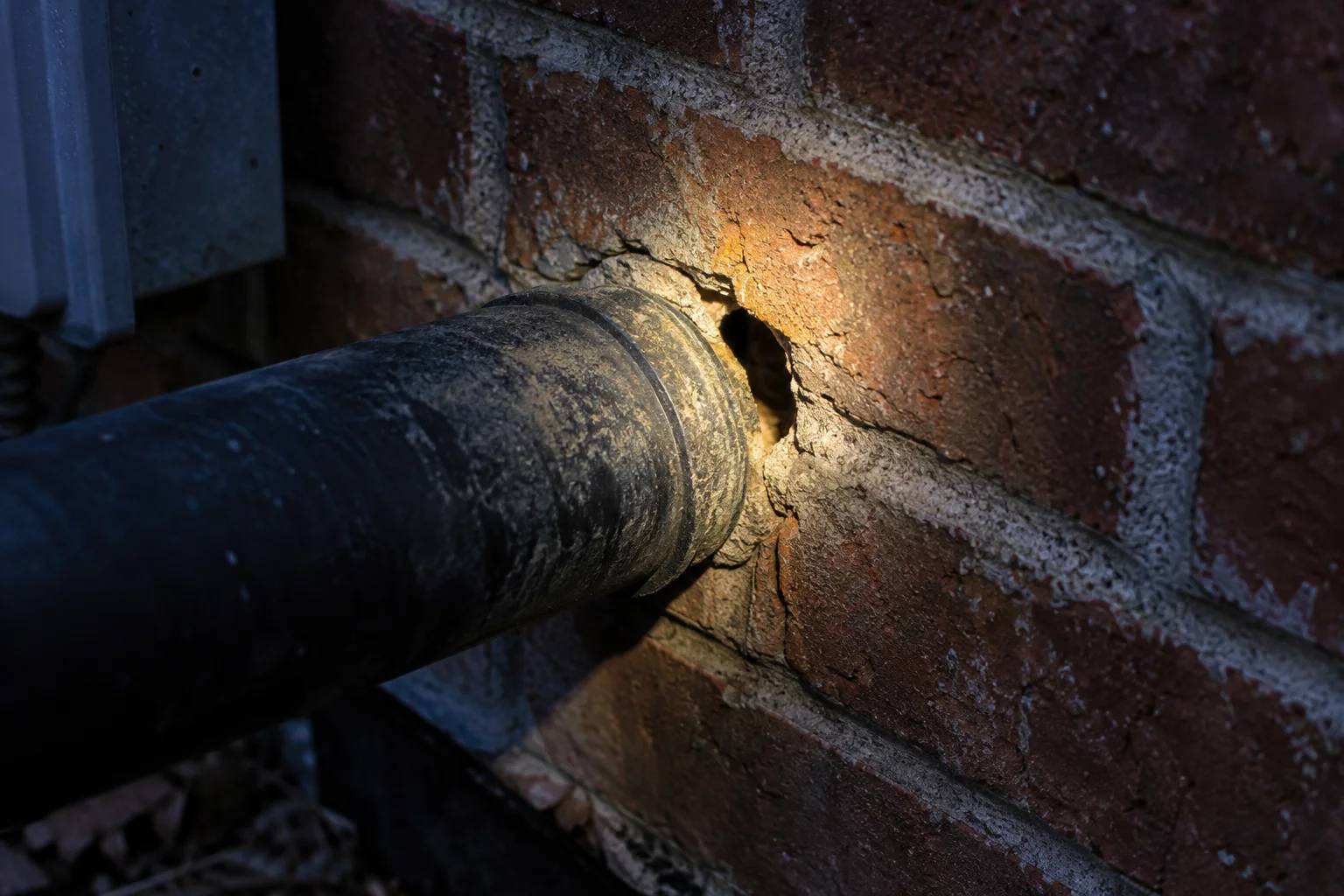
Check around pipes, cables, and other services entering the building. A neat opening at the visible surface may conceal a larger gap behind trim. Note damaged screens, missing vent covers, loose access panels, and deterioration near additions or decks. Do not block a required air intake, drainage opening, combustion vent, or weep system in the name of pest control. The repair must preserve the building's intended function as well as resist animal access.
Review elevated routes safely
Rats can use elevated routes, so a ground-level inspection is not always enough. From a safe position, look for branches contacting the roof, gaps at roof-wall junctions, damaged soffits, and unscreened or damaged vents. Binoculars or photographs may help document a suspected opening without climbing. An animal moving along an elevated route is not proof that every nearby gap is an active entry point, but it tells the inspector where to look more closely.
Leave roof access and difficult ladder work to someone equipped and trained for it. Avoid entering an attic if the walking surface is uncertain, wiring is exposed, heat is excessive, or contamination is extensive. Ceiling finishes are not a safe walking platform. A thorough professional inspection should explain both what could be examined and what remained inaccessible. That limitation is useful information, not a reason to pretend the hidden areas were checked.
Connect exterior findings to interior signs
Inside, compare the location of activity with likely service routes and structural connections. Kitchens, utility rooms, garages, and attic spaces may connect through wall cavities or pipe chases. Sound can travel through framing, making an animal seem closer to a particular spot than it really is. Avoid cutting into a wall solely because a noise appears loud there. Look for supporting evidence and consider other causes before creating a new opening.
A map of the property can be simple: draw the rooms and mark each observation, suspected entrance, and inaccessible area. Use different symbols for confirmed activity and possible access. If a camera or monitoring device is used, position it where it can provide a useful view without exposing cables or equipment to damage. Repeated observations are often more informative than a single brief inspection, especially where activity changes with occupancy or waste collection.
Choose repairs that suit the opening
A successful repair needs sound attachment and a suitable surrounding surface. Covering a damaged gap with material that can be pulled away, chewed, or undermined may provide only a temporary improvement. Metal flashing, appropriate mesh, sound door hardware, and durable building repairs can all have roles, depending on the assembly. The choice should account for weather exposure, drainage, corrosion, ventilation, and the ability to inspect the finished work.
Do not treat expanding foam by itself as a universal rodent barrier. Likewise, stuffing an opening without checking where it leads can interfere with essential building systems. Ask the provider to describe each repair in practical terms: the opening, the material, the attachment method, and any related building work required. Electrical, roofing, plumbing, or structural defects may need the relevant licensed trade rather than a pest-control patch.
Coordinate removal, sealing, and verification
Sealing should be part of a coordinated removal plan. Closing an active route without accounting for animals inside can leave activity in a wall or ceiling, and an overlooked secondary opening may continue admitting rats. Ask how the technician will monitor interior activity while repairs proceed. The sequence may depend on the layout, the species, access limitations, and where dependent young or nests are suspected.
After the work, compare new observations with your original record. Photograph completed repairs, keep the service report, and note any fresh signs. A quiet evening is encouraging but does not establish that the building is secure. Follow-up should evaluate both animal activity and the condition of the repairs. If the problem returns, the record helps distinguish a failed repair, a missed opening, and a new defect. That is how an inspection becomes a lasting prevention plan rather than a one-time search for holes.