
AI-generated illustration
Vacancy changes the risk picture
A vacant or foreclosed home may have uncollected debris, damaged screens, open utility penetrations, standing water, stored materials, or doors that no longer seal. These conditions can let rodents establish activity without being noticed. The issue is not the legal status of the property by itself; it is the lapse in routine maintenance. A buyer, investor, occupant, or property manager should inspect systematically before moving belongings, turning on equipment, or starting cosmetic repairs.
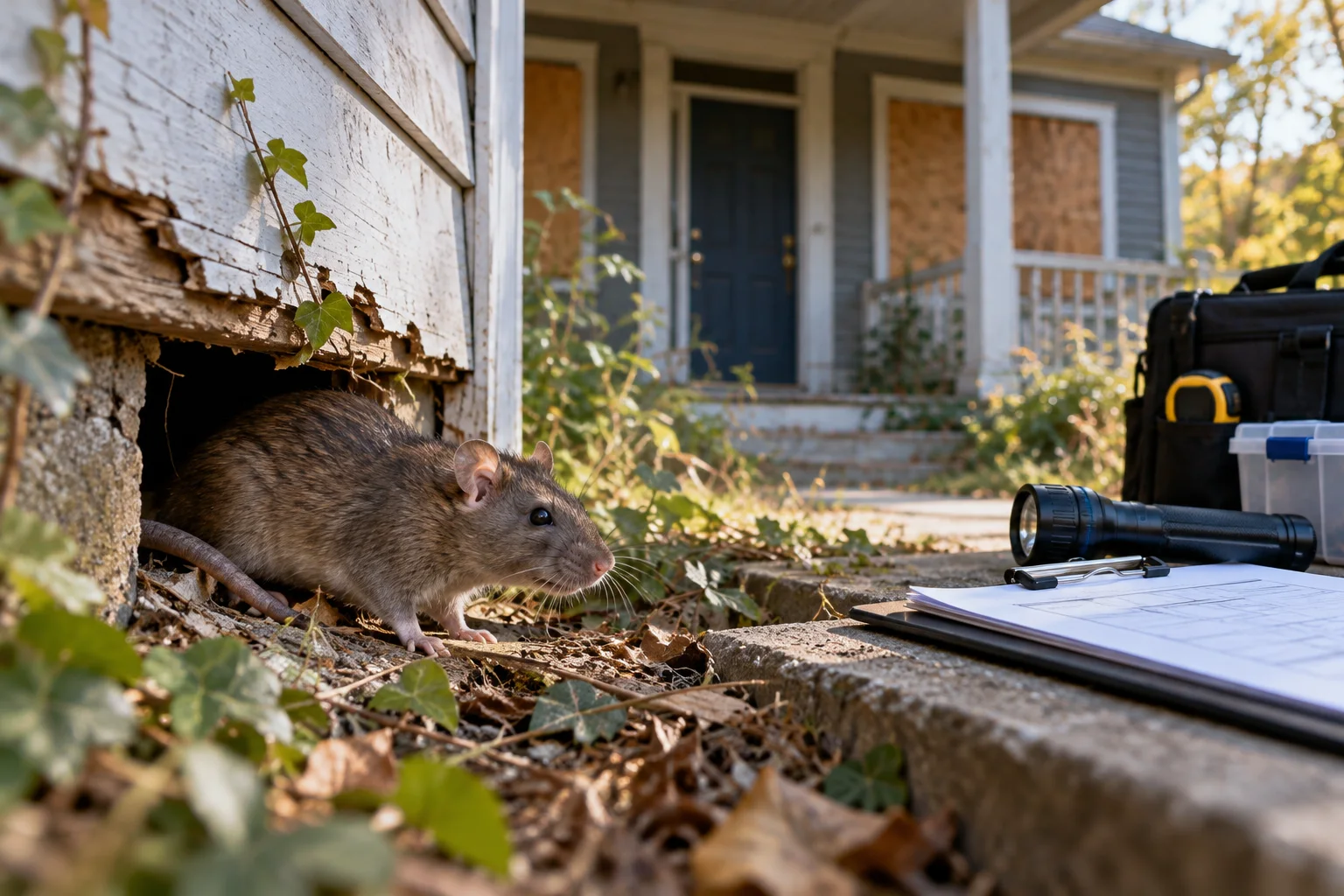
Begin outside. Check foundation gaps, crawl-space access, garage edges, roofline vents, eaves, doors, windows, pipes, cables, garbage areas, sheds, and vegetation against the structure. Look for droppings, gnaw marks, burrows, damaged screens, and nesting material. Take dated photos. Do not enter a structure with obvious unsafe floors, damaged wiring, gas odor, water damage, or heavy contamination without appropriate professional advice.
Document before disturbing evidence
A hasty cleanup can remove the evidence needed to plan repairs or explain a condition to a seller, lender, insurer, contractor, or local authority. Photograph rooms, attic access, garages, utility rooms, and exterior openings before moving boxes or sweeping floors. Make a simple list of what you see: active signs, old damage, contaminated materials, and systems that may be unsafe. This separates a possible rodent issue from unrelated water, mold, electrical, or structural issues.
Do not dry sweep or vacuum droppings while documenting. CDC says dry disturbance can put contaminated particles into the air. Keep children and pets out of the building until the conditions are assessed. If you plan an inspection contingency or repair negotiation, use a qualified inspector or appropriate contractor for the details. A general home inspection may identify evidence, while pest, roof, electrical, plumbing, HVAC, or remediation specialists may be needed for scope and cost.
Make utilities and access safe first
Do not turn on heating, cooling, water, or electrical systems simply to see whether they work if there is visible nesting, chewed wiring, a gas odor, or evidence of water damage. An electrician, plumber, HVAC technician, or utility may need to inspect first. Rats can gnaw wiring and may nest around building systems; UC IPM notes attic activity can create electrical safety concerns. Utility safety is separate from pest removal and should not be delayed for a cleanup schedule.
Secure exterior doors and windows in a way that preserves safe egress, then repair obvious routes as the removal plan permits. Do not lock rats inside by sealing every hole before determining whether activity is current. Document openings and ask a pest professional how removal and exclusion should be sequenced. The goal is to make the property secure without creating an inaccessible carcass or sending rats into another part of the structure.
Plan cleanup by contamination level
For a limited accessible amount of waste, CDC recommends gloves, disinfectant, five minutes or label contact time, paper towels, and hard-surface disinfection. For a large accumulation, contaminated insulation, a long-vacant dwelling, or animal waste spread through several rooms, CDC calls for additional precautions. A remediation professional can control dust, remove material, and protect workers. Do not assume an open window and a household vacuum make a heavily contaminated home ready for renovation.
Cardboard, upholstered items, and insulation may need a different decision from washable hard surfaces. CDC advises discarding cardboard contaminated with urine or droppings and bagging exposed contaminated insulation for removal. Hard nonporous containers can be disinfected. Store documentation of disposal and repair work, especially if the property is part of a transaction, an estate, or an insurance claim. Do not mask odor with fragrance while leaving contaminated material in place.
Remove active rats from checkable routes
If fresh signs confirm rats remain, use a removal plan that can be monitored. CDC recommends rat-sized traditional snap traps in areas where evidence shows travel, kept out of reach of people and pets. An empty house still needs daily trap checks. Pre-baiting an unset trap can help with cautious rats. Do not place a trap in a wall, ceiling, attic insulation, or other place where a catch cannot be found promptly.
Avoid glue and live traps, which CDC advises against, and do not make loose poison the default for a vacant house. Rodenticides can leave carcasses in hidden spaces and create non-target risks if workers, pets, or wildlife later access the property. If a persistent infestation requires a pesticide decision, use an EPA-registered product exactly as labeled or seek professional management. The priority is a documented, contained method rather than a shortcut that creates hidden consequences.
Restore maintenance before occupancy
After no fresh signs or captures for a week, complete durable exclusion. Repair vents, doors, roofline features, utility gaps, and crawl-space access with materials that resist chewing while preserving ventilation and drainage. Secure garbage and food sources, repair leaks, clear vegetation and clutter against the building, and establish a regular exterior inspection. A property that remains vacant needs an assigned maintenance routine rather than a one-time cleanup.
Before moving in, have needed electrical, plumbing, HVAC, roof, and insulation repairs completed. Keep copies of pest reports and trade invoices. A foreclosed or vacant home can become a safe residence, but only after entry routes, contamination, and neglected systems are addressed in order. Moving furniture into an unfinished problem makes later cleanup harder and can hide the exact evidence that would have led to the right repair.