
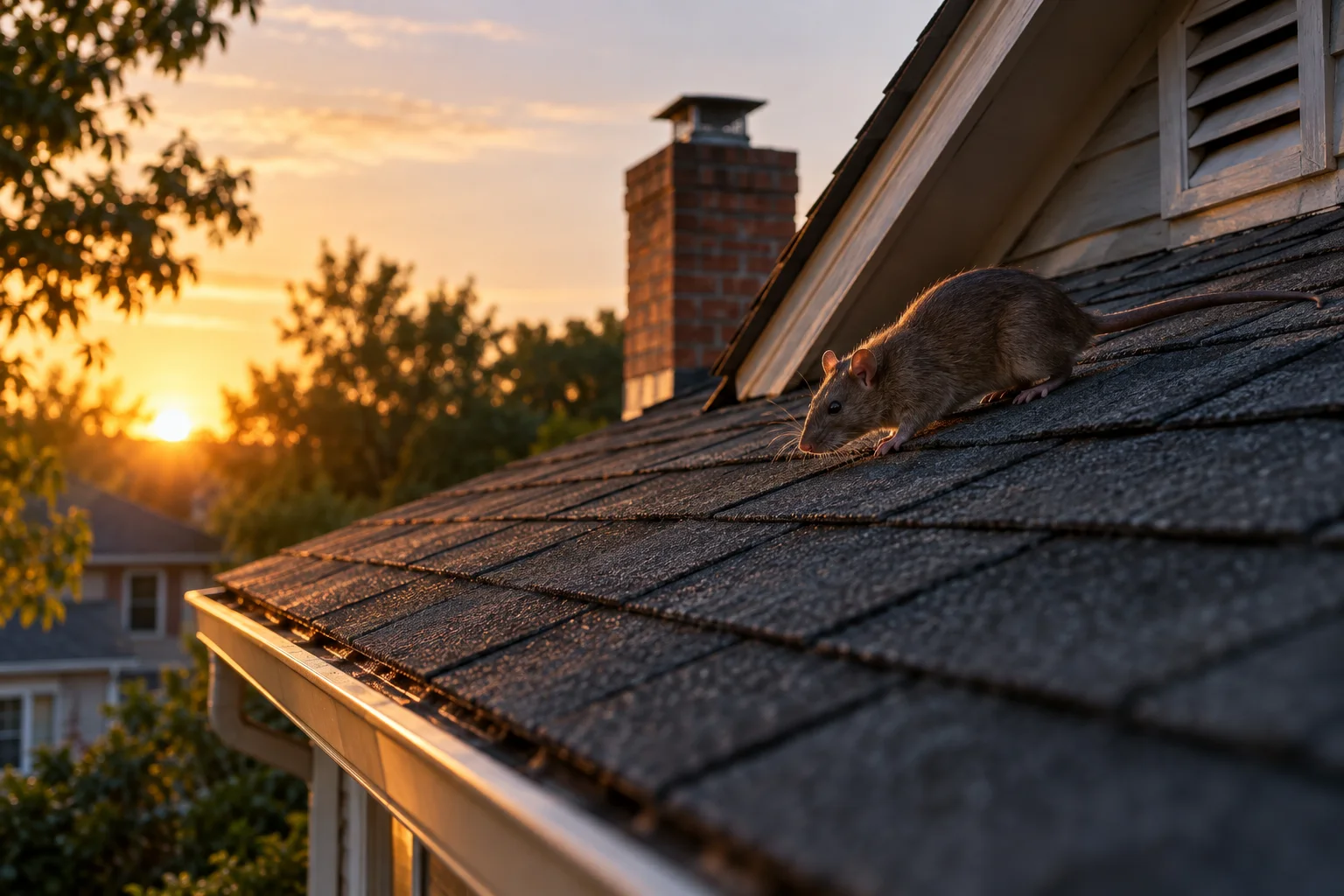
AI-generated illustration
A rat on the roof is a route problem
Seeing a rat cross shingles after dark can be alarming, but the important question is how it reached the roof and where that route ends. A roof rat may travel along dense vegetation, a fence, a pipe, or an overhead line, then test gaps near an eave, roof vent, or attic opening. Norway rats are often more ground-oriented, but species is less important than the evidence at your house. A single animal outside is not proof that one is indoors. It is a good reason to inspect the roofline before a small opening becomes an easy entrance.
Start by looking for the connected path: shelter or food in the yard, a climbable approach, then an opening in the structure. That approach avoids the common mistake of treating the roof as an isolated problem. A trap placed on a roof may catch one animal while branches, an open soffit, or a damaged screen still invite the next one. Lasting control combines an accessible property, a sound building shell, and short-term removal where activity has been confirmed.
Read the signs from the ground first
Do a daylight walkaround before using a ladder. From a stable place, use binoculars or a phone camera to check for branches touching the roof, vines growing on walls, torn attic-vent screens, loose soffit panels, gaps at flashing, and openings around cable or pipe penetrations. Look below the roofline as well. Fallen fruit, open pet-food storage, overflowing bins, and dense ground cover can keep rats close enough to explore the house every night.
Inside, note where evidence appears rather than assuming every attic noise is a rat. Droppings, shredded nesting material, gnaw marks, rub marks on a beam, and recurring sounds in the same area are more useful than a one-time scratch. Do not sweep or vacuum suspected droppings. If the attic has evidence of rodents, use the safe cleanup process described by CDC after the entry and active activity are addressed. A short record of dates, locations, and photographs gives a professional something concrete to assess.
Remove roof access without damaging the roof
Prune limbs that create a direct bridge to the roof and thin climbing vegetation that hides the wall. UC IPM recommends removing climbing plants from buildings and keeping limbs away from roofs; its distance guidance is a useful target, but the actual pruning method should suit the tree and local rules. Do not work around electrical service lines. When a branch is close to a line, call the utility or a qualified tree professional. A rat problem is never a good reason to risk a fall or electrical injury.
Move stored ladders, stacked materials, and bins away from the building if they form a step-up route. Check fences where they meet the home, downspouts, rough utility pipes, and masonry ledges. The goal is not to make a building impossible to climb in every imaginable way. It is to eliminate the easy, concealed connections that repeatedly deliver an animal to a defect. Clearing the approach also makes it much easier to see new damage during later inspections.
Repair the opening, not just the visible damage
Roof-level entries commonly occur at attic and roof vents, beneath eaves, around chimneys, at roof-to-wall joints, and where a utility line or pipe passes through the exterior. Examine the feature closely enough to understand what it is supposed to do before covering it. Dryer vents, appliance vents, chimneys, and plumbing vents have safety and code requirements. A screen or patch that keeps out rats but blocks exhaust or drainage creates a different household problem.
Use durable, fitted repair materials appropriate for the feature and building. Rats can chew through foam, plastic, wood, and ordinary caulk, so soft filler by itself is rarely a lasting repair. UC IPM recommends metal and suitable wire screening for openings, and CDC likewise emphasizes sealing structural gaps. A roofer, pest-exclusion professional, or relevant trade professional is the right choice when the repair involves fragile roofing, high access, electrical equipment, or a ventilation system. Ask for the opening to be photographed before and after the repair.
Remove confirmed indoor activity carefully
If rats are already using the attic or another protected part of the home, do not seal every suspected opening immediately and hope the problem disappears. An animal can be trapped inside, and a route that is still active needs a removal plan. CDC recommends first checking how rodents entered and then using traps for rodents that remain indoors. Traditional rat-sized snap traps are the agency's recommended trap type. Place them only where signs or travel routes support the decision and where children, pets, and wildlife cannot reach them.
Rats often hesitate around unfamiliar objects. CDC advises pre-baiting an unset trap until the bait is taken, then setting it. For roof-rat activity, UC IPM notes that elevated, protected locations may matter because these rats travel above ground. Do not climb onto a roof to improvise trapping or fasten hardware through shingles. A professional can place and secure equipment in elevated routes without compromising the roof. Check active traps daily and use the recommended disinfecting and disposal procedure for a catch.
Make the property less rewarding
Exclusion works best when the yard no longer supplies easy food and cover. Store garbage and feed in tight containers, pick up fallen fruit and nuts, clean outdoor cooking areas, and give pets only the food they will eat at a feeding. Keep firewood, supplies, and garden clutter organized and off the ground where practical. These steps do not promise instant results, but they reduce the reasons rats keep testing a repaired structure.
Reinspect after a week of no captures and no fresh signs, then periodically after storms, roof work, or landscaping changes. CDC uses a week without captures or new evidence as a useful sign that trapping has succeeded. If you still find fresh droppings, new gnawing, or a reopened opening, do not keep adding scent products or move traps at random. Return to the route: food and cover, access to the roof, final entry point, and the protected space inside. That sequence finds what still needs correction.