
AI-generated illustration
Damage is a route map
Rat damage rarely appears at random. Gnawed packaging, a torn vent screen, shredded insulation, droppings near a food area, or a chewed door edge reveals where an animal traveled or tried to enter. UC IPM says rats can contaminate food, damage containers, chew wiring and woodwork, and shred insulation for nesting. Treat each sign as a clue to inspect the nearby route, not merely a mess to hide. The underlying entry point and food source determine whether the damage returns.
Begin with photos and a location log. Note what is damaged, whether it looks fresh, and what is nearby: food, water, cover, utilities, or an exterior gap. Do not touch droppings or nests bare-handed, and do not sweep or vacuum them dry. A simple record helps distinguish a one-time old mark from current activity and supports communication with an electrician, roofer, mechanic, landlord, insurer, or pest professional.
Food and storage damage
Rats can chew bags, containers, cardboard, and food packaging, leaving contamination risk even when the food looks mostly intact. Discard food with signs of rodent contact, clean the storage surface, and move remaining food, feed, and seed to sturdy containers with tight lids. Do not use an odor spray to make a cabinet seem usable again. Check behind the food source and along the wall for droppings, gnaw marks, and entry gaps that explain how the animal reached it.
Garbage, outdoor pet food, birdseed, fallen fruit, grease around grills, and compost can support the same activity outside. Secure those resources while you inspect the interior. A rat that loses one pantry bag but continues to find feed in a garage or food in an open bin will keep testing the building. Damage control works best when it removes the reward as well as replacing the damaged item.
Structural and insulation damage
Gnawed trim, soft wood, foam, plastic, and caulk can indicate an entry point that a rat enlarged. UC IPM warns that rats can chew these materials, so a temporary soft patch is rarely enough. Inspect door bottoms, garage seals, crawl-space access, vents, eaves, roofline screens, and gaps around utilities. Repair each opening with material suited to the feature, taking care not to block required airflow, drainage, or service access.
Attic and wall insulation can be shredded for nests and contaminated with urine or droppings. Do not rake through loose insulation or dry-vacuum it. CDC advises bagging exposed insulation contaminated with rodent waste for removal, while heavy or widespread contamination may need a professional remediation plan. If the damage is near a ceiling, use safe walking surfaces and avoid disturbing electrical wiring. Insulation replacement should follow removal and exclusion, not precede them.
Electrical and mechanical damage
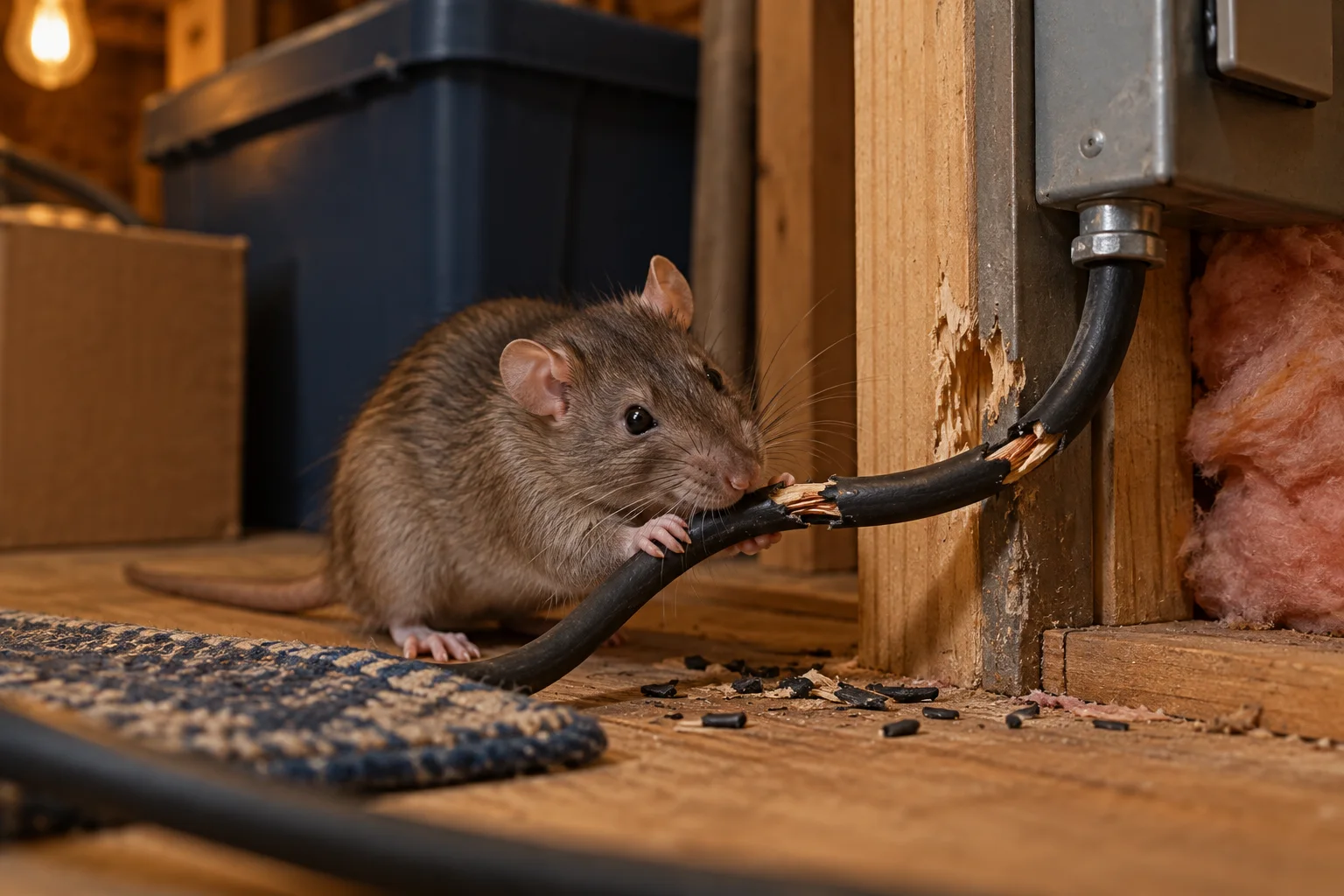
Rats can chew electrical wire insulation and may cause safety concerns in attics. They can also damage vehicle wiring and other equipment. Do not test or repair exposed household wiring yourself. An electrician should inspect suspected home electrical damage; a mechanic should inspect a vehicle; an HVAC technician should inspect equipment wiring or ducts. If you notice sparking, a burning smell, tripping breakers, or a gas odor, follow emergency guidance appropriate to that utility.
Take photographs from a safe distance and ask the technician to document the condition and repairs. Do not wrap damaged wires in household tape, bury them under insulation, or use a scent product in a mechanical compartment. The repair is not complete until the system is safe and the rats no longer have an entry route. This may require coordination among a pest professional and an electrical, roofing, plumbing, or HVAC trade.
Clean contamination safely
CDC directs people to wet rodent droppings, urine, nests, and dead rodents with disinfectant, allow five minutes or the product's stated contact time, and wipe up material with paper towels while wearing gloves. It advises against dry sweeping or vacuuming. A dead rodent and used trap should be double-bagged for disposal in a covered garbage container. Wash gloved hands before removing gloves and wash bare hands afterward.
Heavy infestations, contaminated ducts, or large areas of insulation call for additional precautions and often professional cleanup. Do not assume more bleach or more time makes a risky attic job safe. The safest cleanup is one matched to the material and amount of contamination. Keep children and pets out of the work area until surfaces are cleaned and dry, and replace contaminated cardboard or food-contact items rather than trying to salvage them.
Stop repeat damage
For active indoor rats, CDC recommends rat-sized traditional snap traps in protected, checkable locations and advises against glue and live traps. Follow evidence when placing traps and do not hide them in walls, roofs, or spaces where catches cannot be checked. After there are no fresh signs or captures, complete durable exclusion. Do not seal an active route first if it could trap an animal inside; coordinate timing with removal.
Maintain a property that is not rewarding to rats: secure food and garbage, reduce dense cover near walls, trim routes to the roofline, and inspect repairs after storms and seasonal changes. If damage keeps appearing, seek a professional inspection rather than repeatedly patching the most recent hole. The aim is a home with sound systems and no active route, not merely a collection of repaired chew marks.