
AI-generated illustration
Gnawing is both behavior and damage
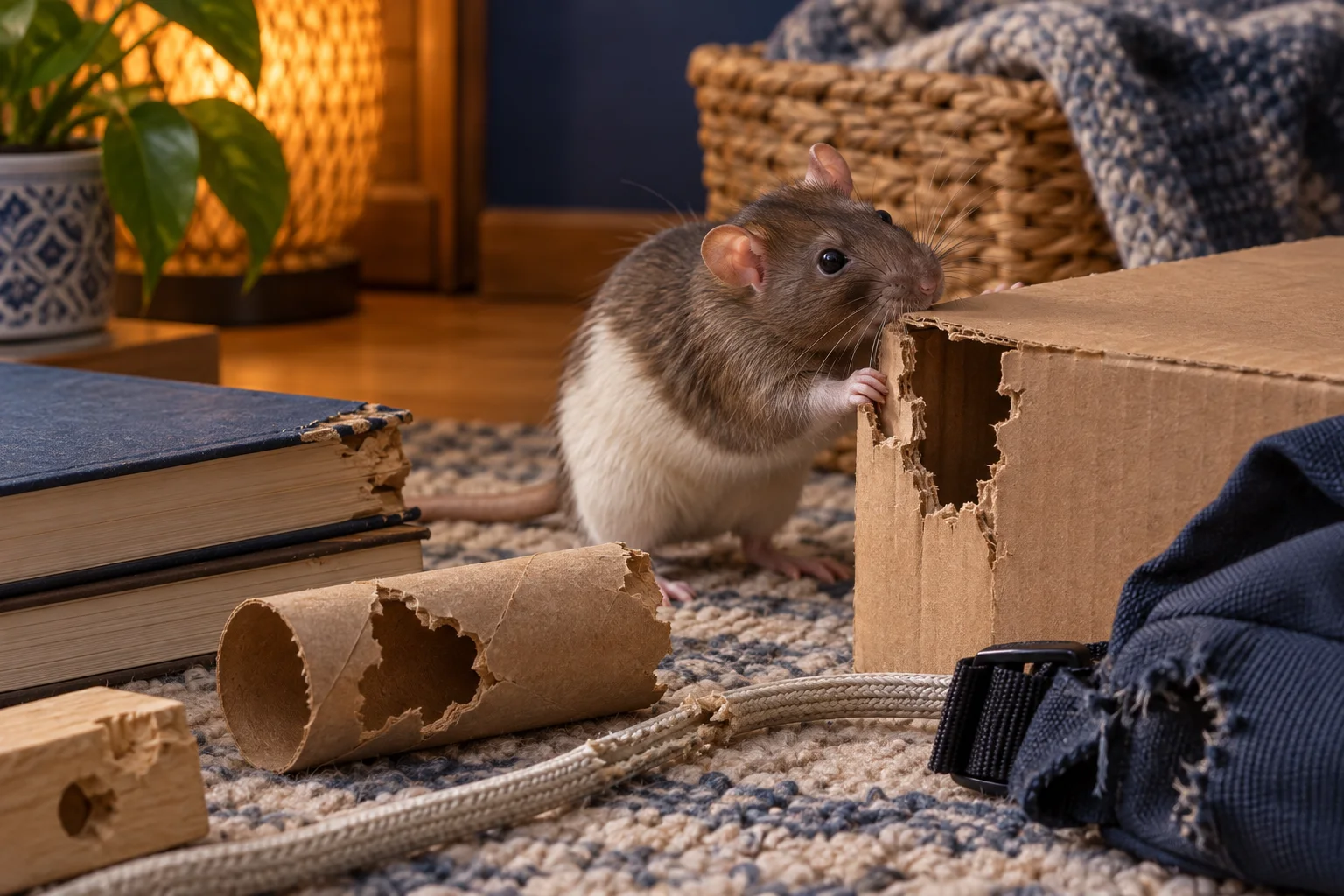
Rats gnaw to access food, nesting material, and protected spaces, and their teeth leave a record of where they have traveled. CDC lists gnaw marks as a common sign of rodent activity. A chewed edge may be fresh evidence or an old mark left after the animal is gone, so pair it with droppings, nesting material, rub marks, or repeated sightings before deciding that activity is current. Do not use one damaged cardboard box as proof that a rat is inside a wall.
The material matters. UC IPM says rats can chew through plastic, foam, wood, and caulk; it also notes their ability to damage wires and woodwork. Soft filler can make a gap look closed while remaining easy to enlarge. A sound prevention plan asks what the opening is for, what the surrounding material is, and how water, air, or utilities must move through it. The right repair is different for a door, a vent, a pipe penetration, and a roof edge.
Food containers are a first warning
Chewed bags of feed, birdseed, pet food, cereal, or garbage are common early evidence. Do not simply tape a torn bag and return it to the same shelf. Discard food that may be contaminated, clean the storage area, and move remaining goods into rigid containers with tight-fitting lids. Check the floor, wall edge, and nearby shelves for droppings or nesting material. This protects food and tells you whether the animal is using a specific route.
Keep animal feed and dry goods off the floor where practical, and clean spilled food immediately. A large source of food can make a rat willing to chew repeatedly at a container or building edge. Do not rely on an odor repellent near food storage. Secure food, find the access point, and use a monitored removal method if fresh signs confirm a current indoor rat. The problem is not only the bag; it is the route that delivered the animal to it.
Soft repairs are not durable barriers
Expanding foam and caulk have useful building roles, but rat exclusion needs a material that can resist chewing and remain attached to the feature. UC IPM recommends durable options such as steel wool, wire screen, and sheet metal for openings, depending on the application. A soft plug at a cable opening can be pushed out, and a foamed roof vent can block a system that needs airflow. Use a fitted repair rather than packing unknown holes with whatever is nearby.
Inspect the edges of a repair after storms, temperature shifts, and landscaping work. If a hole reopens, look for the reason: a loose panel, rotted wood, unprotected utility gap, or nearby route that lets the rat work from cover. Do not keep adding layers of temporary filler. A carpenter, roofer, plumber, electrician, or pest-exclusion professional can make a repair that respects the building system and closes the gnawable edge.
Wire and pipe damage need specialists
Chewed electrical insulation, gas piping, plumbing, or HVAC equipment is not a do-it-yourself sealing job. UC IPM warns that rats can damage electrical wiring and may even chew gas lines, creating serious safety concerns. Do not touch exposed wiring, test a damaged circuit, or start equipment that may have been affected. Turn to a qualified electrician, gas utility, plumber, or HVAC professional based on the system involved, and explain that rodent damage is suspected.
Take photographs from a safe distance and note whether you smell gas, see sparking, have a breaker problem, or observe a leak. If there is an immediate utility emergency, follow the utility's emergency directions. Do not use open flame, smoke, or spray chemicals near suspected damage. Once a professional has made the system safe, address the rodent entry route and cleanup; otherwise the same access may lead to repeat damage.
Inspect from the outside in
Check foundation gaps, door bottoms, garage corners, vents, roofline screens, eaves, and utility penetrations. Then trace any nearby food, vegetation, stacked materials, fence lines, or pipes that form a route. A rat may chew the final weak edge but arrive from a completely different part of the yard. Photograph opening size and surrounding damage. Do not put hands into a dark cavity or climb onto a roof to inspect without safe access.
If activity is confirmed inside, CDC recommends rat-sized traditional snap traps in protected, accessible locations where signs show travel. Do not set traps in a wall cavity you cannot check. Do not use glue or live traps. Let removal and exclusion work together: first determine that active rats are gone, then complete the final repair. This prevents trapping an animal inside a wall and turning a small chewed gap into a larger restoration project.
Make new gnawing less likely
Secure garbage, feed, pet food, and birdseed. Reduce dense cover near the home, clear clutter against walls, and keep doors and vents maintained. These measures remove the rewards that make a rat keep testing a repaired feature. A building with visible edges also makes a new gnaw mark easier to spot. Recheck the locations that were previously damaged, rather than assuming a single repair permanently changes the property.
If chewing persists despite repairs, get an experienced inspection. The missed piece may be a second entry point, a food source, or an incorrectly identified animal. A durable outcome is not an elaborate patchwork of foam. It is a working building system, protected food, and no accessible route from the outdoors to the material a rat wants to chew.