
AI-generated illustration
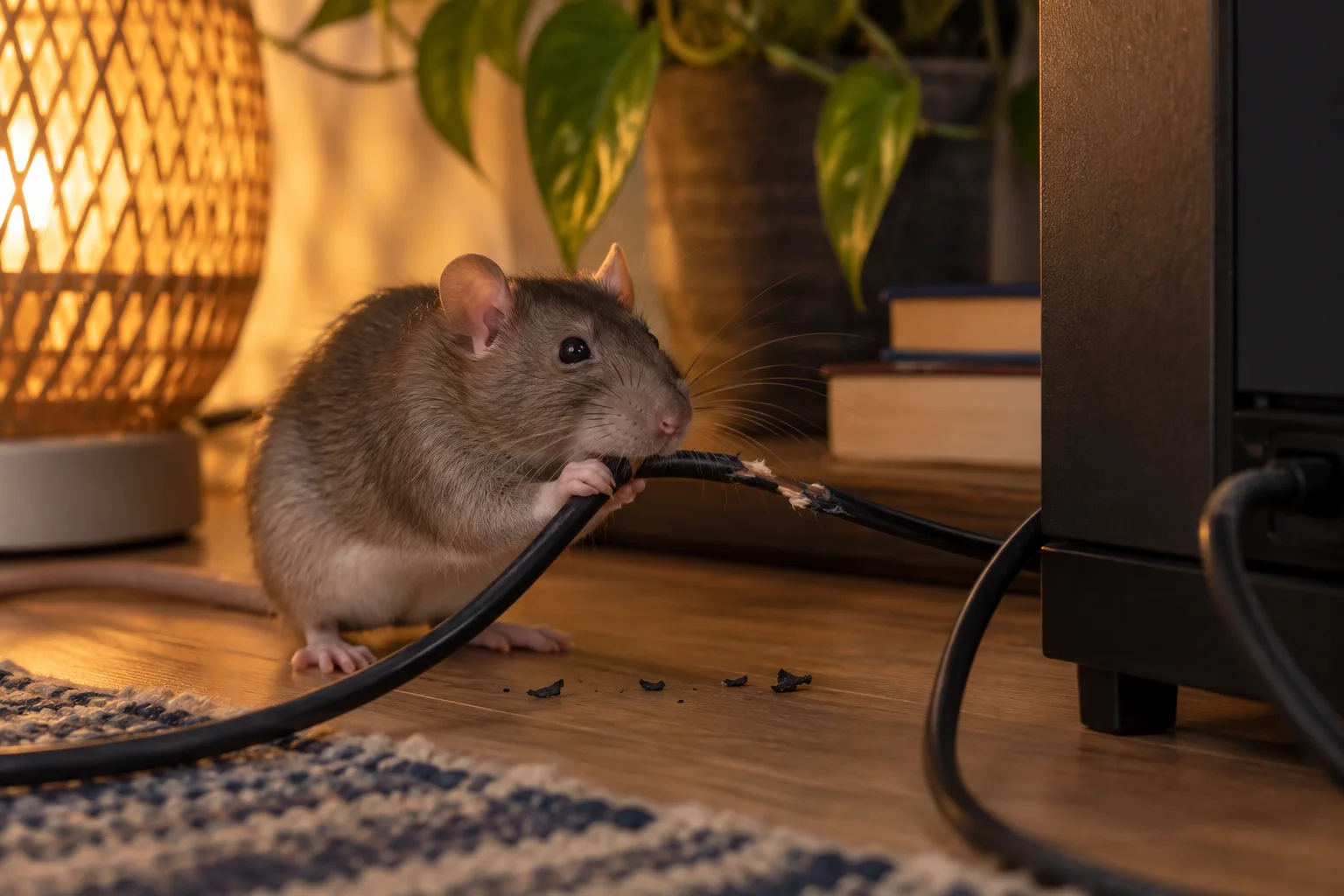
Gnawed wires are not a minor pest sign
Rats can damage electrical wire insulation while traveling, nesting, or gnawing. UC IPM identifies wires among the materials rats damage and notes the risk of electrical sparks and fires when rats inhabit an attic. A chewed cable is therefore a reason to treat the affected system cautiously. Do not touch exposed conductors, test an appliance that may have been damaged, or assume that a circuit is safe because power still works. Damage can be hidden behind walls, insulation, or equipment.
Common clues include fresh tooth marks on insulation, shredded nesting material near wiring, a breaker that trips, flickering equipment, a burning smell, or recent rodent evidence in the same area. None of these signs alone tells you which circuit is affected. Take a photo from a safe distance, note the location, and contact a qualified electrician or the appropriate technician. If there is an immediate electrical emergency, follow local emergency and utility guidance.
Make the area safe without improvising
If you see visible electrical damage, keep people and pets away from the area. Do not pull insulation away from wires, spray cleaners onto electrical equipment, or cover a damaged cable with tape. Do not use metal tools around a suspected live circuit. The right first step may be to stop using the affected appliance or area and obtain professional direction. An electrician can isolate the circuit, inspect hidden damage, and repair to applicable standards.
Rodents can also chew low-voltage lines, appliance cords, vehicle harnesses, and HVAC wiring. The repair professional differs with the system: an electrician for household electrical work, an HVAC technician for equipment wiring, and a mechanic for a vehicle. Explain that rodent activity was observed so the person checks nearby insulation, ducts, access panels, and entry points rather than replacing only the visibly chewed portion.
Do not clean contaminated wires with dry methods
Droppings and nests near wiring create a combined contamination and electrical problem. CDC says not to sweep or vacuum rodent waste dry. But disinfectant also must not be sprayed indiscriminately into a live electrical panel or energized device. This is a reason to separate the tasks. Have the electrical hazard assessed first, then clean accessible, safe surfaces according to the appropriate procedure. Do not choose between fire risk and cleanup risk; use qualified help where they overlap.
For ordinary accessible hard surfaces away from energized equipment, CDC advises gloves, thorough wetting with disinfectant, five minutes or label contact time, and wipe-up with paper towels. Heavy contamination in an attic, wall, or electrical compartment needs a coordinated plan. An electrician may need to make the system safe first, then a cleanup professional can remove contaminated nesting material and an exclusion professional can repair the exterior route.
Find how the rat reached the wires
Wires are usually not the first thing a rat discovers. Inspect the exterior and accessible interior for gaps at eaves, attic vents, crawl spaces, doors, garage edges, and utility penetrations. Trace cover such as dense vegetation, stored materials, fence lines, or pipes that leads to the opening. UC IPM warns that rats can chew plastic, foam, wood, and caulk, so a soft plug around a cable may be the weak point that needs a durable repair.
Do not seal an active route before removal if rats may still be inside. CDC recommends checking how rodents entered and trapping those that remain. Rat-sized snap traps in protected, checkable locations can be used for confirmed activity; never hide traps in a wall or electrical space. A pest professional can manage difficult attic or cavity activity without adding a person to a hazardous location.
Repair the entry after the electrical work
Once the professional has repaired or cleared the electrical concern and activity has stopped, close verified openings with a durable material appropriate to the structure. A screened vent must still ventilate; a cable penetration must still protect the cable and shed water; a door must open and seal correctly. Coordinate with the electrician if a new cover, conduit seal, or access panel is needed. A patch that blocks service access may make a future safety inspection harder.
Do not use a rodent repellent as a substitute for repair. UC IPM notes that frightening devices and repellents do not provide lasting rat control. Secure food and garbage, pick up fallen fruit, and reduce sheltered cover near the building so rats do not keep returning to test the repaired route. The electrical work protects the immediate system; property maintenance reduces the chance of another gnawing event.
Verify and maintain
After repair, ask what to monitor: a particular breaker, appliance behavior, attic access point, or exterior screen. Keep the area clear enough to inspect and report any new odor, buzzing, tripping, or rodent sign promptly. Do not reopen an electrical enclosure yourself to look for tooth marks unless you are qualified to do so. A follow-up inspection by the repair professional may be appropriate when the original damage was hidden or extensive.
A rat problem that reaches wiring has already moved beyond a nuisance. The sensible response is calm and sequential: make the system safe, remove active rodents from accessible routes, clean contamination without dry disturbance, repair entry defects, and reduce food and shelter. That approach protects the home better than a quick tape wrap or a handful of traps placed near an electrical hazard.