
AI-generated illustration
Treat cleanup as a separate part of the job
Removing rats does not automatically remove what they leave behind. Droppings, urine, nesting material, damaged packaging, and carcasses may remain in places that are difficult to reach. Cleanup begins with an assessment of where contamination is present and whether the area can be entered safely. A small amount on an accessible hard surface is a different task from widespread waste throughout attic insulation or inside a ventilation system.
First establish whether rodent activity is continuing. If animals are still entering, newly cleaned surfaces can become contaminated again. Coordinate the cleanup with the removal and exclusion work, rather than assuming that one service visit addresses everything. For an occupied property, identify rooms or storage areas that should be kept out of use while the work is planned. Keep children and pets away from the affected materials and any cleaning products.
Avoid disturbing dry droppings
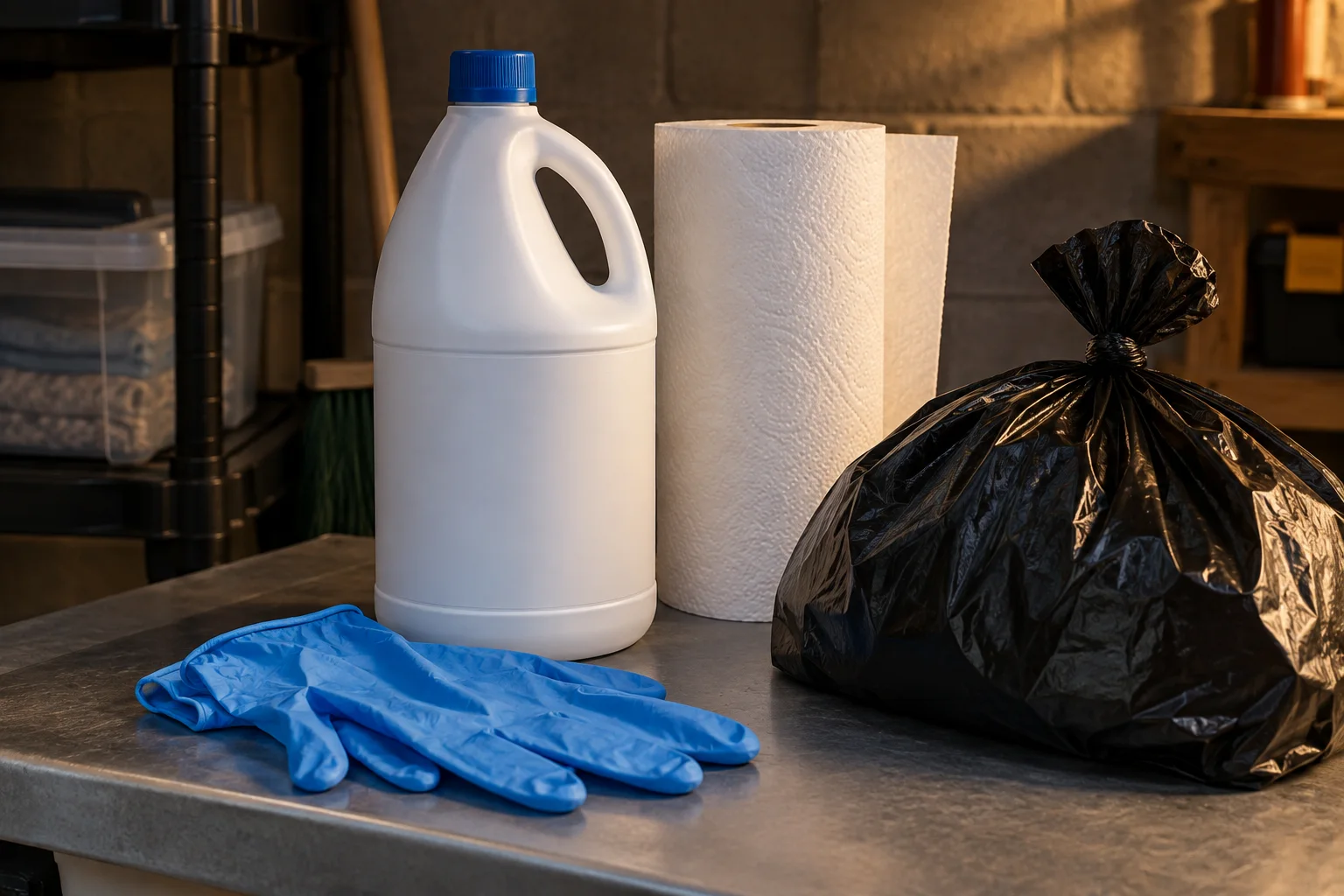
Do not dry-sweep or vacuum untreated rodent waste. Those actions can disturb contaminated dust. CDC guidance calls for wetting waste thoroughly with an appropriate disinfectant before removal and following the product's contact-time instructions. Wear the protection recommended for the task, and do not improvise chemical mixtures. A stronger smell is not evidence of better disinfection, and combining cleaners can create a separate hazard.
For detailed cleanup steps, use the current CDC instructions linked below along with the disinfectant label. The correct method depends on the material and setting. A cleaning approach appropriate for a washable hard surface may damage electronics, finishes, textiles, or insulation. If the contamination is extensive or the space is hard to access, professional assessment is a better starting point than experimenting with a household vacuum or a pressure washer.
Separate cleaning, disinfection, and odor control
Cleaning removes unwanted material. Disinfection is a treatment used to reduce certain microorganisms under specified conditions. Odor treatment addresses smell. These tasks overlap, but they are not interchangeable. A deodorizer does not remove a carcass, and a fragrance does not establish that contaminated material has been cleaned. Ask a contractor to explain what will physically be removed and which remaining surfaces will be treated.
Persistent odor may require locating its source rather than applying more product to the visible area. The source may be hidden, and air movement can make the strongest smell occur away from it. Avoid opening multiple walls without a reasoned search. Discuss access, likely repair work, and the possibility that some materials will need replacement. A useful estimate distinguishes investigation and removal from cosmetic repairs and optional odor treatments.
Decide which materials can be retained
Hard, nonporous items may be suitable for cleaning and disinfection according to the relevant guidance and product directions. Porous items need a different assessment. Contaminated insulation, heavily soiled cardboard, or damaged nesting material may need removal. Do not assume that spraying the surface of a porous material treats everything inside it. The decision should consider the degree of contamination, the material's condition, and whether a reliable cleaning method is available.
Keep replacement work connected to the building's requirements. Attic insulation affects more than appearance: its installation must respect electrical clearances, ventilation, access, and the intended thermal assembly. If damaged insulation is removed, ask what replacement is specified and who will check the surrounding conditions. A proposal for removing a small affected section should not quietly become a whole-attic replacement without explaining why the larger scope is necessary.
Know when specialist help is warranted
Heavy contamination, difficult attic access, confined spaces, and suspected involvement of air ducts call for more planning. Respiratory protection is not simply a matter of choosing any mask from a hardware shelf. The required equipment and work practices depend on the task and applicable occupational requirements. Ask how the provider will contain debris, protect occupied rooms, and prevent contaminated material from being carried through the home.
Damaged wiring, plumbing, or building materials may require another trade. Rodent cleanup should not conceal an electrical defect or leave a disconnected duct unaddressed. If a recent illness may be related to rodent exposure, speak with a healthcare professional and describe the exposure. A pest-control inspection cannot determine a medical diagnosis, and the absence of a visible animal does not establish that an exposure did not occur.
Make the scope and completion criteria clear
Before approving work, request a description of affected areas, materials to be removed, surfaces to be cleaned, products to be used, and replacement items included. Ask whether hauling and disposal are part of the price. Find out how the workers will protect access routes and what photographs or service notes you will receive afterward. Those details make competing proposals more meaningful than a single unexplained cleanup fee.
Afterward, review the work against the agreed scope. Look for remaining visible waste in the accessible treated area, review any photographs of hidden spaces, and check that agreed repairs have been completed. Some staining or odors may have a different cause or require additional work, so record unresolved findings rather than covering them up. Continue monitoring for fresh rodent activity. The lasting result depends on both a clean space and a building that no longer provides easy access to the animals responsible.