
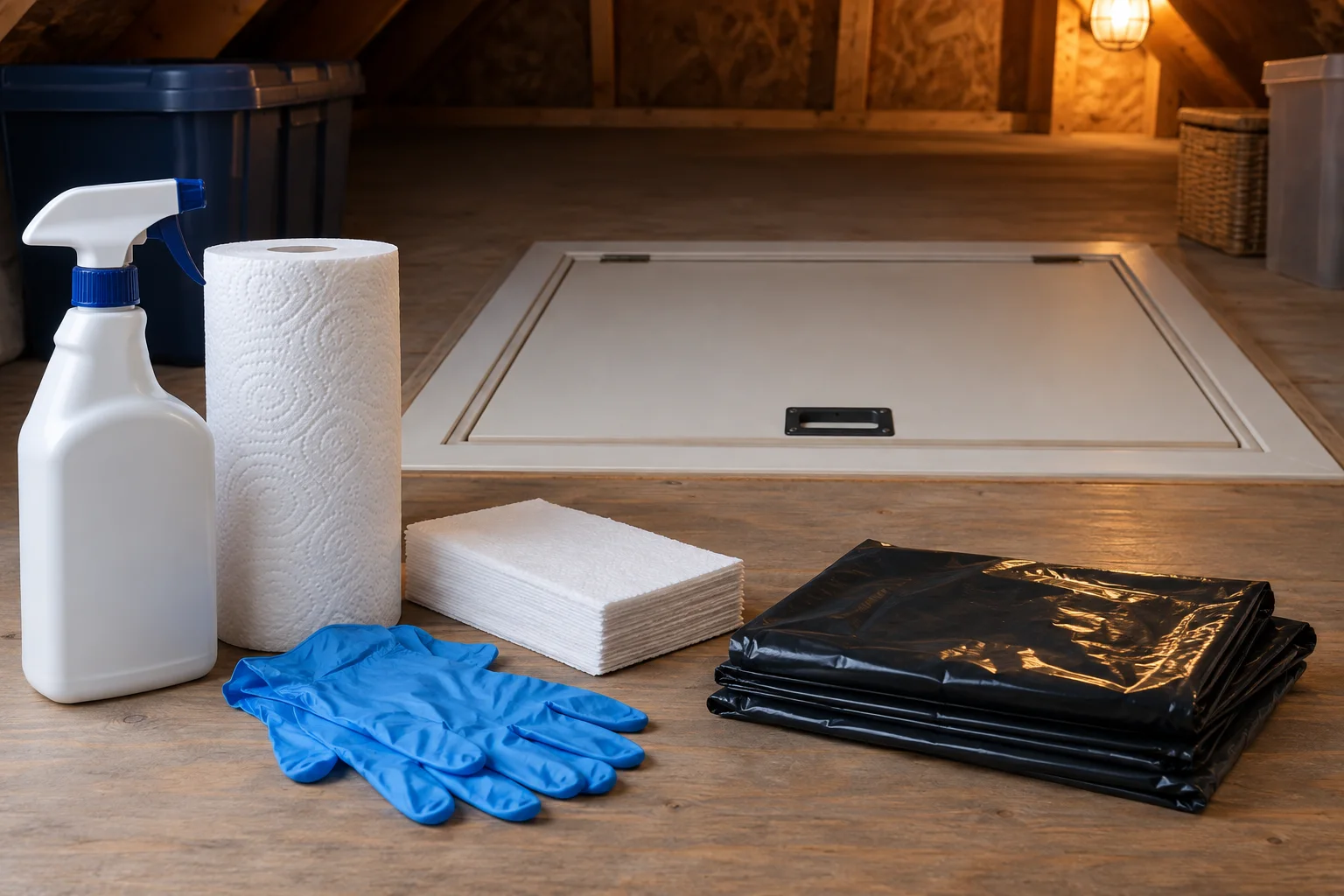
AI-generated illustration
Do not turn attic waste into airborne dust
An attic is enclosed, hot, awkward to reach, and often full of insulation that can hold droppings and nesting material. That makes cleanup different from brushing a little dirt from a garage floor. CDC says not to vacuum or sweep rodent urine, droppings, or nests because those actions can put contaminated particles into the air. A shop vacuum, leaf blower, dry broom, and compressed air are all poor first moves for the same reason.
Pause before carrying tools upstairs. First ask whether rats are still entering, whether there are only a few scattered droppings or a broad accumulation, and whether wires, ducts, or damaged insulation may be involved. Cleaning an active route merely resets the evidence while the contamination returns. An attic with extensive waste, a strong odor, a vacant building history, or visible damaged wiring deserves a professional assessment before anyone disturbs material.
Prepare the attic and choose a safe scope
When it is safe to enter a lightly contaminated attic, ventilate the house or outbuilding according to the structure and weather. CDC's general guidance for homes and outbuildings is to open doors and windows for 30 minutes and leave during that time before cleaning. An attic may not have safe, practical ventilation openings, so do not force access by opening roof features or crawling over fragile material. Use a stable access route and good lighting, and avoid stepping between joists or on a ceiling surface that cannot support weight.
Wear rubber or plastic gloves. Long sleeves and clothes that can be cleaned are sensible for an attic. CDC calls for additional precautions for heavy infestations, including protective clothing, eye protection, and appropriate respiratory protection; respirators also require correct selection, fit testing, and applicable workplace rules. A loose dust mask is not a substitute for a planned heavy-cleanup job. If that level of protection seems necessary, it is generally time to hire a qualified cleanup professional.
Wet, wait, and wipe up small amounts
For accessible, limited droppings, use a household disinfectant labeled as a disinfectant or a fresh bleach solution prepared as CDC directs: 1.5 cups household bleach in a gallon of water, or one part bleach to nine parts water. Follow the product label, especially if it gives different surface or contact directions. Never mix bleach with other cleaners. Spray droppings and urine until they are very wet, then give the liquid time to work rather than immediately wiping it away.
CDC specifies five minutes of soaking time, or the time stated on the disinfectant label. After that contact time, pick up the wetted material with paper towels and place the towels in a covered garbage container that is emptied regularly. Wipe or mop hard, nonporous surfaces with disinfectant afterward. Wash gloved hands before removing the gloves, then wash bare hands with soap and warm water. This sequence controls dust and keeps the contamination from being carried to a ladder, hatch handle, or living area.
Handle nests, carcasses, and traps without shortcuts
Treat a nest or dead rat as contaminated material rather than grabbing it quickly and moving on. Wearing gloves, spray the item and the surrounding area until wet and let it soak for five minutes or the label's stated time. Put nesting material, the dead rodent, and any used trap into a plastic bag, seal it, then place it in a second bag and seal that one before putting it in a covered trash container. CDC also notes that fleas can be associated with rodents, which is another reason not to handle a carcass bare-handed.
If a traditional snap trap will be reused, CDC describes disinfecting it with the rodent still attached, letting it soak for five minutes, and dropping the rodent into a bag before rinsing and drying the trap. Do not carry an exposed trap through the home. Do not assume a dead animal in an inaccessible wall or duct can be solved by adding fragrance. If a carcass is inside heating or cooling equipment, CDC recommends a professional service familiar with rodent access to ventilation systems.
Decide what to do with attic insulation and belongings
Insulation is not one uniform surface. CDC says exposed insulation contaminated with urine and droppings should be placed into plastic bags for removal. That is practical only when the material can be reached and removed without creating dust or damaging the ceiling below. Do not rake through loose insulation to search for every pellet. Map the affected area from the access point and discuss a removal plan with a cleanup or insulation professional if contamination is widespread, old, compacted, or mixed with nesting material.
Move stored boxes and containers outside to a well-ventilated area before assessing them. CDC advises discarding cardboard contaminated with rodent waste and disinfecting nonporous plastic, glass, or metal containers. Wash clothing or bedding that can be laundered in hot water with detergent, then machine-dry hot or air-dry in the sun. Papers and books that cannot be disinfected with liquid need their own cautious handling; CDC gives sunlight or an extended rodent-free isolation period as options. Keep a record of what was discarded for insurance or restoration purposes.
Know when to stop and call a professional
CDC identifies heavy infestations, vacant buildings with large rodent populations, and structures with confirmed rodent-borne disease as situations requiring special precautions. In an attic, warning signs also include widespread droppings across insulation, a strong persistent odor, unsafe access, dead animals in inaccessible cavities, damaged electrical wiring, or material that has spread into ducts. These are not situations to solve by putting on extra household gloves and working longer.
Choose a company that can explain how it will control dust, remove contaminated material, disinfect accessible hard surfaces, and prevent re-entry. Cleanup should follow removal and exclusion, not substitute for them. An electrician may need to evaluate gnawed wiring; an HVAC specialist may need to inspect a duct system; a roofer may need to repair the entry point. Ask for photographs and a written description of what was found. Clear documentation makes it easier to confirm the attic is clean and stays that way.
Finish with prevention and a calm recheck
After cleanup, seal the route rats used and reduce the food and cover that support them outside. Inspect roof and attic vents, eaves, utility penetrations, and access hatches; repair them with materials suited to the feature. Do not block appliance or plumbing vents without professional guidance. Store food, birdseed, and pet feed securely, pick up fallen fruit, and reduce dense vegetation or clutter that gives rats protected travel lanes near the house.
Check the cleaned attic periodically with a flashlight from a safe position. Fresh, localized evidence matters more than stains or old marks that were already documented. If new signs appear, return to the entry inspection and trapping plan promptly. CDC recommends continuing trapping until there are no new captures or signs; a week without either is a useful milestone. The objective is not a perfectly sterile attic. It is a dry, safe, rodent-free space with no ongoing contamination source.