
AI-generated illustration
Droppings are a useful clue
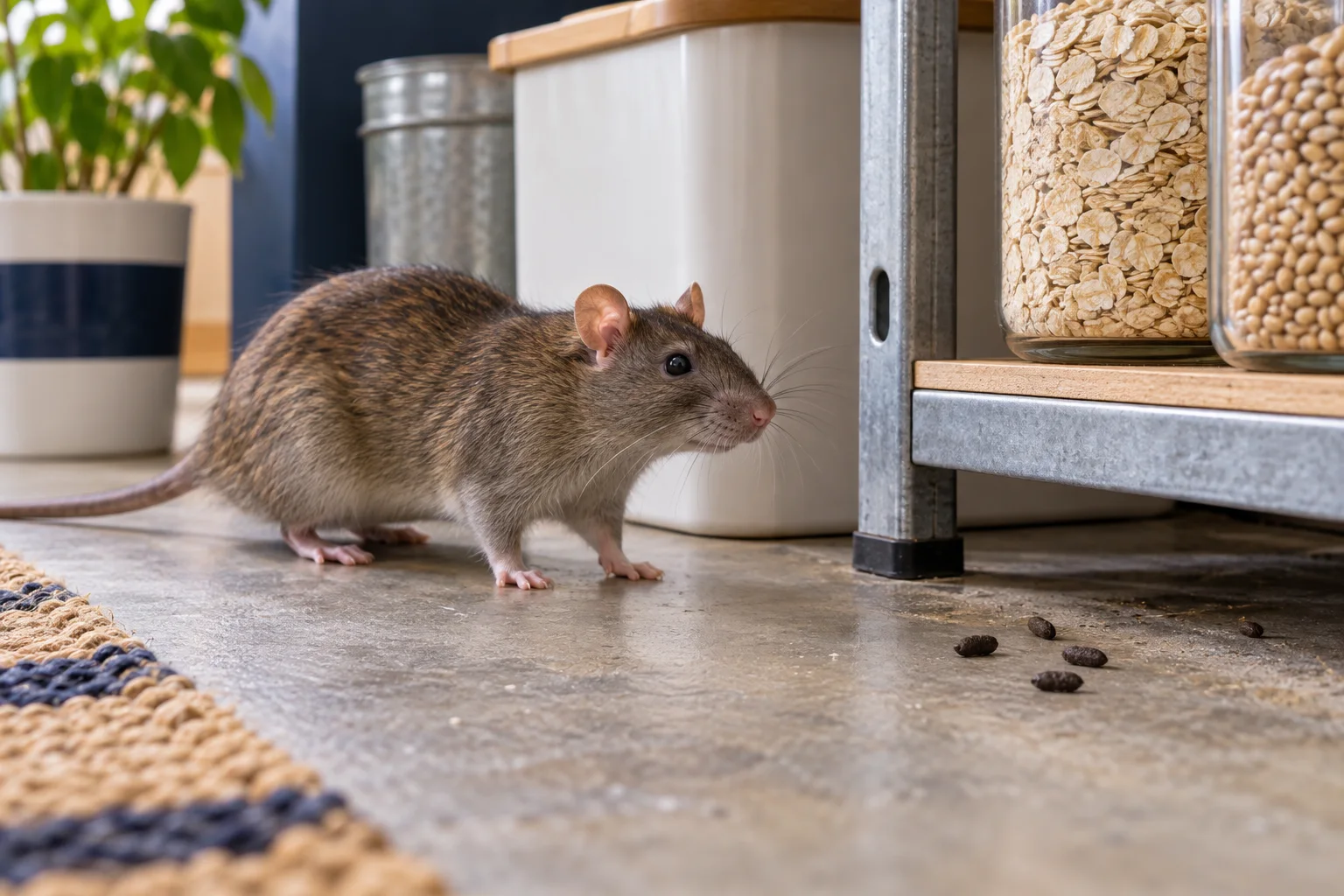
Rat feces are one of the most common signs of rodent activity because rats leave them along travel routes, near food, and in protected nesting areas. CDC lists droppings and gnaw marks among the first signs people notice before seeing a rodent. Their location often matters more than a single pellet. Droppings behind a refrigerator, beside pet-food storage, in an attic, or near a damaged door can point toward a different route and different repair.
Do not identify a rodent solely from one dropping. Mice, rats, and other animals can leave similar-looking waste, and old material changes as it dries. CDC training material describes fresh droppings as moist, soft, shiny, and dark, then dry and hard after a few days. That is a general observation, not a reliable clock. Clean the evidence safely, then watch for new material to determine whether the route is still active.
Where rat droppings are often found
Look in protected places where people do not clean often: behind appliances, inside lower cabinets, in garages, around stored feed, beneath sinks, near water heaters, along attic walkways, beside utility penetrations, and around garbage or compost. UC IPM also lists droppings near food preparation, storage, and pet-food containers as common signs. Do not put your hands into a dark void to inspect. Use a flashlight and take photographs before moving items.
Outside, droppings can appear under covered storage, near a burrow, along a fence, on a ledge, or beneath a food source. Their presence outdoors does not prove an indoor infestation, but it is a reason to inspect the building envelope. Trace from the dropping location toward food, shelter, and a possible opening. A trail near a garage door, for example, may reveal a failed bottom seal that matters more than the individual droppings.
Never sweep or vacuum waste dry
CDC says not to vacuum or sweep rodent urine, droppings, or nesting material because dry disturbance can put contaminated particles into the air. Do not use a leaf blower, compressed air, or a brush to make the job appear faster. Put on rubber or plastic gloves, gather supplies before you enter the area, and keep pets and children out. This is especially important in attics, storage rooms, cars, and other enclosed spaces where dust can linger.
For small accessible amounts, CDC directs people to spray waste until very wet with disinfectant or a fresh bleach solution, let it soak for five minutes or for the label's stated contact time, then wipe it up with paper towels. Put used towels into a covered garbage container that is emptied regularly. Mop or sponge hard surfaces with disinfectant afterward, wash gloved hands before removing gloves, and wash bare hands with soap and warm water.
Treat nests and carcasses separately
Droppings may occur with shredded paper, insulation, fabric, or a dead rodent. Treat these as contaminated material too. CDC recommends wetting a nest, carcass, and surrounding area with disinfectant, allowing contact time, placing the material and used trap in a plastic bag, sealing it, then sealing it in a second bag before disposal. Do not carry exposed material through the house or leave a carcass where a pet can investigate it.
A heavy accumulation is different from a few pellets beside a door. CDC calls for special precautions for heavy infestations, vacant buildings with many rodents, or structures with confirmed rodent-borne disease. If droppings cover attic insulation, appear in ducts, or coexist with damaged wiring, use a qualified cleanup or pest professional. More household cleaning effort is not a substitute for the right protective equipment and dust-control process.
Use fresh signs to locate the route
After safe cleanup, recheck the same location. Fresh droppings, new gnaw marks, bait taken from an unset trap, or recurring sound show that activity is current. A week with no captures and no new signs is a CDC milestone for a successful trapping effort. Do not keep moving traps at random while fresh waste persists. Compare the new location with the nearest food, water, sheltered travel route, and exterior gap.
For confirmed rats, CDC recommends traditional rat-sized snap traps in protected, accessible places where rodents travel. Set the baited end near a wall, keep traps out of reach of children and pets, and check them daily. Do not use glue or live traps. If signs are in a wall, roofline, duct, or another area where equipment cannot be checked, arrange professional help rather than placing a trap you will lose track of.
Close the conditions that create droppings
Droppings will return if the building stays accessible and rewarding. Secure food, feed, birdseed, and garbage; clean spills; bring pet food inside after meals; and reduce dense cover or clutter near walls. Inspect door sweeps, vents, eaves, crawl-space panels, roofline screens, and gaps around pipes or cables. UC IPM warns that rats can chew soft materials such as foam, plastic, wood, and caulk, so choose durable repairs appropriate to each feature.
Keep a dated note of the first and last fresh signs. This is helpful if a professional, landlord, or contractor needs to understand the problem's pattern. Rat feces are not something to ignore, but they are also not a reason for panic. They are a signal to clean safely, verify activity, find the route, and maintain a property that rats cannot easily use.