
AI-generated illustration
Risk comes from exposure, not sight alone
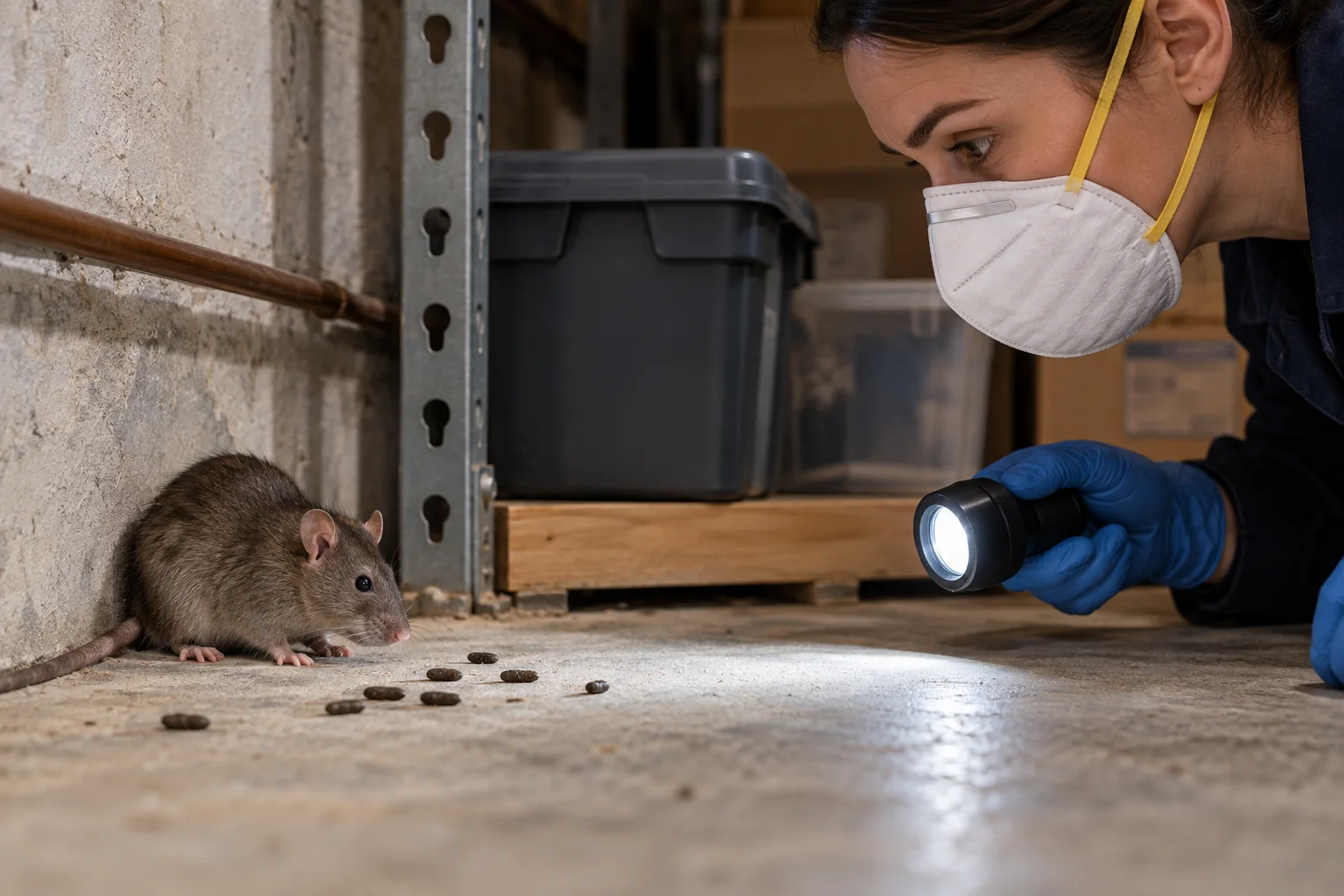
Rat feces can contaminate food, surfaces, and dust, which is why it should be treated carefully. CDC explains that rodents can spread disease through droppings, urine, saliva, and contaminated air or food. Seeing a pellet does not mean someone is automatically sick, but it is a signal to avoid direct contact and clean the area correctly. Fear should not replace practical steps; the aim is to stop exposure and find the route that produced the waste.
Risk depends on the amount of contamination, how it is disturbed, and who is exposed. A few accessible droppings on a garage floor are different from a heavily contaminated attic, a vacant building with many nests, or waste in a heating system. CDC recognizes heavy infestations as situations needing additional precautions. Do not make every small cleanup into a medical emergency, but do not treat a large dusty accumulation as ordinary housework.
Do not make particles airborne
CDC's central instruction is not to vacuum or sweep rodent droppings, urine, or nests dry. Those actions can put small contaminated particles into the air. Do not substitute a shop vacuum, blower, dry brush, or compressed air. Before going into a contaminated area, gather gloves, disinfectant, paper towels, bags, and a covered waste container. This prevents repeated trips through the house with contaminated gloves or open waste.
For a limited accessible area, wear rubber or plastic gloves and spray the droppings until very wet with an EPA-registered disinfectant or fresh bleach solution. CDC specifies a five-minute soak or the contact time on the product label. Then use paper towels to wipe up the waste and cleaning solution. Disinfect the hard surface afterward, wash gloved hands before removing gloves, and wash bare hands with soap and warm water.
Protect food, objects, and pets
Discard food that has been directly contaminated by rodent waste or gnawing. Clean hard, nonporous shelves, countertops, containers, and drawers after the waste is removed. CDC advises discarding cardboard boxes contaminated with urine or droppings and disinfecting plastic, glass, or metal containers. Do not trust a package simply because its unopened portion looks clean if the exterior has rodent contamination. Clean or discard based on material and actual contact.
Keep children and pets away from the work area. A pet can step in waste, investigate a dead rodent, or encounter a trap or pesticide meant for the rodent problem. Store pet food and feed in tight containers and bring outdoor bowls in after meals. This lowers both direct contamination and the food incentive that brought rats near the home. If a pet has had close contact with a rat or carcass, seek veterinary advice.
Nests and carcasses need the same care
A nest or dead rat is not a dry item to grab and throw away. CDC advises spraying it and the surrounding area with disinfectant, waiting the contact time, then placing the material and any used trap in a plastic bag. Seal the first bag, place it in a second bag, and seal that before disposing of it in a covered garbage container. Wear gloves and wash hands after removal. CDC also notes fleas can be common on rodents, which is another reason to avoid direct contact.
If a carcass is in an air duct, electrical compartment, wall, or inaccessible crawl space, do not dismantle a building system without professional help. A pest professional can address the rodent, while an HVAC technician, electrician, or contractor may be needed to access and restore the affected feature. Masking an odor or spraying fragrance does not remove contamination or make a hidden carcass safe.
Heavy contamination needs a different plan
CDC lists heavy infestations, vacant dwellings with large rodent populations, and structures with confirmed rodent-borne disease as situations requiring special precautions. People cleaning these settings may need coveralls, boots or shoe covers, eye protection, and appropriate respiratory protection. Proper respirator use involves selection, fit testing, and requirements that are not solved by a loose dust mask. This is a sensible point to hire qualified remediation help.
Attic insulation, ducts, large nest accumulations, and extensive droppings are not jobs to rush through with household tools. Ask a cleanup provider how it will control dust, remove contaminated materials, protect occupied parts of the building, and verify the source route has been closed. The answer should include exclusion and repair. Cleaning the evidence while leaving an open vent or gap simply creates the same health concern again.
Prevent the next contamination event
Once active rats are removed, close the entry points that let them in. Inspect doors, vents, utility gaps, roofline features, crawl spaces, garages, and food-storage areas. Use durable materials appropriate to each feature and do not block necessary vents, drains, or appliances. Secure garbage, food, feed, and birdseed, pick up fallen fruit, and reduce clutter or dense cover near the home.
For confirmed indoor rats, CDC recommends rat-sized traditional snap traps in protected, checkable locations and advises against glue and live traps. A week without fresh signs or captures is a useful indicator that the effort succeeded. Rat feces are dangerous when people are exposed to contaminated material; safe cleanup, controlled removal, and durable prevention reduce that risk in a practical way for every household member. If anyone develops illness after a substantial rodent exposure, CDC advises discussing that exposure with a healthcare provider.