
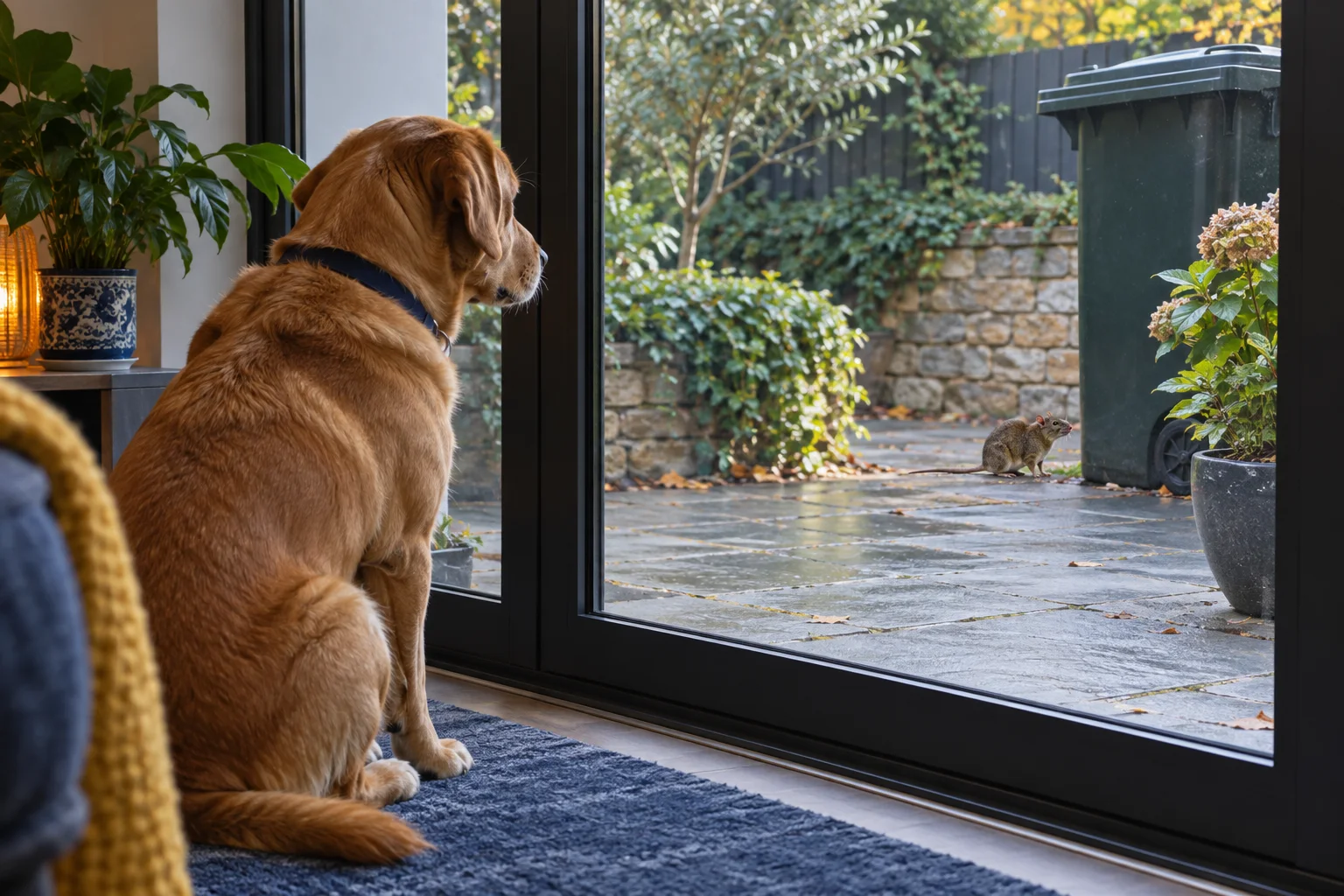
AI-generated illustration
Pets should not manage a rat problem
Dogs and cats may chase, corner, or pick up a rat, but that does not make them safe rodent-control tools. A rat can bite or scratch when threatened, and a pet can carry a rodent or its fleas back into the house. CDC notes that rodents can spread disease through contact, bites, droppings, urine, saliva, and associated ticks, mites, or fleas. Keep pets away from active rodents, nests, droppings, and traps rather than encouraging an encounter.
If a pet has been bitten, scratched, eaten a rodent, or had close contact with a carcass, contact a veterinarian promptly for advice based on the animal, the exposure, and local conditions. Do not wait for online symptom lists to decide whether it matters. A veterinarian can advise on wound care, parasite concerns, vaccination history, and observation. If the pet seems ill, injured, or distressed, follow the veterinary clinic's urgent-care instructions.
Rodenticide is a major pet concern
Poison bait can harm pets through direct access and, for some products, through eating poisoned rodents. EPA requires consumer rodenticide products to use protective bait stations, but a station does not eliminate risk in a household with a determined pet. EPA also notes that certain products can pose secondary poisoning risks to wildlife and pets. Do not assume a garage shelf, shed corner, or outdoor wall is inaccessible just because your pet normally ignores it.
If a pet may have eaten bait or a poisoned rodent, contact a veterinarian or animal poison resource immediately and have the product label ready. Do not induce vomiting or give a home remedy unless a veterinary professional directs you to. Secure pesticides away from animals and food, and use them only according to their label. For many indoor rat problems, protected snap trapping and exclusion are easier to monitor than bait placed near a pet's normal environment.
Food bowls and pet areas can attract rats
Outdoor pet food, feed bags, spilled kibble, and uncleaned bowls can provide a nightly food source for rats. UC IPM recommends giving pets only the amount they will eat at a meal and storing food in rodent-resistant containers. Bring bowls indoors after feeding, clean spills, and keep feed storage sealed. This protects the food from contamination and removes an incentive for rats to remain near a door, garage, patio, or carport.
Do not leave a pet's water or shelter area cluttered with food containers and cardboard. Check beneath dog houses, decks, kennels, and outdoor storage for droppings, burrows, or nesting material. If rats are using the area, move pets away while you plan cleanup and exclusion. A pet's routine should not put it into repeated contact with the exact resources and cover a rat is using.
Fleas and contaminated areas need care
Rodents can carry fleas, mites, and ticks. CDC advises speaking with a veterinarian about flea-control products right for your pet and recommends year-round flea prevention. Do not choose a flea product for a cat or dog based only on another animal's prescription or internet advice. Species, weight, age, and health matter. If you find a dead rodent or nest, do not let a pet investigate it; keep the pet out while the material is removed and the area is cleaned.
Clean accessible rodent waste with gloves and disinfectant, not a dry broom or vacuum. CDC recommends wetting the material, allowing the proper contact time, then wiping it up. Heavy contamination, attic insulation, ducts, or inaccessible wall voids may need professional cleanup. Keep pets out of the work zone until it is clean and dry. This prevents them from stepping in waste and spreading it through living areas.
Use pet-safe removal practices
CDC recommends traditional rat-sized snap traps for confirmed indoor rats and says traps and bait must be out of reach of children and pets. In a pet household, this means a protected station, a closed service area, or professional placement—not a trap under a sofa where a cat can paw it. Check traps daily and remove catches safely. Do not use glue or live traps; CDC advises against them because a scared rodent may urinate, increasing exposure risk.
Avoid putting traps or bait where a pet normally eats, sleeps, or plays. If a rat is in an attic, wall, duct, roofline, or other inaccessible space, call a pest professional rather than trying to persuade a pet to flush it out. A proper plan separates animals from the work, follows evidence, and lets the homeowner monitor activity without creating a pet emergency.
Prevent repeat contact
Close the entry route after active rats have been removed. Inspect door sweeps, vents, utility gaps, crawl-space openings, and roofline screens; use durable materials appropriate to the building feature. Reduce food and shelter outdoors by securing garbage, picking up fallen fruit, thinning dense vegetation, and keeping storage away from exterior walls. These steps lower the chance a pet will meet a rat in the first place.
Continue routine veterinary care and ask your veterinarian about local parasite or disease concerns relevant to your pet. A property can be rat-free without exposing pets to poison, chases, or unprotected traps. The durable goal is straightforward: clean pet feeding habits, a maintained building envelope, professional help for difficult routes, and prompt veterinary guidance after any direct exposure for every household.