
AI-generated illustration
A dog changes behavior, not the building
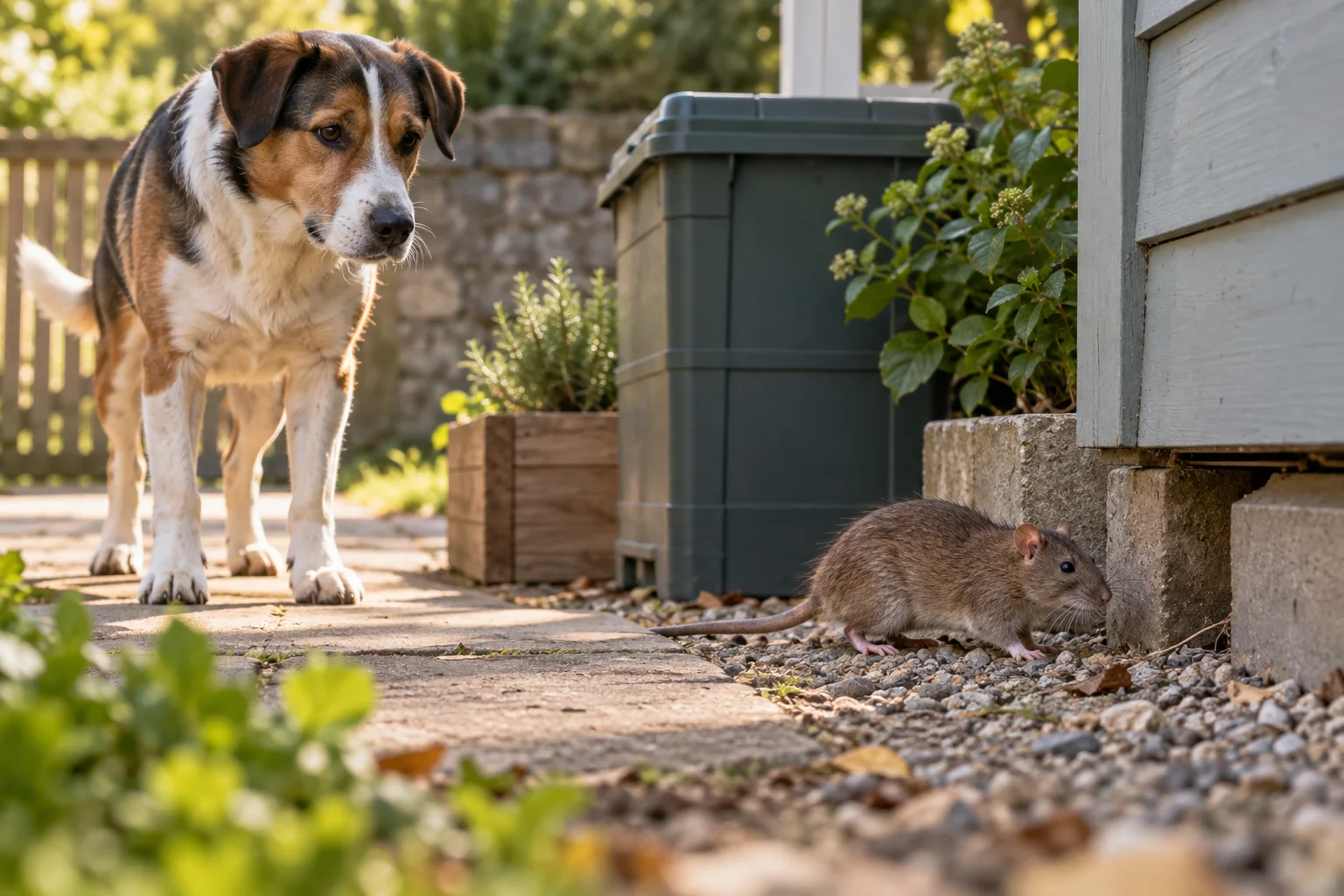
A barking dog, an active yard, or a dog that has chased a rat may make a rat use a different time or route. It does not close a vent, repair a garage-door seal, remove food, or empty a wall void. Rats can use attics, crawl spaces, dense cover, and protected edges that a dog cannot investigate safely. A property may therefore have both a dog and a continuing rat problem. Treat the dog’s interest as a reason to inspect, not as proof that the pet has provided control.
The same point applies to breed claims. There is no dependable household formula in which a particular dog keeps rats away. An individual dog may ignore rodents, become excited by them, or corner one without removing the source population. Encouraging a confrontation exposes the dog and creates an unpredictable animal in a confined space. A safer goal is a home where the dog does not need to meet a rat: food is secured, outdoor cover is reduced, entry points are repaired, and active removal is monitored.
Keep pet food from becoming rat food
Outdoor bowls, spilled kibble, feed bags, chews, and garbage can support rat activity even when a dog is present. Feed dogs the amount they will eat at a meal, remove bowls afterward, clean spills, and store food in intact containers with tight-fitting lids. Check under dog houses, decks, kennels, and outdoor storage for droppings, burrows, nests, or chewed packaging. These sites can combine shelter, water, and food in one protected spot.
Do not solve a feeding problem by moving an open bowl closer to the house or garage. That can bring rat activity toward doors, utility penetrations, and pet sleeping areas. Keep the perimeter visible by moving clutter and dense cover away from walls. Secure garbage, birdseed, and fallen fruit as well. A rat does not distinguish between food intended for a dog and food intended for wildlife. Removing the reward is more durable than hoping a dog makes the space unpleasant.
Prevent direct contact
A rat can bite or scratch when threatened. Keep a dog out of rooms, attics, garages, or yards where a live rat, nest, dead rodent, or active trap is present. Do not send a dog after an animal hiding behind an appliance or under a deck. A chase can drive the rat deeper into the structure, injure the dog, or make it hard to identify the entry route. Use a leash or separation gate while the area is assessed.
If a dog has been bitten, scratched, mouthed a rodent, eaten a carcass, or may have accessed bait, call a veterinarian promptly and describe the event. Do not induce vomiting or give a home remedy unless the veterinary professional directs it. CDC notes that some animals can acquire rat-bite-fever organisms through contact with infected rodents and pass infection to people, while EPA warns that rodenticide can harm pets directly or through poisoned prey. A veterinarian can assess the individual dog, local conditions, and the relevant product label.
Choose control methods that protect the dog
For confirmed indoor rat activity, CDC recommends traditional rat-sized snap traps, placed where rats travel and kept out of reach of children and pets. In a dog household, that may require a protected station, a closed service area, or professional placement. An exposed trap under a sofa or beside a dog bowl is not a responsible setup. Check active equipment daily so a catch can be removed promptly and the area can be cleaned.
CDC advises against glue and live traps because frightened rodents can urinate. Do not scatter loose poison or place bait where a dog can reach it. Consumer rodenticide products are sold in ready-to-use bait stations, but a station is only part of the safety plan; the label and placement still govern use. If persistent activity warrants a pesticide discussion, assess whether dogs, wildlife, and other non-target animals can truly be excluded. If not, choose another method or a qualified professional.
Fix the route the dog cannot patrol
Inspect door bottoms, garage edges, crawl-space access, vents, roofline screens, and gaps around pipes or cables. CDC recommends checking inside and outside for entry routes before trapping rats that remain. Do not seal a route blindly while a rat may be inside a wall or attic. Coordinate removal and final repair so the animal is not driven into another part of the house. Use materials suited to the building feature; UC IPM notes rats can chew soft fillers such as foam, plastic, wood, and caulk.
Do not block an appliance vent, drain, chimney, or plumbing feature without understanding its purpose. A roofer, HVAC technician, plumber, electrician, or exclusion professional may be needed for a sound repair. The practical test is not whether the dog barks less. It is whether food is inaccessible, the route is repaired, and fresh signs stop. A dog can remain a companion instead of becoming the household’s rodent-control tool.
Use the dog’s behavior as a clue, carefully
Repeated staring, pawing, or barking at one wall, cabinet, or yard corner can help narrow an inspection, but it is not proof of a rat. Dogs react to scents, insects, other wildlife, plumbing noises, and activity outside a wall. Look for independent evidence such as fresh droppings, gnaw marks, nesting material, damaged screens, or a documented opening before setting equipment or opening a surface. This avoids turning normal dog behavior into a costly guess.
If evidence continues after repairs, record the location and time of the dog’s reactions along with physical signs. That can help a professional inspect the right route. Keep the dog separated during cleanup; rodent waste should not be dry swept or vacuumed. The answer to “do dogs keep rats away?” is therefore limited: a dog may alert a homeowner or change a rat’s movement, but sanitation, exclusion, and controlled removal are what make a property less available to rats.