
AI-generated illustration
Make the property less rewarding
Rats stay near homes that provide a dependable combination of food, water, shelter, and access. Start with the resources people overlook: spilled bird seed, outdoor pet food, open garbage, fallen fruit, grease around grills, animal feed, water leaks, and cluttered storage. CDC recommends storing food and garbage in secure containers and keeping outdoor food sources away from the home. This is ongoing maintenance, not a single weekend cleanup.
Focus on the places food collects rather than trying to make the whole yard sterile. Clean containers and outdoor cooking areas, store feed in sturdy closed containers, put pet food away after meals, and correct leaks or standing water sources. These changes help because they reduce the reason a rat has to keep returning. They also make new evidence easier to see; a clean foundation edge reveals fresh droppings, gnawing, or a disturbed route more clearly than a cluttered one.
Reduce cover beside the building
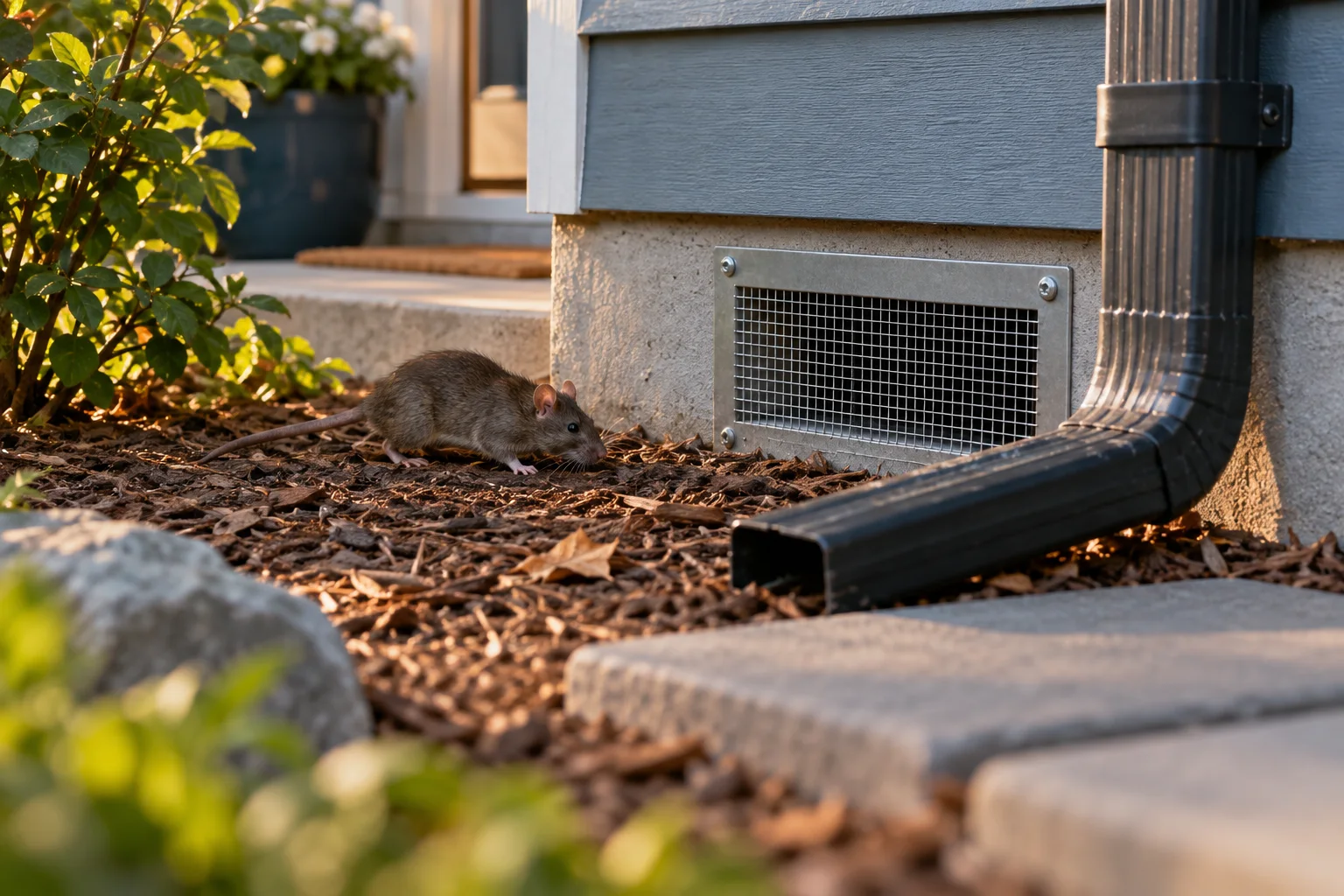
Dense vegetation, woodpiles, debris, ground-level storage, and piles of landscape material can provide cover close to the house. Keep the perimeter visible enough to inspect. UC IPM recommends thinning dense plantings and creating space between shrubs and structures; it also advises reducing climbing vegetation and roof access. The point is not to remove every plant. It is to remove concealed, connected pathways that lead from shelter to the building.
Store items off the ground where practical and away from walls, and clean around garbage containers and compost areas. Check beneath decks, sheds, low shrubs, and tool storage for signs of burrowing or travel. If a rat has a protected path from a food source to a foundation gap, a strong scent or decorative barrier will not keep it away. A visible, maintained perimeter gives you the chance to correct that route early.
Seal entry points with durable repairs
Inspect doors, garage edges, vents, windows, foundation gaps, attic openings, utility penetrations, and roofline features. CDC lists these areas because rodents can use surprisingly small defects. Photograph the opening before repair and choose a material suited to its size and building function. Metal, hardware cloth, cement, and metal sheeting are among CDC’s recommended materials for larger gaps. Foam or caulk alone may not be a durable barrier where rats can chew or push.
Do not seal a necessary drain, vent, appliance exhaust, or service opening without understanding its purpose. A sound repair keeps rodents out while preserving ventilation, drainage, and safe operation. Roof, HVAC, plumbing, electrical, and structural openings may need qualified trade work. The right repair is a fitted, durable solution that can be inspected later, not whatever is quickest to stuff into a hole.
Remove current activity before declaring success
Prevention does not always remove rats already inside. If you find fresh droppings, gnawing, nests, or a live rat, combine exclusion with a monitored removal plan. CDC recommends placing traps where evidence appears and keeping traps and bait out of reach of children and pets. Do not rely on repellents, ultrasonic devices, or one quiet night as proof that the home is clear. Those approaches can leave an active route untouched.
Choose equipment that matches the confirmed rodent and setting. A rat trap differs from a mouse trap, and protected placement matters. Check equipment regularly, dispose of captures safely, and continue to watch for fresh signs after activity stops. If the problem is in an attic, wall, duct, crawl space, or inaccessible route, seek qualified help. Prevention is strongest when it includes a realistic response to the rats already present.
Build prevention into routine maintenance
Add a rodent check to seasonal home care: inspect door sweeps, screens, vents, foundation edges, roofline repairs, utility entries, waste storage, and nearby vegetation. CDC advises regular inside-and-out inspections for openings and supporting conditions. Keep photographs or notes of repairs so a later problem can be compared with the original condition. Weather, lawn work, utility repairs, and building age can all create a new gap after a successful exclusion job.
The result to watch is the absence of fresh evidence, not the strength of a repellent smell or the number of products purchased. When a new sign appears, respond early by tracing the route and correcting the resource or opening that supports it. Keeping rats away is ordinary property maintenance done consistently: make food and shelter less available, make the exterior easier to inspect, and keep the building envelope sound.
Include shared property conditions
A rat route may cross a fence line, shared garage, utility corridor, or common waste area. When conditions are outside your control, document the evidence and notify the property owner, manager, homeowners association, or local authority that has responsibility. Do not try to repair another person’s structure or apply a pesticide on property you do not control. A coordinated waste and maintenance response can matter more than a private treatment at one doorway.
Keep the report factual: dates, locations, photographs, and the specific condition such as an overflowing bin, broken screen, or gap at a shared wall. This helps the responsible party investigate and reduces arguments based on speculation. Prevention is strongest when the whole route from outdoor resources to the building is visible and maintained.