
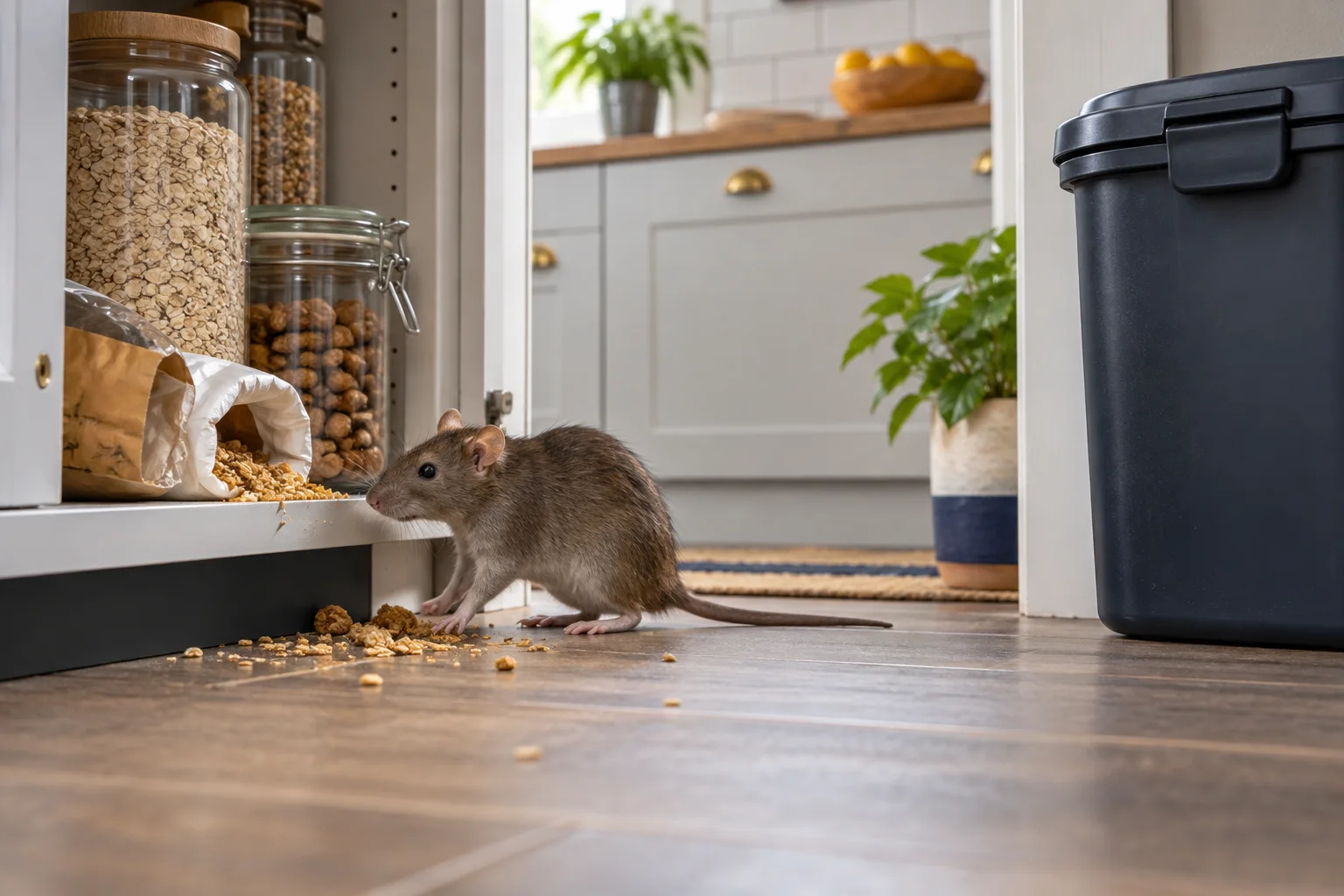
AI-generated illustration
Attraction is a combination, not one smell
Rats do not need a spotless-looking mess or one dramatic food spill to use a property. A place becomes useful when it offers some combination of accessible calories, water, cover, nesting material, and a route that feels protected. UC IPM notes that rats explore and memorize pathways, obstacles, food, water, shelter, and other features of their surroundings. That means a small but dependable resource can matter more than a one-time large one.
Avoid trying to find a magic item that “caused” the problem. An outdoor pet dish may be one factor, but dense shrubs can supply cover on the approach and an unsealed pipe gap can turn outdoor activity into indoor activity. The most effective inspection asks how these elements connect. Where can an animal feed? Where can it travel unseen? Where can it enter or nest? A property with several weak links often needs several modest corrections rather than one dramatic treatment.
Food sources are broader than a kitchen bin
Garbage, pet food, birdseed, fallen fruit, compost ingredients, livestock feed, and food residue on containers can all support rats. UC IPM specifically advises frequent collection of garbage and garden debris, cleaning residues from receptacles, removing fallen fruit and nuts, and feeding outdoor pets only what they will eat at a meal. The point is to interrupt a reliable feeding routine, not to make a yard sterile or eliminate every insect and seed.
Inspect at the time the resource is actually available. A bin can be closed at noon but have spilled material around its base after collection. A dog bowl may be empty during the day but left full overnight. Fruit can disappear from low branches yet accumulate under an uninspected hedge. Check storage too: a bag of feed in a garage, unsealed recycling with food residue, and a compost pile containing kitchen scraps create different opportunities and each has a different practical fix.
Water and moisture keep a site useful
Rats can use standing water, leaks, condensation, irrigation, pet water, and moisture around drains. Water does not have to look like a pond to matter. A slow pipe leak under a sink, condensate near an air-conditioning component, or a regularly overflowing saucer can provide a predictable stop along a travel route. UC IPM includes water with food and shelter as the conditions that allow rat populations to increase quickly.
Do not assume that eliminating one visible water dish solves the issue. Trace moisture at ground level and in enclosed spaces: beneath sinks, behind appliances, around water heaters, near exterior hose connections, and beside irrigation. A persistent damp area can also point to a building-maintenance problem unrelated to rats, so repair it for its own sake. The goal is not to remove normal household water use; it is to stop unintended, continuously accessible sources near cover and entry points.
Shelter and cover affect the approach
Norway rats often favor lower-level burrows, foundations, rubbish, and woodpiles, while roof rats are agile climbers and may use dense vegetation, trees, and elevated building areas. These are tendencies, not species identifications from landscaping alone. Both types benefit when stored materials, ground cover, fencing, branches, and gaps give them a protected path between food and a nesting area.
Look at the structure from the rat’s route rather than only from the front walk. Are shrubs pressed to the wall? Is ivy or another climber touching the eaves? Are branches close to the roof? Is lumber, firewood, or equipment stored directly on the ground? UC IPM recommends tidy off-the-ground storage and thinning vegetation around structures. These changes make a property less hospitable and make signs easier to see, which is as valuable as removing shelter itself.
Entry turns outdoor attraction into an indoor problem
A yard can attract rats without a house being infested. Indoor activity requires a route, such as a gap around a utility line, a damaged vent, a door that does not close tightly, or a defect in a lower wall or roofline. UC IPM advises sealing openings around pipes, cables, drains, and vents and making exterior doors, windows, and screens fit tightly. Roof rats require attention above ground because climbing access can bypass an otherwise tidy foundation.
Inspect from the evidence outward. Droppings in a low cabinet may lead to a pipe penetration or an exterior foundation defect. Attic noises or high shelves may point to tree limbs, vines, roof vents, or eaves. Do not simply seal a visible hole while active animals may still be using a hidden route; determine what is happening on both sides and plan repairs in an order that does not strand an animal indoors. A repair is strongest when it answers a documented route.
Use signs to decide what matters first
UC IPM lists droppings, gnawing, nests, burrows, smudge marks, food damage, and rats using fences or utility lines as useful evidence. These signs help rank the work. Fresh food damage beneath a fruit tree makes fruit management urgent. Burrows by a garbage area make container condition and lower cover relevant. Activity around an attic requires a climb-route and roofline inspection. Treating every possible attractant at once can obscure the main route and exhaust the homeowner.
After changes, check the same evidence points rather than relying on whether the yard seems tidier. Safely clean droppings, then watch for new ones. Note whether a burrow is reopened, whether food is disturbed, or whether new gnawing appears. A continuing sign tells you a resource, access route, or nesting area remains. The answer to what attracts rats is not a single product or scent; it is the workable network a property accidentally provides.