
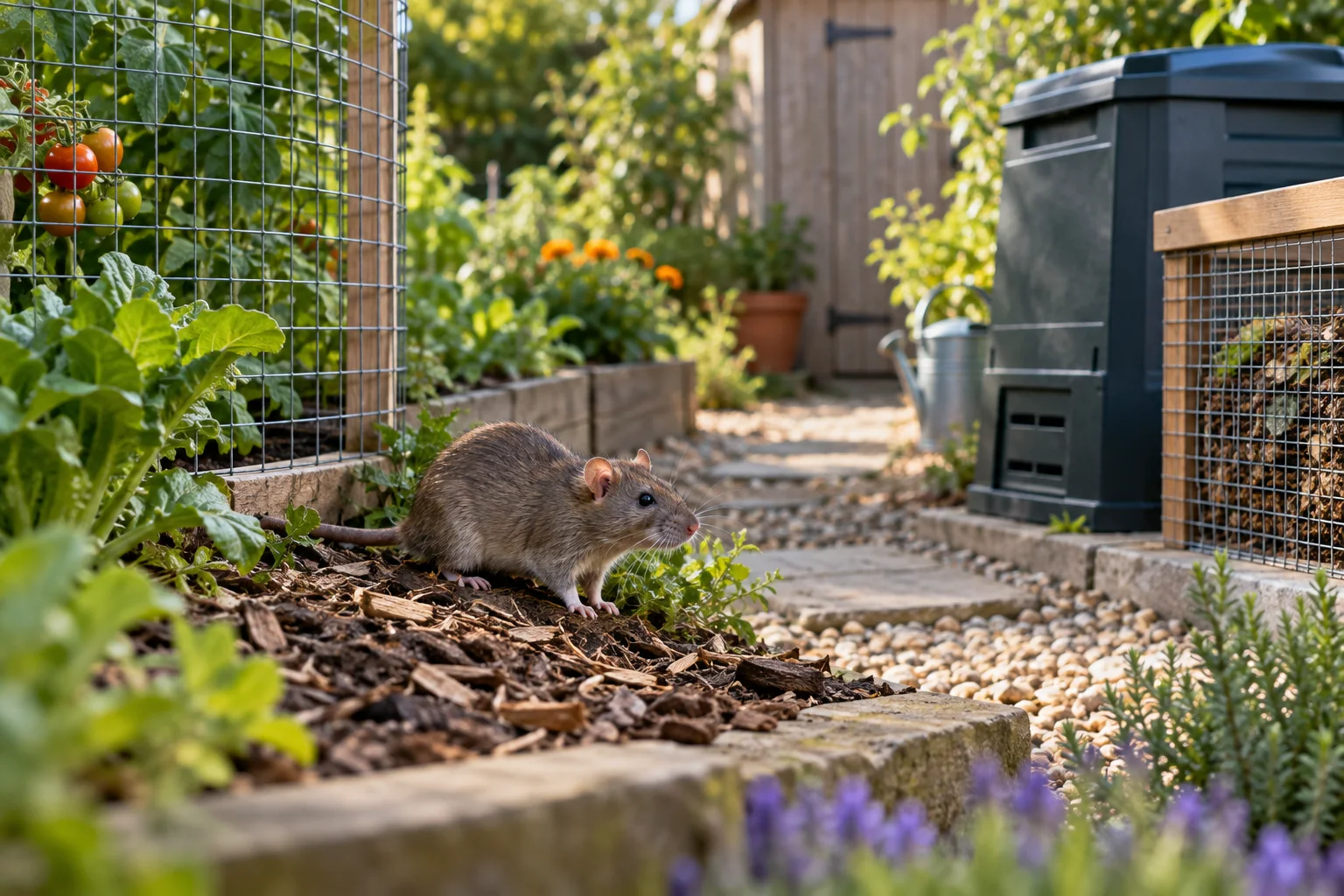
AI-generated illustration
Read the garden as a food and shelter system
A garden can attract rats through ripe fruit, fallen produce, seeds, compost ingredients, water, dense ground cover, stacked pots, lumber, and quiet spaces beneath sheds or decks. One chewed tomato or disturbed bed does not prove a rat; birds, squirrels, insects, slugs, and other animals can also damage crops. Start with evidence: droppings, gnawing, burrows, tracks, a camera image, or repeat activity at a protected route.
Walk the garden in daylight. Check the bases of raised beds, compost bins, sheds, fences, woodpiles, irrigation connections, bird feeders, and fruit trees. Note whether damage occurs on the ground, in a tree, beside a wall, or near a food-storage area. This helps distinguish a ground-level route from a climbing route and prevents treating every nibbled plant as a pesticide problem.
Harvest and sanitation matter
Harvest ripe produce promptly and pick up fallen fruit, vegetables, and nuts before they become a dependable nightly meal. Remove rotting produce from the soil surface, rinse tools and containers that carry food residue, and do not leave pet food, birdseed, or grill scraps beside the garden. UC IPM notes that rats use a wide variety of foods and that food availability around homes supports continued activity.
Compost deserves special attention. A compost system should be managed so it does not become an open cafeteria. Use an intact, managed container where appropriate, avoid leaving food scraps exposed, and follow local compost guidance. Do not assume compost is separate from the rat issue simply because it is located at the far end of the yard. A route from compost to a house, shed, or garage can be a direct invitation.
Reduce hiding cover without stripping the garden
Rats prefer protected movement. Move stored pots, boards, bags, unused equipment, and debris away from the foundation and leave room to inspect the ground around beds. Thin dense vegetation that forms an uninterrupted route to a wall, fence, or roofline, while preserving healthy plants and soil. The aim is not a bare yard. It is a visible perimeter where fresh disturbance and burrows can be noticed early.
Check branches, climbing vines, trellises, fences, pipes, and nearby structures that connect a garden to an upper opening. Roof rats are agile climbers, while Norway rats are often associated with lower routes and burrows, but either can use a convenient connection. Do not prune near power lines or climb structures to investigate. A professional can assess a route that crosses a high roofline or utility access.
Protect crops and structures thoughtfully
Physical protection can be useful when it fits the crop and does not trap other animals. Use sound fencing, secure storage, and crop-specific barriers that still allow gardeners to work safely. Inspect for gaps at the base of a shed, greenhouse, garden storage box, or enclosure. A barrier should match the feature and be maintained after storms, digging, or landscaping changes.
Do not pour chemicals into burrows, flood a hole, use poison loosely in beds, or apply household repellents to edible crops. These practices can harm pets, wildlife, beneficial animals, soil, or plants and may not address the route. If a product is considered at all, its label, crop restrictions, and non-target risk matter. For many gardens, food management and exclusion provide clearer information and less collateral risk.
Use removal only for confirmed activity
After sanitation and inspection, decide whether fresh evidence shows a current rat route. If it does, use a monitored method that is protected from children, pets, birds, and other wildlife. CDC recommends traditional rat-sized snap traps for rats and says traps should be placed where rodents travel, checked daily, and kept out of reach of children and pets. An exposed trap next to a bird feeder or crop row is not a responsible placement.
Do not use glue or live traps as a casual garden solution; CDC advises against them because frightened rodents can urinate. A professional may be the better choice for activity around a shed, dense planting, shared fence, or area with wildlife traffic. Ask how equipment will be protected, how captures will be handled, and which food or entry route will be corrected after removal.
Protect the house from the garden route
A garden solution should include the building edge. Inspect foundation gaps, crawl-space panels, doors, vents, cable and pipe penetrations, garage seals, and roofline features near garden access. Repair confirmed routes with durable materials appropriate to the feature. UC IPM warns that rats can chew through soft materials such as foam, plastic, wood, and caulk.
Do not block drains, irrigation components, vents, or utility systems without understanding their function. A garden rat can be a landscape problem, a building-entry problem, or both. A durable result comes from securing the food and shelter in the garden while making the house inaccessible, not from simply moving the animal to another planting bed.
Monitor the plants and the routes
After changes, keep a short record of fresh damage, droppings, burrows, sightings, harvest, and repairs. This can show whether an apparent garden problem was seasonal fruit, a broken compost lid, or a continuing structural route. Photograph the original disturbed areas before filling or repairing them so later changes are visible.
If new signs continue after crop protection and sanitation, broaden the inspection to neighboring food sources, shared fencing, and nearby storage. A garden remains productive when its soil, plants, wildlife, pets, and people are protected. The goal is not to wage war on every outdoor animal. It is to remove the conditions that make rats a recurring user of the garden and a potential visitor to the home.