
AI-generated illustration
A hole near the house is a starting point
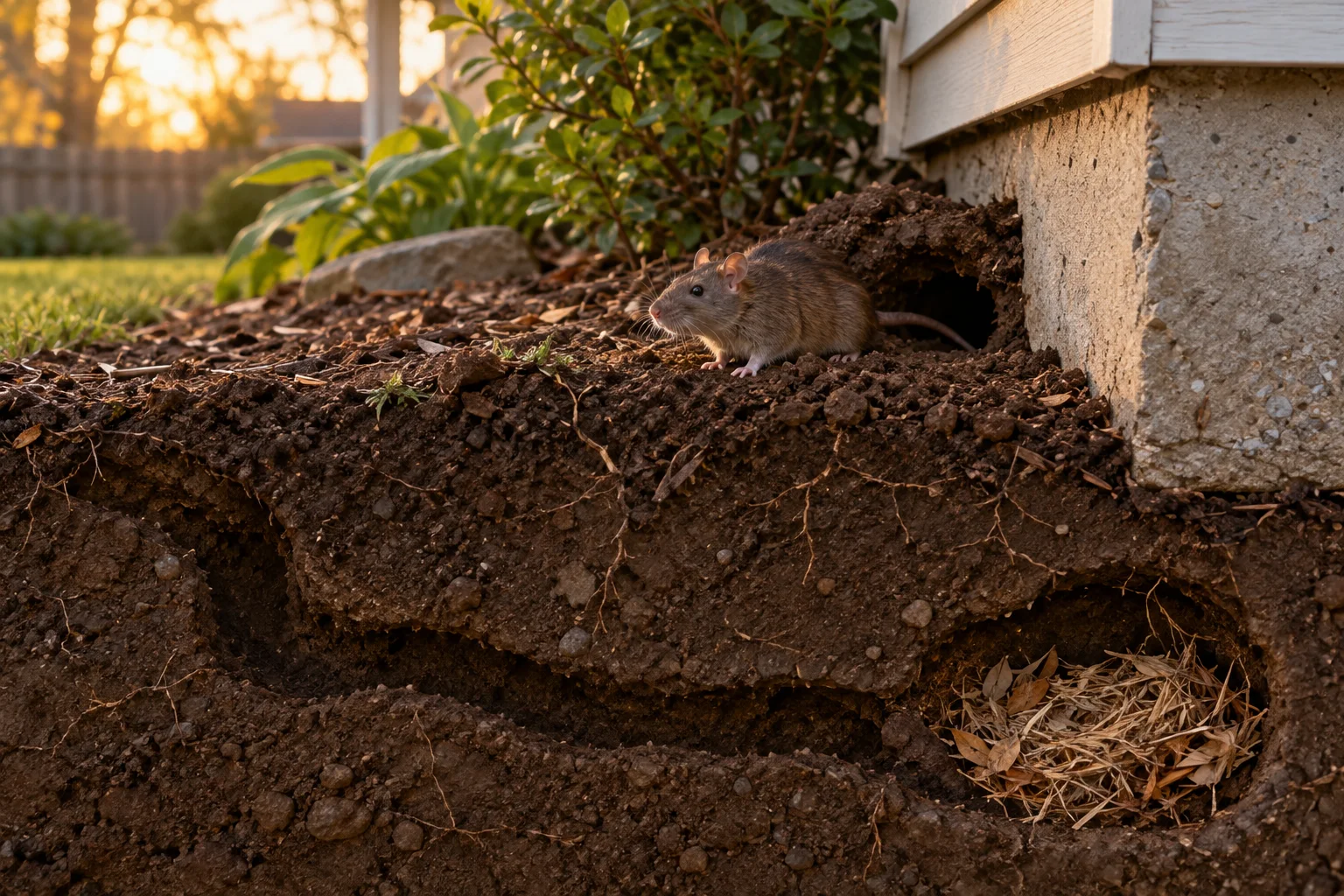
A hole in soil beside a foundation, under a slab, or near a deck deserves attention, but it is not automatically a rat burrow. Roots, settling, drainage, insects, and other animals can leave openings that look similar at first glance. Start by treating the hole as an observation point. Its location, surrounding soil, nearby cover, and connection to other signs will tell you much more than the opening alone.
Rats do use burrows around buildings. Public-health and wildlife guidance identifies foundation edges, slabs, dense vegetation, debris, gardens, and sheltered areas as places where burrows may be found. But a yard is not an anatomy diagram. Do not assume a particular tunnel depth, layout, or number of exits from a visible entrance. Soil type, landscape features, weather, and the animal involved all change what is underground.
Look for signs that the opening is active
An active entrance is usually clearer when you look at the ground around it instead of peering into it. Freshly moved soil, an opening free of leaves or cobwebs, smooth compacted travel paths, and repeated disturbance are useful clues. Look along walls, fence lines, beneath shrubs, beside garbage storage, and around utility penetrations. Rats often reuse travel routes, so evidence can appear between the suspected burrow and a food, water, or shelter source.
Check for a pattern of evidence: fresh droppings in protected spots, gnawing on bins or building materials, greasy rub marks at edges, tracks in suitable dusty areas, or new damage near gaps. One clue can be misleading; several clues in the same area are more persuasive. Use a flashlight, keep a respectful distance, and write down what you see. A date-stamped photo from the same viewpoint is especially helpful when you need to compare whether a hole is changing.
Confirm activity without damaging the area
A simple observation test can help when it is safe to do so. Lightly place loose leaves, dry soil, or a small amount of crumpled paper across the outer opening, then check from a distance over the next few days. If it is repeatedly cleared or reopened, that supports the conclusion that an animal is using the route. This is a monitoring aid, not an identification test and not a guarantee that rats are the species involved.
Do not insert your hand, a camera, smoke, water, poison, broken glass, or chemicals into a burrow. Besides the injury and contamination risks, forcing material into a hole can push an animal toward another route or damage a feature you have not identified. If the hole is beneath a slab, close to a foundation, near a utility line, or part of a sudden depression, avoid exploratory digging. The question may be broader than pest activity.
Inspect the building as well as the yard
A burrow beside a house matters most when it connects to conditions that let rodents reach food, shelter, or the building itself. Walk the exterior slowly and inspect the foundation-to-soil line, crawl-space vents, door bottoms, garage edges, pipe and cable openings, drain areas, and damaged screens. CDC specifically recommends checking around foundations, vents, and utility entries when looking for routes into a home. Do not focus only on the most visible hole.
Then look for conditions that make the location appealing. Open garbage, spilled birdseed, uncovered pet food, standing water, dense ground cover, and ground-level storage can all support ongoing activity. Move through the property in a logical loop: suspected entrance, likely travel path, food or water source, then possible building entry. This makes repairs more effective because you are responding to a system of access and resources, rather than trying to win a contest with one patch of soil.
Repair after you understand the route
Once you have assessed activity and likely access, repair the property in stages. Remove the conditions that draw rodents into the area, then address usable gaps in the structure with durable materials appropriate to the repair. CDC lists metal, hardware cloth, cement, and metal sheeting among materials used for larger rodent-entry repairs. A loose board, a cinder block, or a decorative rock placed over a hole is not a lasting closure; New York City Health specifically warns that covering a burrow entrance that way will not keep rats out.
For an earthen opening away from critical structures, collapse and level the area only after you have addressed the surrounding access and attraction conditions. Continue to inspect it for reopening. If rats keep reopening a filled hole, treat it as evidence that the underlying problem remains. If soil is washing out, the hole is close to a foundation or retaining wall, or you suspect a void under a slab, ask a qualified building, drainage, sewer, or pest professional to assess the situation before making a structural repair.
Consider a side-sewer issue when the pattern fits
A repeatedly reopened burrow on the side of a house or in a yard can sometimes point to a side-sewer problem. King County notes that recurring reopening may be a sign of rats in a sewer and describes professional dye testing for suspected breaks. That does not mean every burrow is connected to plumbing. It means a persistent opening near the house is worth investigating rather than endlessly refilling, especially if you also notice drainage trouble, odors, backups, leaks, or unusual settling.
A sewer inspection company or licensed contractor can evaluate the line and recommend a repair if a defect exists. Keep the description factual: where the opening is, how often it reappears, what surface evidence you have seen, and whether there are plumbing symptoms. This separates a possible infrastructure issue from a guess about animal behavior. It also helps you avoid spending effort on a yard-only repair when the route may lie below it.