
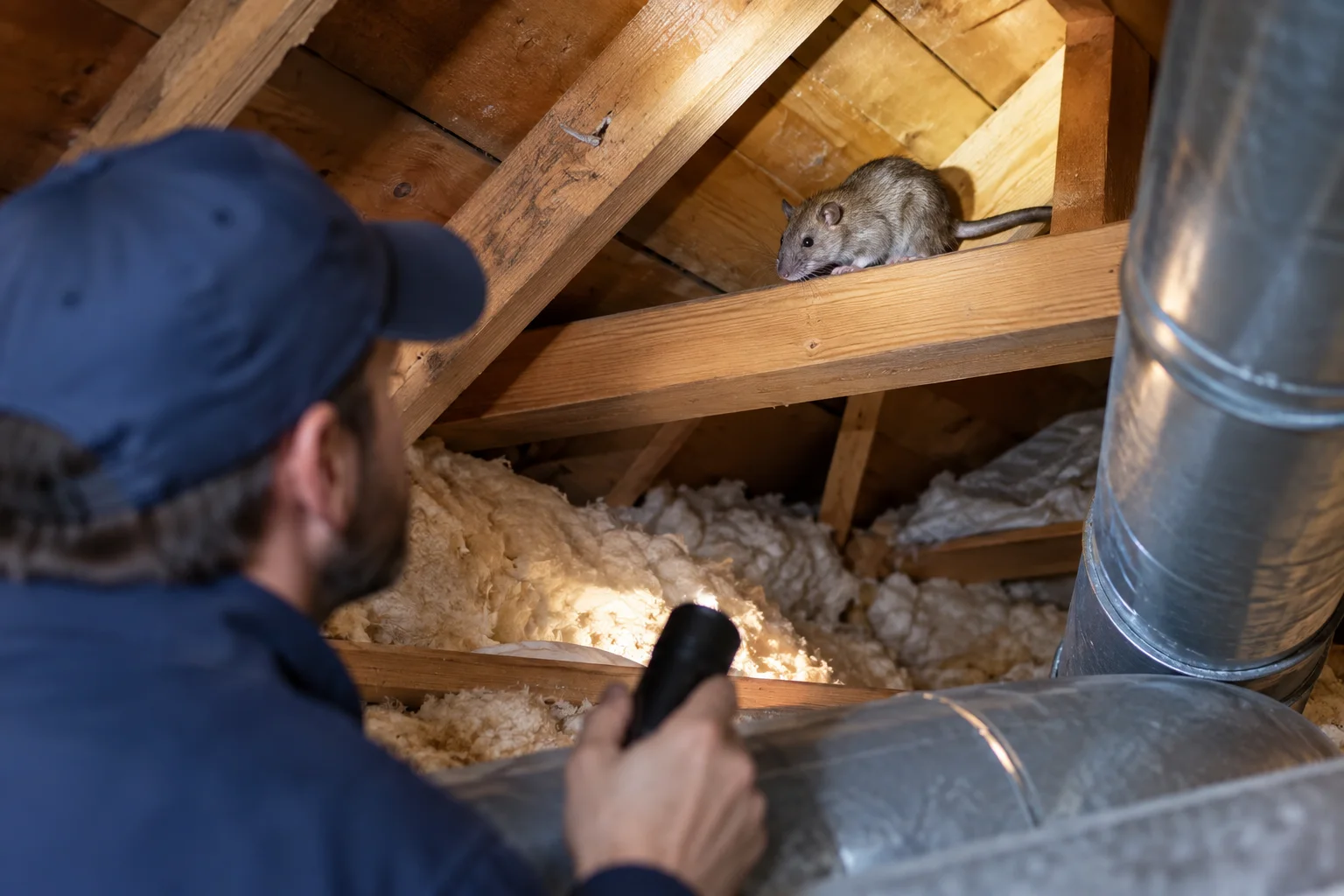
AI-generated illustration
A ceiling sound is a clue, not a location
Scratching, scurrying, or gnawing above a ceiling can be alarming, but sound travels through framing, ducts, and cavities. The noise may be heard away from the actual entry point or nest area. Begin by recording the room, time, weather, and type of sound rather than cutting an access hole where you hear it. This creates a pattern that can be compared with exterior signs and helps avoid unnecessary damage to finished ceilings.
Rats can use attic spaces, walls, false ceilings, and cabinets; UC IPM lists noise from attics or drop ceilings among signs worth investigating. Other animals and building systems can create similar sounds, so do not identify the species from noise alone. Look for supporting evidence such as droppings, gnaw marks, rub marks, nesting material, or an exterior gap. If the sound is near wiring, a light fixture, heating equipment, or a damaged ceiling, treat safety as the first priority.
Inspect the exterior route before the room
The path into a ceiling often begins outside. Walk the exterior and check roof vents, eaves, soffits, gable openings, chimney flashing, attic access points, damaged screens, roofline gaps, and places where cables or pipes enter. UC IPM emphasizes that roof-rat exclusion requires attention to upper-level openings, while CDC lists vents, roof areas, and utility penetrations among places to inspect. Look for vegetation, fences, pipes, or wires that connect cover to the roofline.
Document suspected defects from the ground with photographs. Do not climb a roof or use a ladder in poor conditions to chase a noise. A roofer, pest-exclusion professional, or other qualified person can inspect locations that cannot be reached safely. The goal is to find the physical route that allows entry, not merely the room where the animal was heard. Ceiling work without an exterior inspection often patches evidence while leaving the access path open.
Check attic access safely when available
If there is a safe, accessible attic, use it as an inspection point rather than a place to blindly set equipment. Look in good light for fresh droppings, disturbed insulation, gnawing, tracks on dusty surfaces, nesting material, damaged ductwork, and daylight showing through a gap. Do not dry sweep or vacuum droppings. CDC recommends wet cleanup methods for rodent waste because disturbing it dry can spread contaminated particles.
Avoid entering if the attic has unstable flooring, exposed wiring, extreme heat, damaged insulation, a strong odor, or more contamination than you can safely manage. Do not step between joists, and do not pull insulation aside around electrical connections. Take photographs from the access point if possible. An inspection should answer where signs are concentrated and whether there is a safe route for removal and repair, not create a new fall, electrical, or contamination hazard.
Do not seal animals into a cavity
A ceiling route may need repair, but timing matters. Closing the only apparent opening while activity continues can leave an animal in an inaccessible void or push it toward another room. A removal and exclusion plan should identify active routes, monitoring points, and the sequence for closing them. It should also account for multiple entry points. A single quiet night does not prove that the ceiling is empty, and a single patched vent does not prove it was the only route.
Use protected equipment only where it can be checked and where children, pets, and non-target wildlife cannot reach it. Do not drop loose bait, powders, repellents, or chemicals into a ceiling void. Such products do not repair the entry point and can leave a dead animal where it is difficult to remove. If activity is behind a finished ceiling, in ducts, or near wiring, a qualified professional can assess whether an access opening, controlled removal, or another method is appropriate.
Repair the opening and protect the feature
After removal activity is resolved, repair the actual exterior defects with materials that will resist rodent access and weather. Screens, flashing, fitted covers, and durable patches may be appropriate depending on the feature. Do not cover a chimney, appliance vent, plumbing vent, or attic ventilation opening without understanding its required function. The NPS Rodent Exclusion Manual recommends inspection of roofs, chimneys, and vents and notes that rodent-exclusion materials must be suited to the building feature.
Check the surrounding landscape as part of the repair. Remove vines that conceal access, reduce direct vegetation bridges to the structure, and move stored items that help an animal reach a wall or eave. A roofline repair is most durable when it removes the route leading to it as well as the gap itself. Keep a photograph of the finished repair and the material used so you can check for movement, corrosion, or damage during later maintenance.
Clean and verify the ceiling area
When contamination or nesting material is accessible, follow CDC cleanup guidance: wear appropriate gloves, wet the material with disinfectant, allow the product’s stated contact time, and remove it without dry sweeping or vacuuming. Contaminated exposed insulation may need bagging and removal. For ducts or other heating and cooling components, CDC advises contacting professionals experienced with rodent access to ventilation systems. Do not assume a ceiling cavity can be cleaned adequately by spraying something through a small hole.
Verify the result by watching for fresh evidence over time. Record any new sounds, but also recheck repaired roofline features, attic access points, and the exterior path. If noise returns, compare it with the earlier record before making a new opening in the ceiling. A successful fix removes the route, resolves accessible contamination, and leaves the ceiling dry, structurally sound, and free of new signs—not merely quieter for a night.