
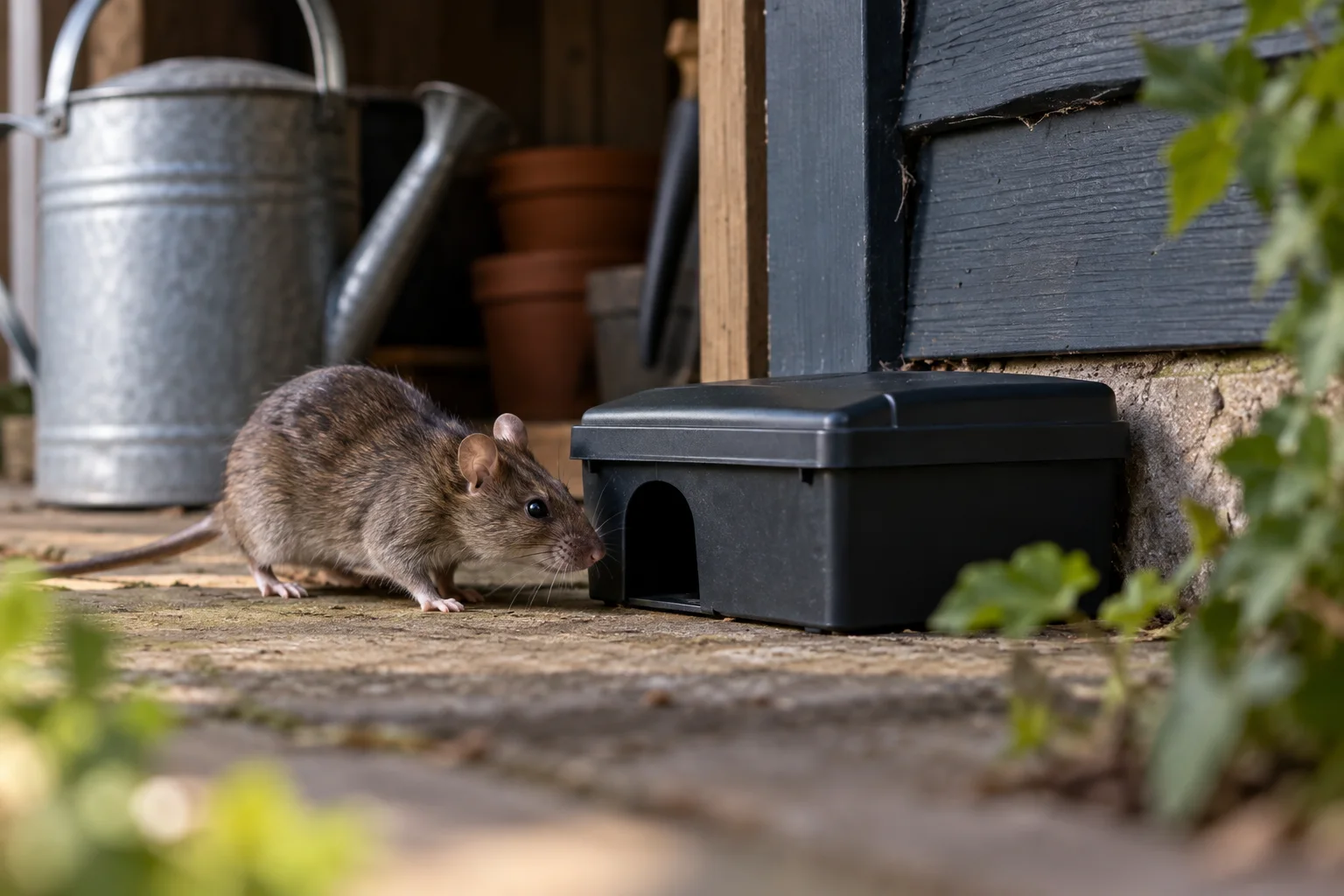
AI-generated illustration
Start with the problem, not the product
Rat poison is sometimes presented as the fastest answer to any scratching sound or dropped food package. It is not a first diagnostic tool. Begin by confirming current activity and looking for the entry route, food source, and protected travel areas. CDC recommends traditional snap traps for rodents around the home and says bait stations may be considered when an infestation persists. That sequence matters because a poison application will not repair a broken vent screen, close a garage-door gap, or remove fruit and pet food that keep drawing rats to the property.
A clear plan also reduces surprises. Ask whether the activity is inside a wall, attic, garage, or outdoor burrow; who could reach the area; and whether pets, children, or wildlife are present. A rat that eats bait may die in an inaccessible location, so indoor baiting can trade one problem for an odor and difficult removal. If the situation involves a high roofline, a shared building, an air duct, a crawl space, or repeated signs after exclusion, a pest professional can assess the route before any pesticide is selected.
Understand what consumer bait products are
A rodenticide is a pesticide, not a food additive or a homemade remedy. EPA says consumer rat and mouse poison products are ready-to-use bait stations with bait secured inside them. Consumer products use block or paste bait, and loose pellet bait is not permitted for residential consumers. The station is part of the product's safety design; do not remove the bait from it, refill it with a different product, or adapt it to a container that is not approved for that purpose.
The label governs where, how, and against which animals a product may be used. Read it before purchase and again at the placement site. It will identify the target rodent, placement restrictions, inspection schedule, personal-protection directions, storage, and disposal instructions. An EPA registration does not make a product harmless or suitable for every location. It means the product must still be used exactly as labeled. If the directions do not fit your house, pets, or site, choose a different method or ask a licensed professional.
Protect children, pets, and wildlife
Keep bait stations only where children and pets cannot access them, and never store pesticide beside human or pet food. EPA requires protective stations for consumer products because accidental contact is a real concern. Outdoor, above-ground placements can require tamper- and weather-resistant stations where children, pets, or wildlife could be present. Do not assume a station is safe simply because it has a lid; use the protection level and placement the label requires, and keep it intact throughout the effort.
Direct access is not the only risk. EPA notes that pets and wildlife can be poisoned after eating a rodent that consumed certain baits. Check stations and the surrounding area according to the label, and promptly remove carcasses you find using gloves and the safe cleanup process. Keep a simple placement log so a family member does not unknowingly move a station or miss one when cleaning up. If a person or animal may have ingested bait, contact the relevant poison-control, veterinary, or emergency resource immediately and keep the product label available.
Place only where evidence supports it
Do not broadcast bait, pour it into a hole, or leave it loose on shelves, rafters, or ground. Identify likely rat activity from fresh droppings, gnawing, protected runways, or a documented burrow, then follow the product label's instructions for the appropriate site. In a home, a station should be accessible for inspection but protected from normal household traffic. In a yard, it should never become an unattended object beside a bird feeder, compost pile, or pet area.
Before placing any bait outdoors, reduce access to the building. UC IPM specifically advises minimizing entry points before baiting outside so poisoned rats are less likely to come indoors and die there. Clean garbage containers, secure feed, remove fallen fruit, and thin cover near the building at the same time. Those steps give you a way to measure improvement. If bait seems to be taken but new indoor signs continue, do not keep adding stations. Reinspect the structure and consult a professional.
Monitor, end the treatment, and repair
A bait station is not a set-and-forget appliance. Follow the label's inspection and replacement directions, record any consumption, and keep the station locked or otherwise secured as directed. Watch for fresh signs in the same places you found them before treatment. CDC recommends a week without captures or new signs as a useful indication that a rat problem has ended; with bait, evidence and monitoring are especially important because a missing rat is not proof that the route is closed.
When the label's treatment period is complete and activity has stopped, remove unused bait as directed and store or dispose of the product according to the label and local requirements. Then complete the durable work: seal gaps around vents, doors, pipes, cables, and roofline features without blocking systems that need airflow or drainage. A rat-control program ends with fewer access points and less available food, not with permanent pesticide sitting around a property. If the source is unclear, get an inspection before repeating the treatment.
When poison is a poor fit
Poison is a poor fit when it cannot be secured, when a rat may die in an inaccessible indoor void, when non-target exposure cannot be controlled, or when the actual issue is a building defect. It is also a poor substitute for identifying whether the animal is a rat, a mouse, squirrel, or another species. A correct snap trap may be more manageable for confirmed indoor rats because it can be checked daily, provides a known result, and lets you remove the carcass promptly.
Choose professional help for a large infestation, recurring activity, a commercial or multi-unit setting, or any job involving roof access, electrical damage, or ventilation systems. Ask the professional what evidence led to the bait decision, how the bait will be secured, how dead rodents will be collected, and what exclusion repairs are planned. Good answers connect every product to a specific route and a follow-up inspection. A container of bait without that plan is simply another risk to manage.