
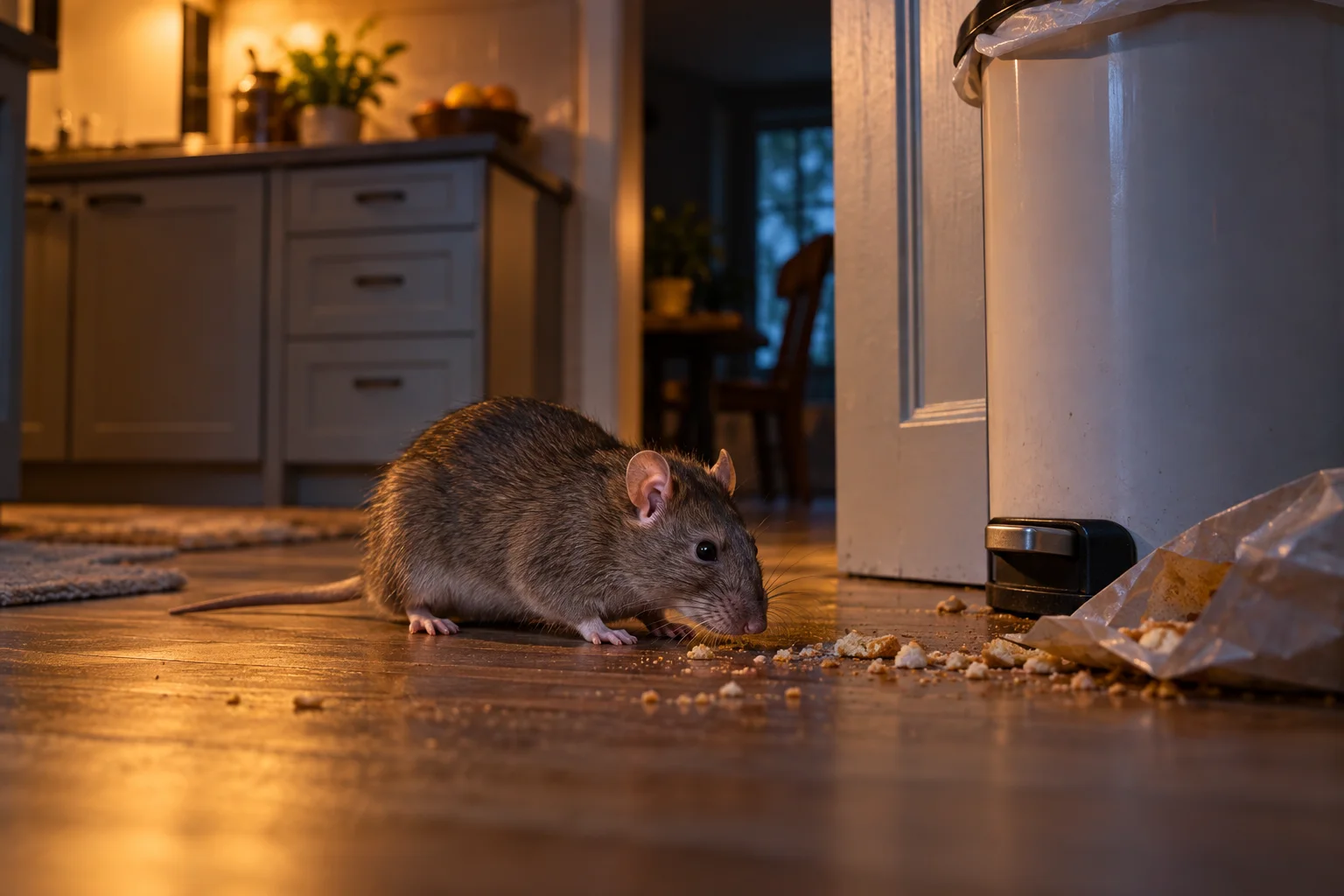
AI-generated illustration
Start with exposure, not a frightening label
The phrase “rat disease” can make any attic sound or pellet of waste feel like a medical emergency. It is more useful to separate three questions: was there a rat or another animal, what contact actually occurred, and is anyone ill? A sighting by itself does not diagnose an infection. Nor can a homeowner decide that an animal carried a particular germ by its size, coat color, or behavior. CDC notes that rodents carrying the bacteria that cause rat-bite fever may look healthy. That is a reason to avoid handling wild rodents, not a reason to assume sickness after every encounter. Write down the relevant facts instead: a bite or scratch, direct contact with urine or saliva, food that may have been contaminated, cleanup of waste, or contact with water or soil after flooding. Those details give a clinician or public-health professional something useful to assess. They also keep the home response proportional: correct the route, remove the waste safely, and seek care when an exposure and symptoms warrant it.
A reliable health plan does not require naming every organism associated with rats. It requires interrupting the routes that matter. Keep rats out of food storage and living spaces, wash hands after outdoor or cleanup work, avoid bare-handed contact with animals and their remains, and handle confirmed rodent waste with the wet-cleaning method. If an illness follows a meaningful rodent exposure, tell the healthcare provider when and where the exposure occurred. That information is more valuable than a web search diagnosis. If someone has a weakened immune system, is pregnant, or has another condition that affects infection risk, it is reasonable to ask their own clinician how to approach an exposure promptly. The goal is informed attention, not fear of every small mark or unexplained cold.
Understand the main pathways
A bite or scratch creates a direct route for germs and deserves prompt attention. CDC says rat-bite fever can follow bites, scratches, or contact with rodent saliva or urine, and recommends medical care immediately if compatible symptoms develop after rodent contact. Clean a bite or scratch gently with soap and running water, apply basic first aid, and contact a healthcare professional for individualized advice. Urgent care is especially important for severe bleeding, a deep wound, loss of feeling or movement, a bite on the face or hand, rapidly spreading redness or swelling, fever, or a person who feels seriously unwell. A clinician can assess the wound and immunization history; this article cannot diagnose infection or prescribe treatment.
Waste and contaminated materials are a different route. Rodent urine, droppings, nests, and dead rodents should be treated as material to remove carefully, not as visual proof of a particular disease. CDC advises against dry sweeping or vacuuming this material because it can disturb contaminated particles. In a normal household cleanup, gloves, a suitable disinfectant, wetting the material thoroughly, allowing the stated contact time, and wiping it up limit disturbance. Food with signs of rodent contamination should not be eaten. Floodwater deserves separate caution because CDC notes that urine from infected animals can contaminate water and soil after heavy rain or flooding. Avoid contact with floodwater when possible and protect cuts if exposure cannot be avoided.
What symptoms should trigger medical advice
Symptoms do not identify their own cause. Fever, vomiting, headache, muscle aches, rash, diarrhea, cough, and fatigue occur in many ordinary illnesses as well as in infections that may follow animal exposure. The useful combination is symptoms plus a concrete exposure. CDC describes rat-bite fever as rare in the United States, but says it can become severe and that symptoms after rodent contact deserve prompt medical evaluation. Its North American symptom description includes fever, vomiting, headache, muscle pain, and sometimes rash or painful joints; symptoms can begin after a wound has healed. That is why it helps to mention a recent bite, scratch, pet-rodent contact, or contaminated setting when seeking care.
Do not wait for an internet image to match a rash, and do not self-treat based on a presumed rat disease. Seek urgent medical help for trouble breathing, confusion, fainting, severe weakness, signs of a serious allergic reaction, uncontrolled bleeding, or a rapidly worsening wound. Contact a healthcare professional promptly for fever or worsening illness after a known rodent bite, scratch, or meaningful contamination exposure. For a questionable old dropping with no illness or direct contact, the appropriate next step is usually safe cleanup and prevention rather than emergency testing. A local or state health department can also help when an exposure is unusual, widespread, or connected to flood conditions.
Clean confirmed rodent contamination safely
Before cleaning a home or outbuilding with ordinary rodent contamination, open doors and windows to air it out, then wear rubber or plastic gloves. CDC says to use a household disinfectant labeled as a disinfectant or a properly prepared bleach solution, wet droppings and urine until thoroughly soaked, wait five minutes or the product label’s contact time, and pick the material up with paper towels. Dispose of the towels in a covered garbage container, disinfect hard surfaces, and wash hands after taking off gloves. Do not use a broom, ordinary vacuum, leaf blower, or high-pressure spray on dry droppings or nesting material. The point is to capture contamination rather than loft it into the air.
A dead rodent or nest needs the same deliberate approach. Spray it and the surrounding area, allow the disinfectant to work, bag it, place that bag inside a second bag, and dispose of it in a covered trash container as local rules allow. Contaminated cardboard is often best discarded; hard containers can be cleaned and disinfected. CDC has additional precautions for heavy infestations, long-vacant buildings, and areas with confirmed rodent-borne disease, including appropriate protective equipment. If insulation, an inaccessible cavity, or a ventilation system is contaminated, get professional help instead of pulling dusty material through the home. CDC specifically advises contacting a rodent-control and duct-cleaning professional when rodents have accessed heating or cooling ducts.
Protect people, pets, and food without overreacting
Prevention reduces health risk because it reduces contact. Store pantry foods, pet food, birdseed, and garbage in intact containers with tight-fitting lids. Clean spilled food, remove outdoor pet food after meals, pick up fallen fruit where it accumulates, and reduce dense cover or clutter beside the building. Inspect door bottoms, vent screens, utility penetrations, crawl-space access, and roofline openings. A repair should preserve the function of a drain, dryer vent, appliance exhaust, or other building system; use the relevant trade professional when that function is unclear. Keep children and pets away from active cleanup and from any control equipment.
Avoid casually handling a rat, even if it appears weak or dead. A wildlife or pest professional can identify a safe removal option when needed. If a pet has mouthed a rodent, eaten unknown material near rodent activity, or shows illness after contact, call a veterinarian and describe the event rather than relying on a home remedy. Do not use a rat sighting as a reason to take antibiotics, use pesticides indoors without a plan, or test everyone in a household. Sensible prevention is less dramatic: reduce access, clean safely, and make exposure information available to a qualified professional if illness occurs.
Use records to make the next decision easier
Take a photo of droppings or damage before cleanup if it may help identify the activity, then record the location, date, direct contact, cleanup method, and repairs. This is not a medical diary for every household member. It is a practical record that can show whether activity is new, continuing, or confined to an old storage area. A week with no fresh signs after trapping and exclusion is more meaningful than simply noticing an old stain. If an animal was found in a duct, wall, food-storage area, or water-damaged space, record that too so the right professional can inspect the relevant system.
The measured approach protects against both extremes. Ignoring a bite, severe symptoms, or widespread contamination is unwise. Treating every outdoor rat as evidence of an immediate household outbreak is also unhelpful. Exposure-specific first aid, a clinician’s assessment when needed, careful cleanup, and durable exclusion give a homeowner control over the part that can be controlled. The medical question belongs with a healthcare professional who knows the exposure and symptoms; the property question belongs with a thorough inspection that removes the rat’s food, shelter, and entry route.