
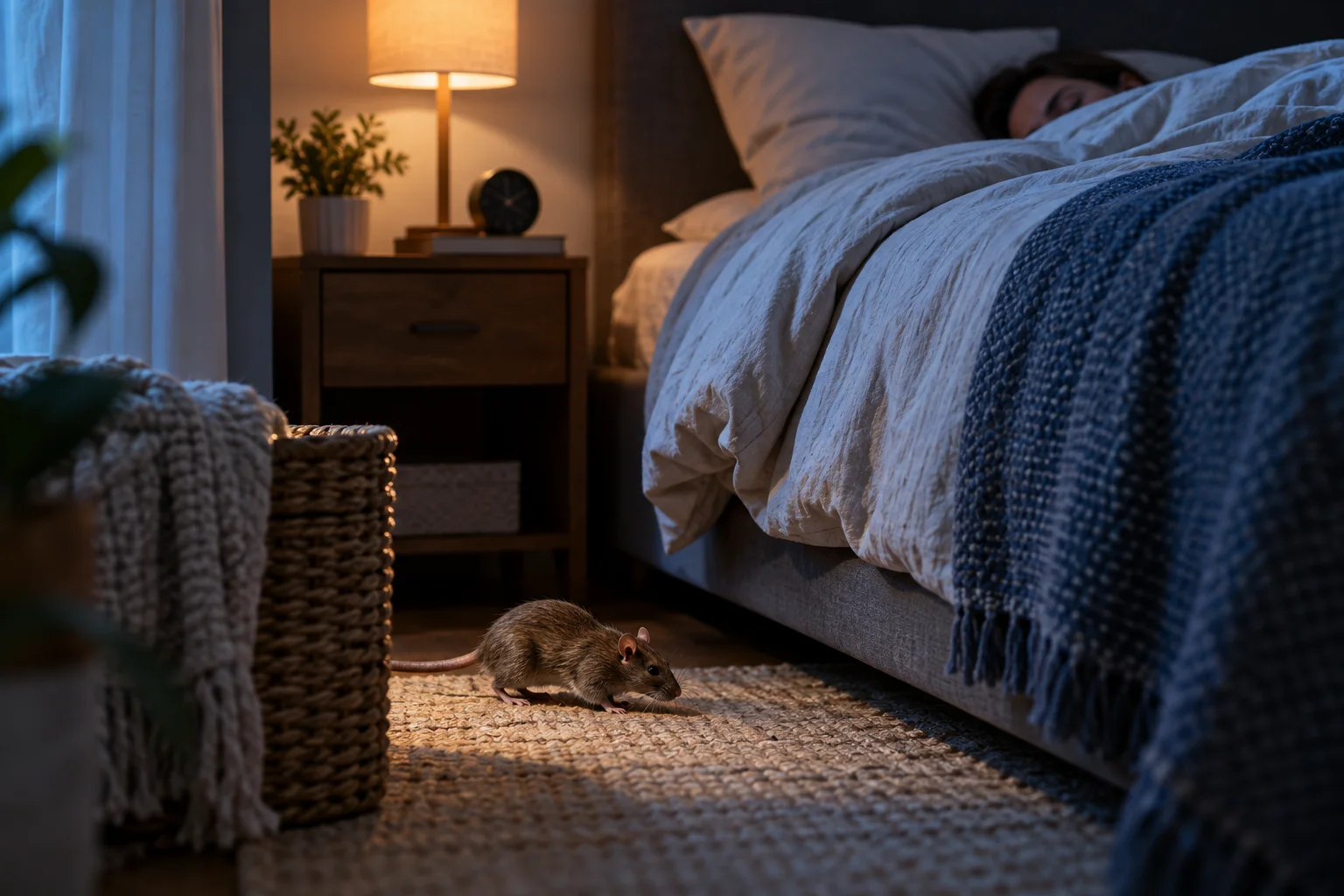
AI-generated illustration
A bedroom rat needs action, not a prediction
No homeowner can calculate a personal chance of a rat bite during sleep from one sighting, a sound in the wall, or an old dropping. Rats do not provide a predictable schedule, and a room’s risk depends on whether there is current access, food, cover, and an animal actually using the space. A rat in a bedroom should still be taken seriously because direct contact is possible and the situation means the home has an access route to repair. The answer is to reduce contact tonight and inspect the route promptly, not to stay awake searching for a statistic that does not apply to the room.
If a rat has been seen in the sleeping area, move children and pets out, remove food, drinks, and pet bowls, and reduce bags or floor clutter that give it cover. Do not sleep on the floor in a room with suspected activity. If the room cannot be made calm and safe, use another sleeping space for the night and arrange inspection. Do not try to catch the animal bare-handed or turn a pet loose to chase it. A frightened rat, a frightened pet, and a dark room are a poor combination.
Make an overnight plan that limits contact
Close the bedroom door only if doing so does not trap the rat in the occupied room or block someone’s safe exit. Keep the room simple: food stored away, laundry off the floor, shoes and bags raised or removed, and the bed area clear of clutter. If there is a visible gap around a pipe, closet, wall, or floor, photograph it but do not stuff it shut while you believe an animal may be using the route. A sudden closure can redirect the animal into another cavity. The priority overnight is separation, not a permanent repair in the dark.
Avoid spraying repellents, using mothballs, scattering poison, or placing an unprotected trap where someone may step on it. These tactics can expose people while doing nothing to identify the route. If you know the animal is in the room and it cannot leave safely, contact a pest or wildlife professional for advice. If it was only heard in a wall or ceiling, wait for daylight evidence before opening construction. Building noise, duct movement, and plumbing can mimic animal sounds, so fresh signs are important.
If a bite or scratch may have occurred
A new puncture, scratch, or unexplained wound after a rodent encounter should be treated as an injury, not investigated by watching the animal. Gently wash the area with soap and running water, apply basic first aid, and contact a healthcare professional promptly for individualized advice. A clinician can consider the wound location, depth, immunization history, and the person’s medical circumstances. Seek urgent care for severe bleeding, a deep or gaping wound, loss of feeling or movement, an injury to the face or eye, trouble breathing, rapidly worsening redness or swelling, fever, or a person who feels seriously unwell.
CDC says rat-bite fever can spread through bites and scratches and through contact with rodent saliva or urine. It says the disease is rare in the United States but advises people who develop compatible symptoms after rodent contact to seek medical care immediately. Do not decide a rat was safe because it appeared healthy; CDC notes that rodents carrying the bacteria can show no signs of illness. Do not self-prescribe medication. Tell the clinician that a possible rodent contact occurred, when it happened, and whether there was a known bite, scratch, or contact with contamination.
Find the route and evidence in daylight
The next day, inspect carefully rather than pulling apart a bedroom. Look behind furniture, inside closets, along baseboards, near radiators or pipes, and under beds for fresh droppings, gnawing, shredded material, or rub marks. Then inspect the exterior of the wall and the route above or below the room: foundation gaps, door bottoms, window screens, vents, utility penetrations, roofline features, attic access, and garage or crawl-space connections. Take photos and make a simple map of the evidence. This is more useful than assuming the entry is directly behind the bed.
Do not sweep or vacuum rodent droppings dry. CDC advises wearing gloves, wetting the material thoroughly with disinfectant, waiting five minutes or the label’s stated contact time, wiping it up with paper towels, and disinfecting hard surfaces afterward. If there is a nest, a dead rodent, heavy contamination, or evidence in a duct or inaccessible wall space, use professional help. The cleanup should follow removal and should not create more dust in a sleeping area.
Use a protected, monitored removal plan
For confirmed indoor rat activity, CDC recommends traditional rat-sized snap traps. Place them only where evidence shows a protected travel route and where children and pets cannot reach them. CDC suggests putting the baited end close to the wall so the trap forms a T with the wall and pre-baiting an unset trap if rats are avoiding the new object. A bedroom is not a place for a loose trap in the middle of the floor. A protected location that can be checked daily, or professional placement in an inaccessible route, is safer.
CDC advises against glue and live traps because a frightened rodent can urinate. Do not use loose poison or improvised chemical repellents in a bedroom. If pesticide is proposed for a persistent infestation, it should be an EPA-registered product used exactly as labeled in a setting where access by people, pets, and wildlife can be controlled. In many bedroom cases, the more direct solution is monitored removal plus repair of the entry route, not a pesticide that may leave a dead animal in a wall.
Repair the access and restore the room
When removal has ended and there are no fresh signs, repair the documented opening with materials suited to the feature. Door sweeps, sound vent screens, fitted metal barriers, flashing, or proper utility-penetration repair may be needed. Soft fillers alone may not withstand chewing. Do not block a functioning dryer vent, plumbing vent, appliance exhaust, drain, or electrical feature just because it seems like an opening. Use a qualified trade professional where the system’s purpose is uncertain.
Continue to monitor the original location for a week without new evidence or captures. Launder bedding or clothing that may have been contaminated according to CDC guidance, and keep food out of sleeping spaces. The result should be more than a quiet night: a room without accessible food or hiding places, a known entry route repaired, and a removal plan that did not create new risks. That practical outcome reduces the chance of another encounter far better than trying to predict what a rat might do while someone sleeps.