
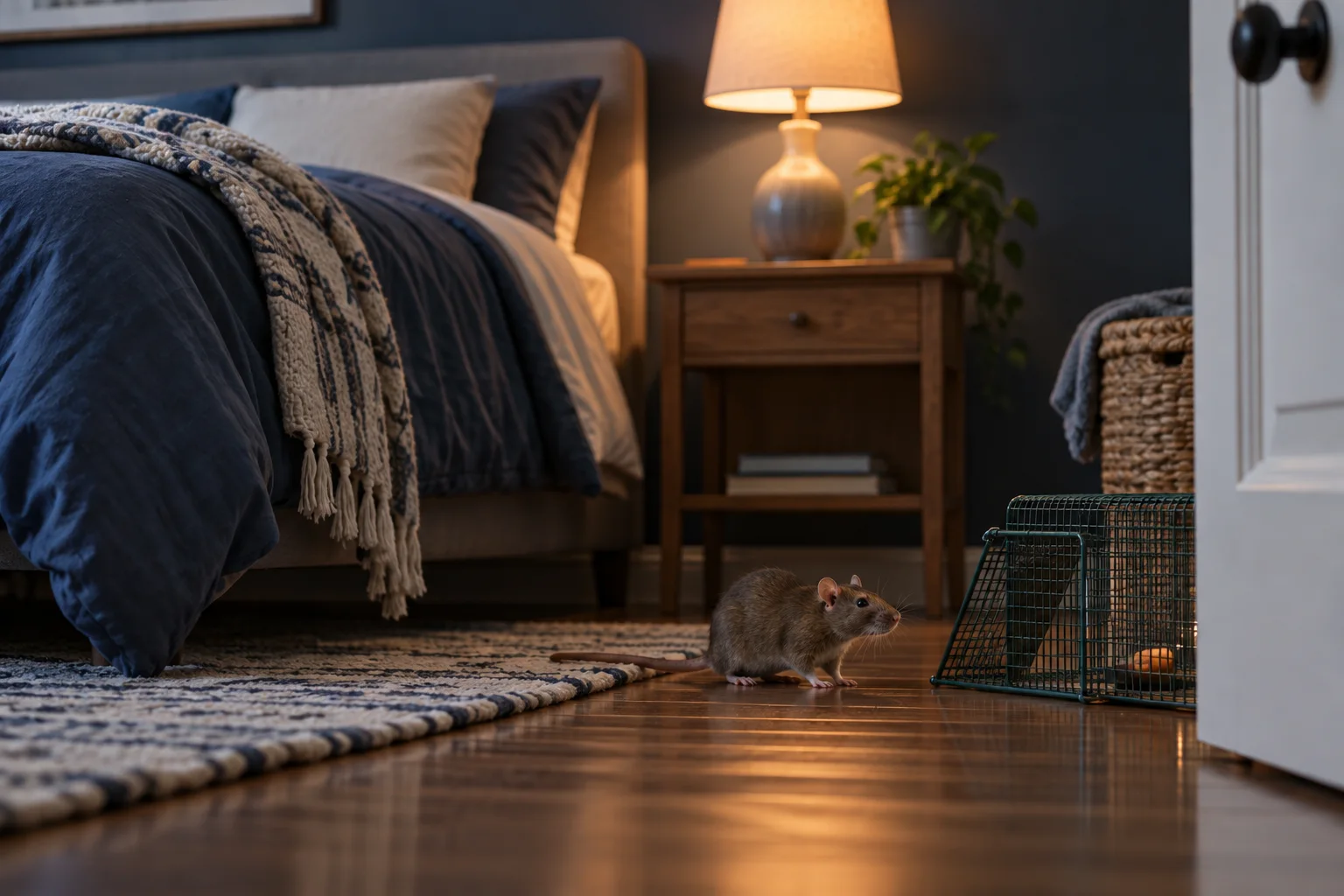
AI-generated illustration
Keep the first response calm and contained
A rat in a bedroom feels urgent because it is close to where people sleep, but rushing around can drive it into a wall, closet, or another part of the house. Keep children and pets out of the room, close the room door if you can do so without cornering yourself or the animal, and give yourself a clear route out. Do not try to catch a rat with bare hands, a towel, or a household container. Bites, contamination, and a frightened animal in a confined room are avoidable risks.
If you can see the animal, observe from a safe distance and note where it entered, where it hides, and whether it travels along a wall, behind furniture, or near a closet. Do not spray it with chemicals, set off smoke, or chase it into a ventilation opening. Those actions make the room less safe without identifying the route. If a person has been bitten or has a health concern after exposure, seek medical guidance promptly and explain the rodent contact.
Make the room less inviting overnight
Remove food, drink, pet bowls, and open snack packages from the room. Put laundry, bags, and floor clutter into bins or move them out so there are fewer hiding places and you can see the base of the walls. Avoid moving a bed or heavy furniture abruptly if you believe the rat is behind it; instead, leave a clear protected perimeter that can be inspected. Check closets, under furniture, and along radiators or pipes from a safe position.
Do not sleep on the floor in a room with suspected activity, and do not rely on a pet to control the situation. A pet may be bitten, may spread the rat through the house, or may encounter a trap. If you cannot make the room safe and calm enough to use, use another room for the night and arrange a prompt inspection. The goal is not to turn one bedroom into a sealed trap. It is to reduce contact while you create a responsible removal plan.
Locate the route before setting equipment
A bedroom rat may have entered through a shared wall, an attic or ceiling void, a closet penetration, a damaged screen, or a ground-level opening elsewhere in the home. Look for fresh droppings, gnaw marks, rub marks, shredded material, or a gap around pipes and cables. Inspect the outside of the corresponding wall in daylight, including foundation gaps, vents, utility penetrations, nearby vegetation, and roofline features if the bedroom is upstairs. Record the evidence instead of cutting into drywall based on sound alone.
CDC recommends checking inside and outside to find how rodents got in before trapping those that remain. If a route is obvious but active, do not close it blindly while a rat may still be inside. A professional can help coordinate removal and exclusion when the animal is using a wall or ceiling void. An open hole in the exterior and a rat under a bed may look like separate issues, but they are usually part of the same travel path.
Use a protected, monitored removal plan
For confirmed indoor rats, CDC recommends traditional rat-sized snap traps. Set traps only where there is evidence of travel and where children and pets cannot reach them. In a bedroom, that may mean a protected station along a wall behind furniture that can be checked daily, rather than a trap in the middle of the room. CDC recommends positioning the baited end next to the wall so the trap makes a T with the wall. Read the trap instructions before setting it.
Rats may avoid a new trap at first. CDC recommends pre-baiting an unset trap until the bait is taken, then setting it. Do not use glue or live traps; CDC advises against both because trapped rodents can become frightened and urinate. Do not put loose poison, repellent chemicals, or mothballs in a bedroom. Those methods can expose the people who use the room while leaving the actual entry gap and nearby food source uncorrected.
Clean only after the activity is controlled
If you find droppings, do not sweep or vacuum them dry. CDC recommends wearing gloves, wetting the waste thoroughly with disinfectant, letting it soak for five minutes or the label's stated contact time, then wiping it up with paper towels. Clean hard surfaces with disinfectant afterward and wash hands after removing gloves. Launder bedding or clothing that may have been contaminated in hot water with detergent, then dry it on a high setting or in the sun as CDC advises.
A dead rodent or nest should also be sprayed and soaked before being handled. Put it and any used trap into a sealed plastic bag, then a second sealed bag, before disposal in a covered trash container. If there is widespread waste, a strong odor, or contamination in a wall or duct, do not try to carry the material through a bedroom yourself. Arrange professional cleanup and repair so the room is returned to normal without creating airborne dust or opening unnecessary sections of wall.
Close the route and restore confidence
After there are no new signs or captures, repair the entry route with a durable material suited to the feature. Check exterior doors, window screens, utility gaps, vents, roofline areas, and the shared wall or attic path. Do not block functional vents or plumbing features without professional input. Use the repair as a chance to inspect nearby parts of the home, since one worn screen or door sweep may have companions.
For the next week, inspect the room and the original route for fresh evidence. CDC uses a week without captures or new signs as a useful indication that rats are gone. Keep food out of bedrooms and reduce clutter that hides a new problem. If you hear repeated activity, find fresh droppings, or cannot identify the route, call a pest professional. A bedroom should become quiet because the rat's path has been removed, not because the evidence was pushed out of sight.