
AI-generated illustration
Make the room safer first
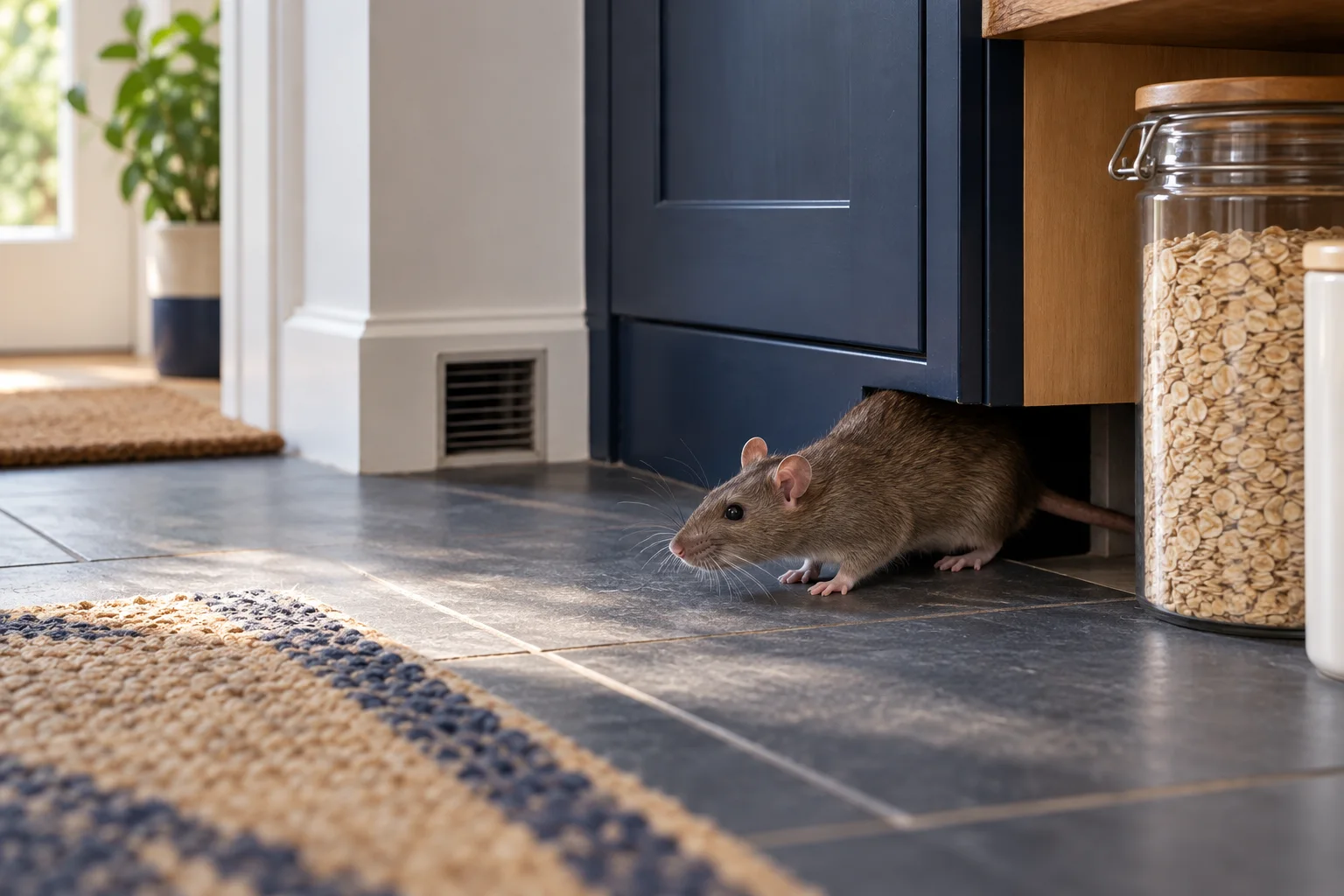
A rat in a kitchen, bedroom, living room, or hallway is unsettling, but rushing toward it can drive it behind appliances or into a wall cavity. Keep children and pets out of the immediate area. Leave yourself a clear exit and do not try to catch the animal with bare hands, a towel, or a storage container. Avoid spraying chemicals or chasing it toward a vent or open doorway.
If the rat is visible, watch from a safe distance long enough to note where it travels and hides. That observation can identify a wall edge, cabinet gap, appliance space, closet, or utility route. A brief note about location and time is more useful later than a memory of a frantic chase. If the animal is trapped in an unsafe or inaccessible area, contact a qualified professional.
Remove food and hiding opportunities
Put away open food, pet bowls, dishes, trash, and food packaging in the affected room. Clear floor clutter carefully so there are fewer hiding places, but do not move heavy furniture abruptly if you think the rat is behind it. A bedroom needs special attention because food, laundry, bags, and floor-level storage can create cover. Use another room for the night if the space cannot be made calm and safe.
Do not sleep on the floor where rat activity is suspected, and do not expect a cat or dog to solve the situation. A pet may be bitten, may drive the rat into a hidden void, or may encounter a trap. Separation lets the homeowner make a plan based on evidence rather than handing the encounter to another animal.
Inspect routes inside and outside
Look for fresh droppings, gnawing, shredded material, rub marks, food damage, or gaps around pipes, cabinets, doors, and nearby vents. Then inspect the exterior related to that room. Check foundation features, door sweeps, garage and crawl-space connections, utility penetrations, roofline screens, vegetation, and stored materials. CDC recommends finding how rodents got inside before trapping those that remain.
Do not assume the rat entered directly behind the room where it was seen. An animal can travel through a garage, crawl space, attic, wall, or ceiling before reaching a kitchen or bedroom. Photograph evidence rather than cutting drywall based only on a noise. If the route involves wiring, a duct, plumbing, or unsafe roof access, use the relevant professional.
Use protected removal only where it can be checked
For confirmed indoor rats, CDC recommends traditional rat-sized snap traps. Place them in protected locations along evidence-supported travel routes and keep them inaccessible to children and pets. CDC advises setting the baited end close to a wall so the trap forms a T with the wall. Rats may avoid a new object, so pre-baiting an unset trap can show whether a route is active before it is set.
Do not use glue traps or live traps; CDC advises against them because frightened rodents can urinate. Do not place loose poison in rooms where people sleep, eat, or handle food. If a route cannot be accessed and checked daily, or if the household cannot keep pets and children away, use professional placement and monitoring rather than leaving equipment where it becomes another hazard.
Clean evidence without spreading it
Do not sweep or vacuum droppings, urine, or nesting material dry. CDC says dry disturbance can put contaminated particles into the air. For limited accessible waste, wear gloves, wet the material thoroughly with disinfectant, allow five minutes or the label contact time, and wipe it up with paper towels. Disinfect hard surfaces, wash gloved hands before removing gloves, and then wash bare hands.
A dead rodent or nest should be wetted with disinfectant, bagged, placed in a second bag, and disposed of in a covered garbage container as local rules allow. If a room has substantial waste, contaminated insulation, a strong odor, duct involvement, or an inaccessible carcass, arrange professional cleanup. Do not carry exposed contaminated material through occupied rooms.
Repair the route at the right time
Do not close a confirmed entry point while a rat may still be inside. Removal comes first, followed by a durable repair. UC IPM cautions that rats can chew through foam, plastic, wood, and caulk, so a repair may need a fitted metal barrier, sound screen, flashing, a door adjustment, or a proper utility-penetration repair.
The repair must preserve the function of building systems. Do not block a drain, appliance vent, chimney, plumbing vent, or electrical access without knowing its purpose. A rat route can intersect work for a roofer, HVAC technician, plumber, electrician, or door contractor. The right repair is the one that closes animal access while leaving the system safe and serviceable.
Restore confidence through evidence
Keep the affected area simple and inspectable while monitoring continues. Food should stay out of bedrooms and living spaces, and storage should leave the base of walls visible. CDC uses a week without captures or fresh signs as a useful indication that rats are gone. Compare later observations with the photos and notes from the initial sighting.
If new signs appear, revisit the route and food source instead of assuming the trap failed. An indoor rat sighting is a building-access problem with a practical sequence: create distance, document evidence, remove safely, clean without dust, and repair access. That produces a quieter home without relying on panic or improvised methods.