
AI-generated illustration
Start with the claim, not the package
A rat repellent claim can sound broader than it is. It may mean an odor temporarily makes an exposed spot less appealing, a device emits sound, or a substance is intended to repel a pest under particular label conditions. None of those statements means an established rat population will leave a house, stop using nearby food, or remain excluded after the product is gone. The useful question is specific: what location, what behavior, and for how long does the product claim to change?
UC IPM reports that rats may initially avoid some odors and tastes, but no repellent has been found to solve a rat problem for more than a very short time. That is consistent with rats weighing a novel annoyance against food, shelter, and a familiar travel route. A spray might make one corner unpleasant for a while, yet do nothing about an open pipe chase, fruit under a tree, or food in an unsecured bin. Judge a product by whether it removes a route or resource, not by whether it has a dramatic smell.
Understand scent-based products
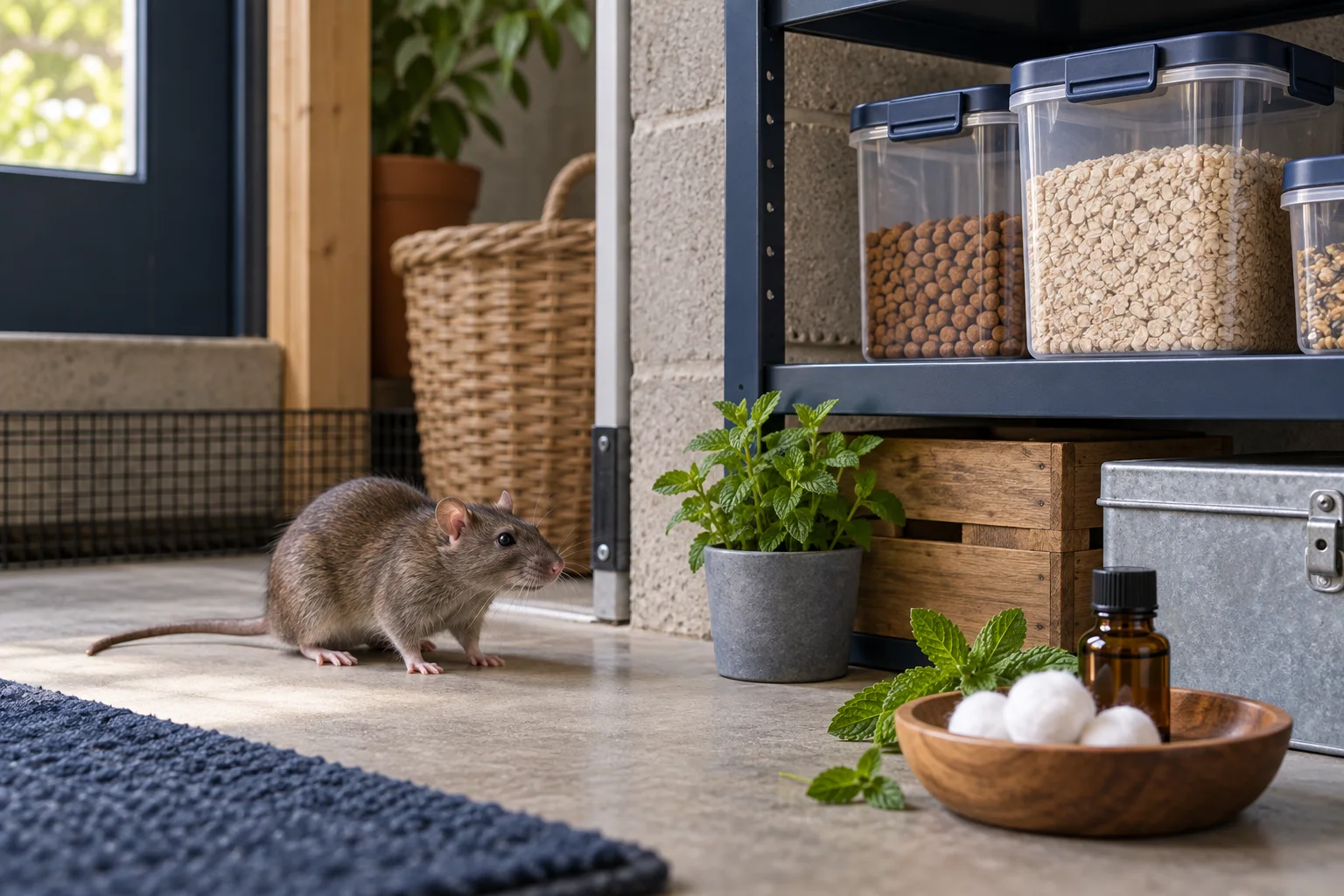
Peppermint, predator-odor, ammonia-like, and other strongly scented products are often sold as a simple answer. Strong odor is not the same as lasting avoidance. Air movement can dilute it, porous materials can absorb it, and the product may be impractical near food, pets, or occupied rooms. Adding more is not a solution when the label does not authorize it. A concentrated scent can also make it harder for residents to notice a plumbing problem, spoiled food, or the actual location of rodent activity.
If a labeled product is being considered, read the whole label before purchase: target pest, indoor or outdoor use, approved surfaces, reapplication directions, precautions, and storage. A label is a legal set of directions, not a recipe to expand. Do not spread household chemicals, essential oils, moth products, or unknown mixtures into wall cavities. If the intended use is to force rats from an enclosed home, scent is particularly poor evidence that every animal has left or that a hidden route has been sealed.
Why ultrasonic and electronic promises need scrutiny
Ultrasonic rodent products are devices rather than conventional pesticide products when they work by electrical or electromagnetic means and are not sold with a pesticidal substance. EPA identifies ultrasonic pest repellers as devices and explains that pesticides receive a premarket registration review while devices are regulated differently. A device listing or establishment number is therefore not a finding that the device will solve a rat problem in a particular home.
The physical setting also works against a room-wide promise. Sound is blocked, reflected, and weakened by furniture, walls, stored goods, and the spaces behind them. UC IPM says rats soon become accustomed to repeated sounds and finds frightening devices, including high-frequency and ultrasonic sounds, ineffective for rat control in homes and gardens. A light, vibration, or sound might alter behavior briefly when it is novel. It does not close the opening that lets rats return after the novelty fades.
Do not confuse repelling with removal
Repelling describes an attempt to discourage a pest from one place; removal addresses animals already using a site; exclusion stops new entry. Those are separate jobs. A homeowner who sprays an attic entrance may accidentally shift activity farther into the building if the animal has another route. A homeowner who runs a device in a kitchen may still have a food source and a gap under a door. The result can feel like a product failure because the goal was never well matched to the tool.
Use evidence to choose the job. Fresh droppings at a pantry wall suggest an active travel path. Gnawed produce under a fruit tree suggests an outdoor food source. A gap around a utility line needs durable repair suited to that location. Once access and food are dealt with, traps placed where rats travel can address remaining activity. That sequence is less glamorous than a repellent purchase, but it gives you observations that can show whether the problem is actually declining.
Evaluate safety and advertising language
Avoid products or methods that produce smoke, gas, or fumes near a residence. UC IPM specifically warns that burrow smoke or gas cartridges are not recommended around homes because burrows can extend under residences and gases can enter a dwelling; it also notes the fire risk. Never use vehicle or lawn-equipment exhaust as a control method. A product that seems powerful because it has a harsh odor can create a human and pet exposure problem without controlling the rat route.
Be skeptical of phrases such as permanent barrier, guaranteed whole-house coverage, or pest-free without inspection. Look for a clear target pest, limitations, and care directions. For pesticide products, use only the labeled application and keep them away from children and pets. For electronic products, do not let a marketing reference to EPA regulation become a claim of EPA-tested effectiveness. EPA’s consumer guide distinguishes these categories precisely because the regulatory path and meaning of a number on a package are different.
Build an answer that has something to measure
A short-term deterrent can be a minor convenience while a repair is arranged, but it should not be the evidence that the repair worked. Photograph or note the original signs, then check the same locations after sanitation, exclusion, and control work. Look for new droppings, fresh gnawing, disturbed food, or renewed use of a runway. These are more meaningful observations than whether a room still smells minty or whether a device light is on.
If activity continues in a concealed building area, identify the route and obtain an inspection suited to the structure. The decision is not between buying a repellent and doing nothing. It is between a temporary sensory disturbance and a plan that reduces food, shelter, access, and the animals already inside. Put the money toward the part of that plan the evidence shows is missing.