
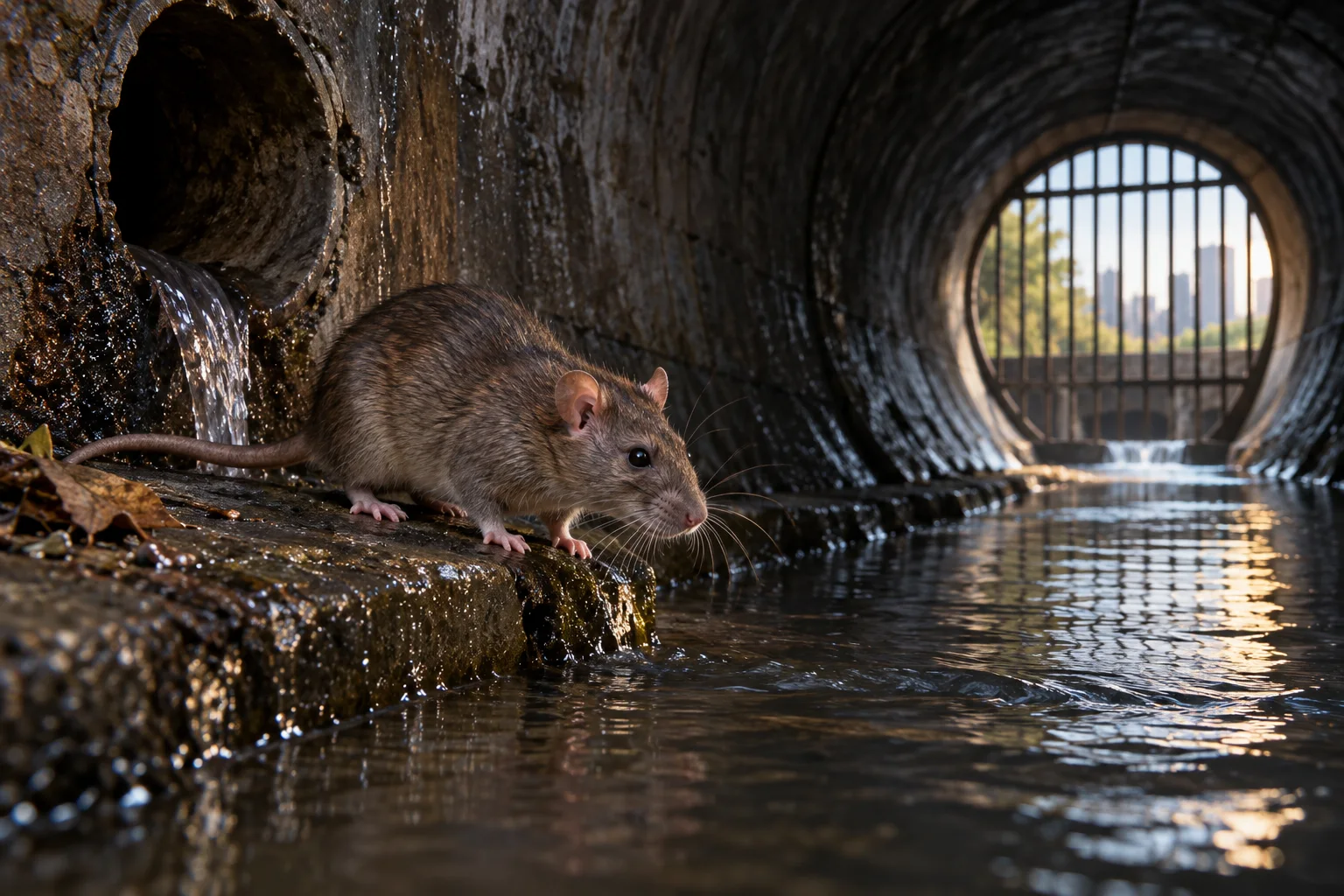
AI-generated illustration
Sewer stories need a plumbing reality check
Rats can use drainage and sewer systems, and a damaged connection can create a route between a yard and a building. That does not mean a rat found near a bathroom came through the toilet, or that every sewer odor indicates rodents. Drain odors, slow fixtures, gurgling, and backups have many plumbing causes. Start with the actual evidence: rodent signs near a drain, a known damaged line, an exterior cleanout, a yard burrow near a service line, or a camera inspection that shows a defect.
UC IPM notes that rats can enter buildings through broken drains and, in some circumstances, travel through sewers and toilets. The important word is can. A homeowner should avoid turning that possibility into an automatic diagnosis. Treat unexplained drain performance as a plumbing question first, and treat droppings, gnawing, rub marks, or sightings as a rodent question that may overlap with it. The overlap is where an informed inspection matters.
Know the route categories around a house
A private sewer lateral is the pipe connecting a building to the public sewer or septic system. Its ownership and maintenance responsibility vary by jurisdiction and property arrangement. Cracks, separated joints, missing cleanout caps, broken vents, damaged traps, or abandoned connections can each create different problems. Some admit roots, water, or soil; some permit odor; some may offer animal access. A drain line hidden under a slab cannot be evaluated by looking at a sink alone.
Exterior access is often simpler to inspect. Look for a missing or loose cleanout cap, damaged screens where they are appropriate, openings around pipes, and burrows near utility routes. Do not open a sewer cleanout casually or put hands into it. A plumber or drain professional can determine whether a camera inspection, repair, or code-compliant cover is appropriate. If an opening is found, address it as both a plumbing defect and a potential pest route.
Separate fixture maintenance from rodent control
Functional water seals in plumbing traps help block sewer gas and are part of normal fixture maintenance. A seldom-used floor drain or sink can lose its water seal through evaporation, which can cause odor without any rat present. Follow the fixture manufacturer’s and local plumbing guidance for maintaining unused drains; do not pour pesticides, bleach mixtures, or improvised repellents into a drain to solve either odor or a suspected animal problem.
A recurring backup, broken fixture, sewage leak, or strong persistent sewer odor calls for timely plumbing assessment. These conditions can damage the home and create sanitation concerns independent of rats. If there are also rodent signs, report both sets of facts: which fixture behaves oddly and where evidence appears. That allows the inspection to test a plausible route instead of treating a rat-control product as a substitute for pipe repair.
What an inspection can establish
A proper evaluation may involve tracing signs from indoors to the exterior, inspecting accessible pipe penetrations, and using drain equipment where warranted. A camera can show some defects within a line, but it does not prove that every defect has been used by a rat. Likewise, a rat in a yard does not prove the sewer is the source. Ask the inspector to identify observed conditions, the evidence connecting them to activity, and the repair that would close the route.
This is especially useful where repairs compete for priority. An open gap beside a pipe may be an immediate building-envelope fix. A damaged buried line may require a different specialist and permit process. A professional conclusion should distinguish what was seen from what is inferred. That gives the homeowner a basis to coordinate pest control with plumbing work and to avoid sealing a route in a way that traps an animal inside the structure.
Avoid hazardous shortcuts
Never use fire, explosive devices, fuel exhaust, or fumigant-like methods in a drain, sewer, burrow, or pipe chase. These can introduce toxic gases, create fire or explosion hazards, damage plumbing, and endanger neighbors. UC IPM warns that smoke and gas cartridges are not recommended for rat control around homes because burrows can extend under a residence and gases can permeate the dwelling. A sewer system is not a safe place for a homeowner to improvise a control method.
Do not assume that flushing chemicals will solve a route problem. They may be unsafe for people, pets, septic systems, pipes, or wastewater treatment, and they do not repair a broken line. If a rat is visibly trapped in a fixture or pipe opening, keep people and pets back and seek appropriate local or professional help rather than attempting to handle the animal. The goal is a durable repair with normal plumbing function intact.
Coordinate repair with verification
Once a real access defect is repaired, check the nearby evidence points: the cleanout area, pipe penetrations, cabinets, crawlspace, and exterior burrows or runways. Secure food and garbage and address any other entry points because rats may use more than one route. New droppings after a plumbing repair may mean there is another building opening; a repaired line does not automatically explain every sign in an attic or pantry.
The useful conclusion is modest. Sewers and damaged drains are possible parts of a rat pathway, especially where evidence and plumbing defects line up. They are not a universal explanation for rats in a house. Start with observed signs, use qualified inspection for hidden plumbing, repair actual defects, and verify results with fresh evidence rather than a single dramatic theory.