
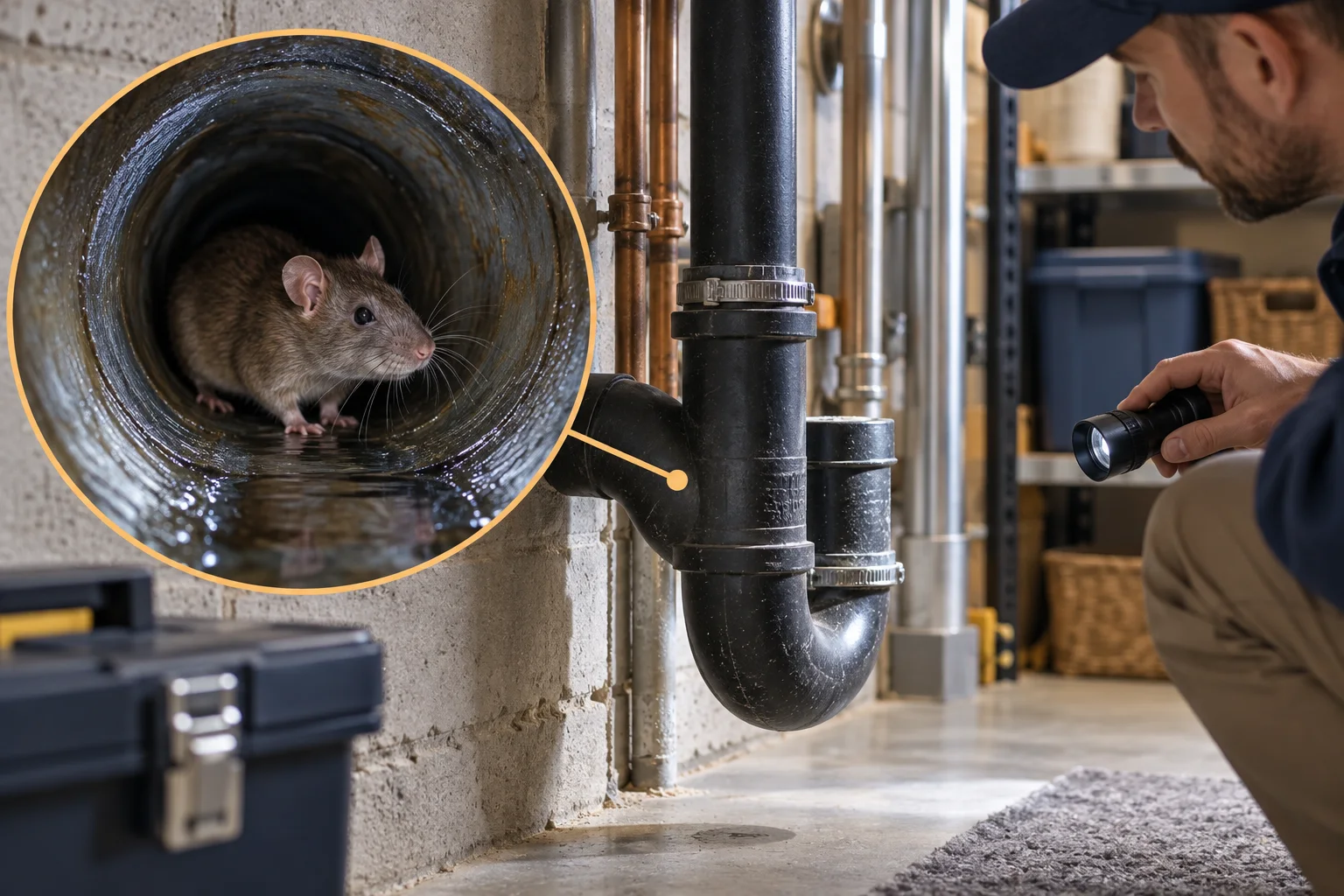
AI-generated illustration
Plumbing can mean several different routes
“Through plumbing” can describe a rat in a sewer, a rat near an exterior drain, a gap around a pipe where it enters a wall, or the rare report of a rodent in a toilet. Those are not the same problem. A pipe penetration through a wall may be an ordinary building-envelope opening. A damaged sewer lateral is an infrastructure issue. A rat seen near a sink or bathtub may simply have entered a wall void beside plumbing rather than traveled through the fixture itself.
Start with the evidence. Record the room, fixture, drainage symptoms, odors, weather conditions, and any actual sighting. Look for gaps around visible pipes, utility chases, crawl-space penetrations, and exterior service entries. Do not pour chemicals into drains, dismantle a toilet, or seal a plumbing feature as a rat-control experiment. The repair must preserve drainage, venting, and safe access for service.
A toilet sighting is unusual, not a universal explanation
A rodent can use parts of a sanitary sewer system under some conditions, and defects in a sewer or drain system may create pathways. That does not mean rats routinely rise through every household sink or toilet, or that a single encounter proves a failed sewer line. A rat in a toilet is a reason to keep people and pets away, document the event, and seek appropriate removal help. It is also a reason to consider plumbing assessment if there are repeat events, backups, sewer odors, or known damage.
Do not reach into a fixture, attempt to flush an animal, or use an improvised chemical response. A pest professional can handle an animal in the living space. A licensed plumber, sewer-inspection provider, or local utility may be the right resource for suspected infrastructure defects. Each needs a clear description of what was observed. Replacing a toilet seal or closing a pipe chase without evidence can miss the route and create a plumbing leak.
Pipe gaps are the common inspection target
The more ordinary route is beside plumbing. Pipes and drain lines often pass through walls, floors, foundations, crawl spaces, and cabinets. A poorly sealed or damaged penetration can connect a utility area with a void large enough for rodent travel. CDC advises looking for gaps and holes in and around a home as part of rodent prevention. Inspect the pipe’s exterior and interior transitions, not just the fixture at the end of it.
Photograph a visible gap before repair and identify what the pipe does. A durable repair may involve a fitted metal barrier, sound flashing, suitable screening, or a proper penetration seal. Soft filler by itself may not last where rats can chew. Do not cover a cleanout, shutoff, drain, vent, or access point that must remain serviceable. If water, gas, electrical, or HVAC systems share the chase, use the relevant trade professional.
Inspect the whole route from ground to roof
A plumbing question can distract from more likely pathways. Check door sweeps, garage edges, crawl-space panels, vents, roofline screens, utility cables, exterior vegetation, and stored material near the foundation. Roof rats can use elevated routes, while Norway rats are often associated with ground-level areas and burrows, but either can find a defect. The best inspection follows the connection from shelter and food to an actual opening.
Secure garbage, pet food, birdseed, compost, and fallen fruit so a repaired building is less rewarding. Do not assume water itself is the attraction. A rat near a drain or pond may be using nearby cover or food rather than the water route. Clear leaves and clutter around exterior drainage while preserving drainage function. If a buried pipe, catch basin, or municipal system appears damaged, do not excavate blindly; call the responsible utility or professional.
Remove and clean without damaging plumbing
For confirmed indoor rat activity, CDC recommends traditional rat-sized snap traps in protected, accessible locations where they can be checked daily. Do not put traps inside plumbing, near a fixture where they can get wet, or behind an access panel that cannot be checked. Do not use glue or live traps; CDC advises against them. If a route is inside a wall or an active drain system, professional placement and inspection are safer than forcing equipment into the opening.
Clean accessible rodent waste with the CDC wet method: wear gloves, wet the material with suitable disinfectant, allow the stated contact time, and wipe it up. Avoid dry sweeping or vacuuming. If contamination is in ducts, insulation, or inaccessible pipe chases, use a professional. A plumber can restore a system’s function, but rodent cleanup and exclusion may require coordinated work so no contaminated material or active route is sealed inside.
Choose the right follow-up from the facts
Call a plumber or sewer professional for recurring backups, sewer odors, drainage failures, a confirmed defect, or repeated plumbing-related sightings. Call a pest or exclusion professional for an active animal, droppings, gnawing, or a building-entry route. Call both when a rodent route intersects a compromised system. This division avoids expecting one trade to diagnose every issue from a single unusual event.
The successful end state is simple: plumbing drains and vents properly, penetrations are protected without blocking service, food and cover are reduced, and no fresh rodent evidence appears. The question is not whether rats can ever use plumbing. It is which route the evidence supports at this building, and how to repair it without creating a more expensive systems problem.