
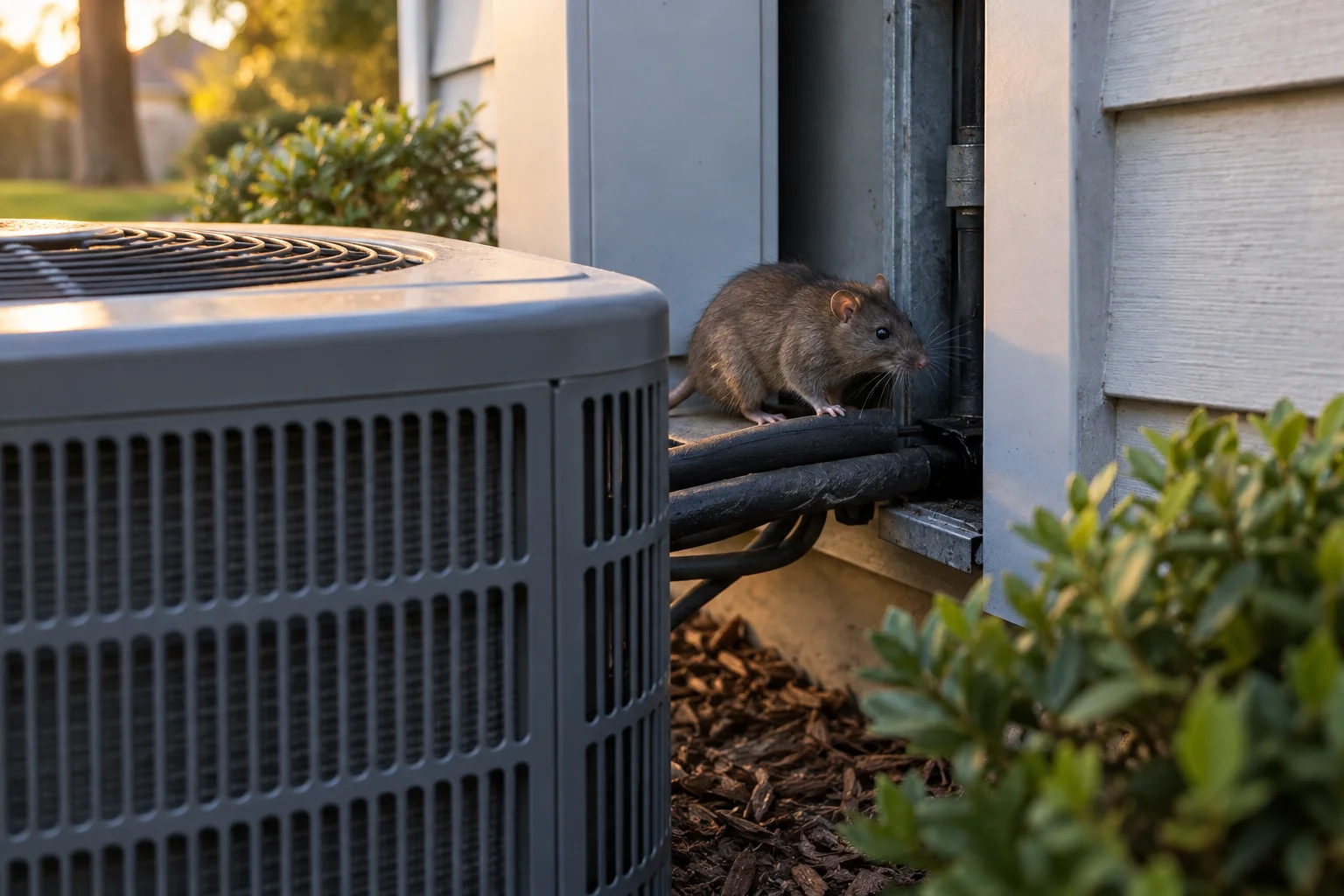
AI-generated illustration
Separate the equipment from the route around it
An outdoor condenser, refrigerant line, drain connection, wall penetration, and indoor ductwork are different parts of an air-conditioning system. A rat may travel near one without being inside another. Treating every scratch near an air conditioner as proof of an animal in the ducts can lead to unnecessary opening of walls or damage to equipment. Begin by locating the evidence: is it outside around the condenser pad, in the gap where insulated lines enter the wall, behind an indoor air handler, at a floor or ceiling register, or in a duct? Fresh droppings, nesting material, gnawing, odor, or actual footage of an animal are more useful than noise alone. Note the location and photograph it before cleaning.
The line chase is often the important term. It is the protected route around lines, wiring, or drains from the outdoor unit into the building. If its exterior cover, seal, or wall opening is damaged, it can create a small animal pathway into a wall void. That does not mean the repair is a job for expanding foam alone. Refrigerant lines, condensate drainage, electrical connections, and the building envelope all have to keep working. Use an HVAC technician, qualified building-repair professional, or rodent-exclusion specialist if the route is unclear or the fix could affect equipment operation.
Inspect safely before turning anything apart
Turn the concern into an inspection rather than a chase. In daylight, look around the outdoor unit and the pipe route for disturbed insulation, chew marks, droppings, openings in the line-set cover, loose siding, or vegetation that lets an animal approach unseen. Look at the ground, pad edge, and nearby wall rather than reaching behind the unit. Indoors, look for evidence around the air handler, return plenum, accessible mechanical closet, and registers. Do not insert hands into a dark chase, remove electrical covers, or pull insulation from a sealed wall cavity. A rat can bite when cornered, and HVAC equipment can expose a homeowner to electrical or mechanical hazards.
Noise needs context. Cycling, expansion, duct movement, drain sounds, and a loose panel can all make intermittent noises. Animal activity is more plausible when noise occurs with fresh droppings, nesting material, odor, gnawed material, or an exterior opening. A technician can identify equipment noises while an exclusion professional can assess signs and access routes. Ask each to document what was found. That is more reliable than assuming every service call must solve both a mechanical problem and an animal problem.
Do not treat a duct as ordinary storage space
If there is evidence that rodents accessed heating or cooling ventilation systems, CDC recommends contacting a professional rodent exterminating service and a company familiar with duct-cleaning risks. This is a sensible boundary: ducts can be hard to inspect, may contain contaminated nesting material, and connect to airflow people breathe. Do not tape a register closed as a permanent remedy, spray fragrance into a vent, or run a household vacuum hose into ductwork. Those approaches can miss the source and spread material through the system. A professional assessment can determine whether the evidence is in accessible ductwork, in the return path, or only in a nearby wall cavity.
The cleanup method also matters. CDC advises against vacuuming or sweeping rodent urine, droppings, or nesting material dry. Accessible waste should be wetted thoroughly with an appropriate disinfectant, allowed to sit for the product’s stated contact time, then wiped up with disposable material while wearing gloves. Heavy contamination, insulation, and HVAC access are cases for a specialist. Keep the system’s maintenance needs separate from cleanup claims: a filter change may be appropriate after confirmed contamination, but a homeowner should use the equipment manufacturer’s guidance or an HVAC professional rather than inventing a replacement schedule.
Repair the opening without blocking the system
Once removal and inspection show the animal is no longer using the route, repair the entry point with materials suited to its job. Soft foam, plastic, wood, and caulk alone are poor long-term barriers where rats can chew or where weather and vibration work on the seal. A durable repair may involve a fitted metal barrier, a proper line-set cover, sound flashing, suitable screening, or a correctly sealed utility penetration. The exact choice depends on whether the gap is outside the chase, between siding and masonry, or around a penetration through a wall.
Do not block a condensate drain, cover an electrical disconnect, enclose the condenser so it cannot breathe, or seal a required ventilation opening. Air conditioners need service access and clearance according to the manufacturer and local code. A good repair keeps water draining where it should, protects wiring and lines, and restores the weather barrier while making the animal route inaccessible. If you cannot explain what a hole does, pause and have the relevant trade inspect it. Closing a rat route should never create a water, electrical, or equipment failure.
Remove nearby rewards and travel cover
Equipment repair alone will not help much if the location remains a quiet food and shelter area. Clear leaves, stored pots, loose bags, and dense vegetation that hide the wall or condenser pad. Keep garbage, pet food, birdseed, and fallen fruit away from the unit. Avoid piling mulch, firewood, or construction debris against the house. The aim is a visible strip where fresh tracks, droppings, or disturbed soil will be easy to see. Do not use mothballs, fragrance oils, or unapproved chemicals around HVAC equipment. They do not repair the opening and may create another indoor-air or material problem.
If active rats are confirmed, use a controlled plan that fits the setting. CDC recommends traditional snap traps for rats and advises checking for routes inside and outside before trapping. Place any equipment only where it can be protected from children, pets, and wildlife and checked daily. Do not leave loose bait or a trap on an outdoor condenser pad. If pesticide is considered for a persistent problem, the product label, protected placement, non-target risk, and carcass retrieval all require careful planning. Exclusion and sanitation remain the durable answer.
Verify operation and the absence of new signs
After repair, have the air conditioner tested if work involved its cover, electrical service area, condensate line, refrigerant line cover, or indoor cabinet. The test should confirm that the equipment operates normally and drainage has not been obstructed. Then monitor the original evidence area for fresh droppings, gnawing, nests, or renewed noise. Compare with the dated photos taken before work. A quiet system without new animal signs is stronger evidence than an unverified patch hidden behind landscaping.
Call for help again if waste reappears in a duct or air handler, the opening is reopened, the system has an unusual odor or performance problem, or you cannot determine whether the route is a wall void or ventilation path. The finish line is clear: the AC equipment works, the line chase is weather-tight and protected, contamination is removed without dry disturbance, and the property no longer supplies a sheltered route toward the house. That is a better outcome than trying to turn an air conditioner into a DIY animal trap.