
AI-generated illustration
A crawl space needs a careful first look
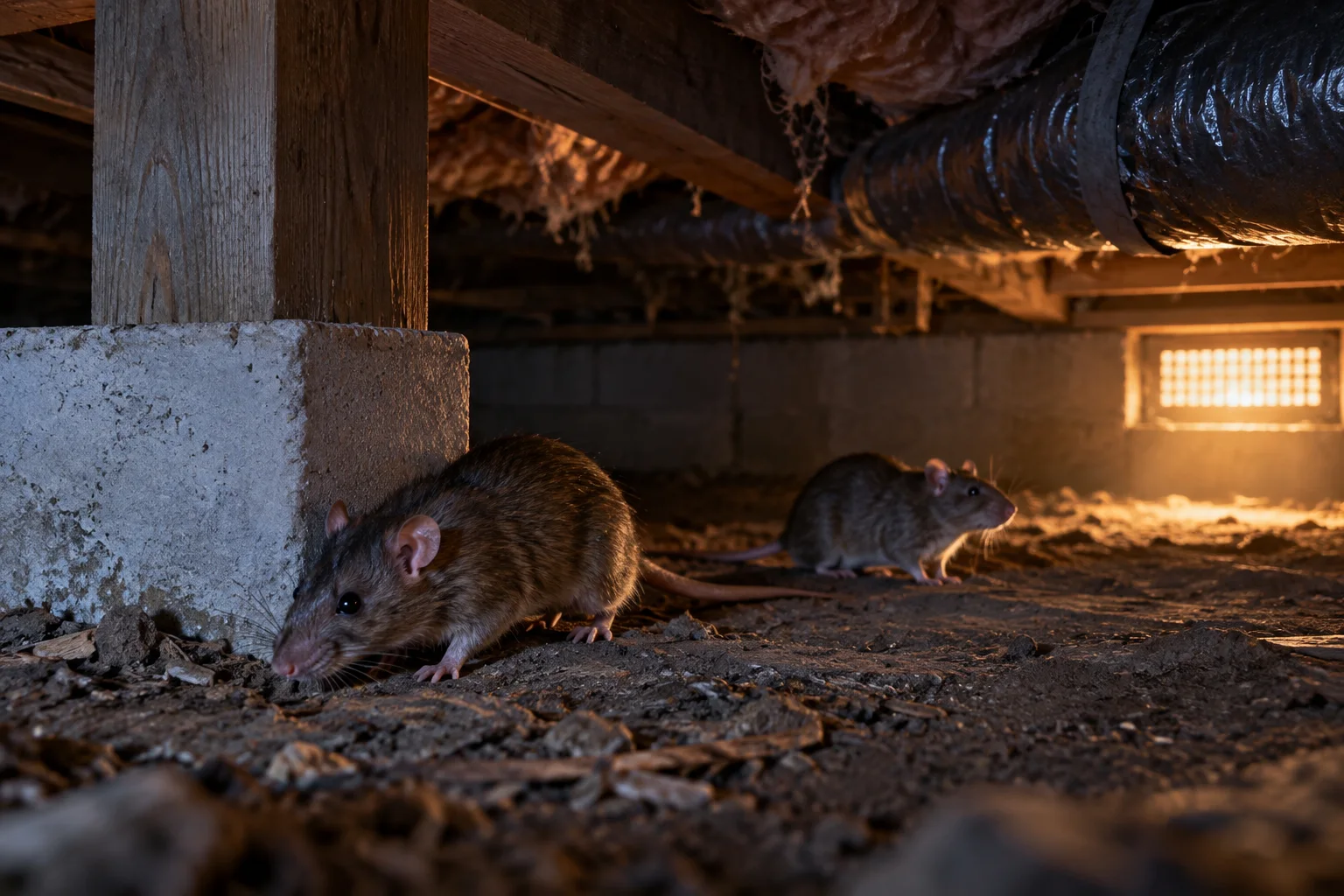
A crawl space is attractive to rodents because it is enclosed, protected, and often difficult to inspect. Before going inside, inspect from the exterior. Check the access door, foundation vents, gaps at service lines, broken screens, loose skirting, standing water, burrows near the foundation, and damaged insulation visible from the opening. Note odors, droppings, gnawing, or nesting material, but do not disturb them during the first look. The goal is to decide whether entry is safe and what type of help may be needed.
Do not enter a tight, flooded, unstable, poorly ventilated, electrically hazardous, or visibly contaminated crawl space just to confirm a suspicion. A sound under the floor is not proof that a rat is directly below it, and a hole near the foundation may have more than one cause. Photograph what you can see from a safe position. If the access is unsafe or the space contains extensive waste, damaged wiring, standing water, or a suspected structural issue, arrange an appropriate professional inspection.
Map the access route from outside inward
Start at the building envelope. CDC advises homeowners to inspect around foundations, crawl-space vents, doors, and openings for electrical, plumbing, cable, and gas lines. A crawl space can be reached through more than its access panel: a damaged vent screen, an unsealed pipe opening, loose lattice, broken foundation material, or a burrow under a shallow edge may be part of the route. Mark each suspected entry on a simple sketch or with photographs before repair.
Then look for what keeps rodents at the property. Food waste, pet food, fallen fruit, a compost source, dense cover, water leaks, and ground-level storage can support activity outside even after an entry is patched. This is why filling a single opening is often disappointing. A crawl-space solution needs to reduce access and attraction together. Do not close a route blindly if there may be active animals inside; removal, monitoring, and exclusion need a coordinated sequence.
Plan removal before final exclusion
If there is current activity, use a plan that identifies where equipment can be placed safely, who will check it, and how the space will be rechecked. UC IPM emphasizes that traps should be kept out of reach of children and pets, and that trap placement should follow real rodent travel paths. In a crawl space, access limits and utility hazards can make this more complicated than setting a device in a garage. A qualified pest professional is useful when routes are inaccessible or when the area involves wiring, ducts, or difficult footing.
Do not use a loose scent product, a smoke-producing method, or uncontained poison in a crawl space to force an animal out. Those approaches can create exposure concerns, leave a carcass in a hard-to-reach cavity, or send animals toward another part of the house. If rodenticides are considered, use only products and placements allowed by their label, with attention to children, pets, and wildlife. Removal is a distinct task from repair; combining them carelessly can leave both unfinished.
Clean only after the space is safe to enter
Once active access has been addressed and the crawl space can be entered safely, clean rodent waste without dry sweeping or vacuuming it. CDC directs homeowners to wear rubber or plastic gloves, wet waste and contaminated material with disinfectant, allow the stated contact time, and remove it with paper towels or other appropriate materials. The point is to control dust and contact, not to make the area look clean quickly. Ventilation, lighting, footing, and the amount of contamination all affect whether do-it-yourself cleanup is reasonable.
Separate materials by what can be cleaned safely. Hard, nonporous surfaces may be disinfected according to the product instructions. Wet or visibly contaminated insulation, cardboard, and nesting material may need removal and proper disposal. CDC specifically notes that exposed insulation contaminated with urine and droppings should be bagged for removal. Do not assume every dark mark is contamination, but do not reuse visibly soiled porous material without a safe cleanup plan.
Repair openings without disabling the house
A rodent exclusion repair must preserve the crawl space’s building functions. Foundation vents, drainage paths, plumbing, gas service, and electrical access exist for reasons. Do not permanently seal a vent or stuff a service opening with random material without understanding the role it serves. CDC lists metal, cement, hardware cloth, and metal sheeting as durable options for larger rodent-entry repairs. The choice and attachment method should suit the feature, local building conditions, and the type of damage.
Check that access doors close firmly, vent coverings are securely fastened, and repair materials leave no loose edge that can be pulled aside. For burrows running under a foundation, damaged masonry, sewer issues, or signs of settlement, a building, drainage, or sewer professional may need to assess the defect before any exclusion barrier is installed. A repair that hides an infrastructure problem is not a successful rat repair. The finished result should be inspectable and should hold up to weather and routine maintenance.
Verify conditions after the work
Return to the exterior inspection points after repairs and ordinary weather. Look for reopened soil, damaged mesh, fresh droppings, new gnawing, or activity at the original access panel and service lines. Keep a dated record of what was repaired and where. A quiet floor above does not prove the crawl space is clear, especially when the original signs were old or intermittent. The absence of fresh evidence over time is more meaningful than one inspection immediately after cleanup.
If activity returns, do not assume rats defeated the same repair. Recheck the full loop: outdoor food and shelter, new landscape connections, an overlooked opening, the crawl-space enclosure, and upper-level routes into the home. This systematic approach prevents a crawl space from becoming a recurring hidden problem. It also gives a professional useful information if you need a follow-up inspection: the original evidence, repair locations, cleanup steps, and the pattern of anything new.