
AI-generated illustration
Start with the route, not a product
Removing rats safely begins with finding the access and the conditions that support activity. Look for fresh droppings, gnawing, food damage, rub marks, nests, and gaps around doors, foundations, vents, service lines, and roof features. CDC advises checking how rodents got inside before trapping so the home is not simply refilled by new animals. An indoor capture without an exclusion plan may solve a moment while leaving the property open.
Record what is fresh and where it appears. A rat in an attic may require an upper-level inspection; activity near a foundation may point to a ground route or burrow. Do not assume every sound or old dropping means current activity. Focus removal effort on evidence that connects a shelter location, travel route, food source, and entry point. This makes every later step more precise and limits the temptation to use chemicals or devices blindly.
Use protected trapping when it fits the setting
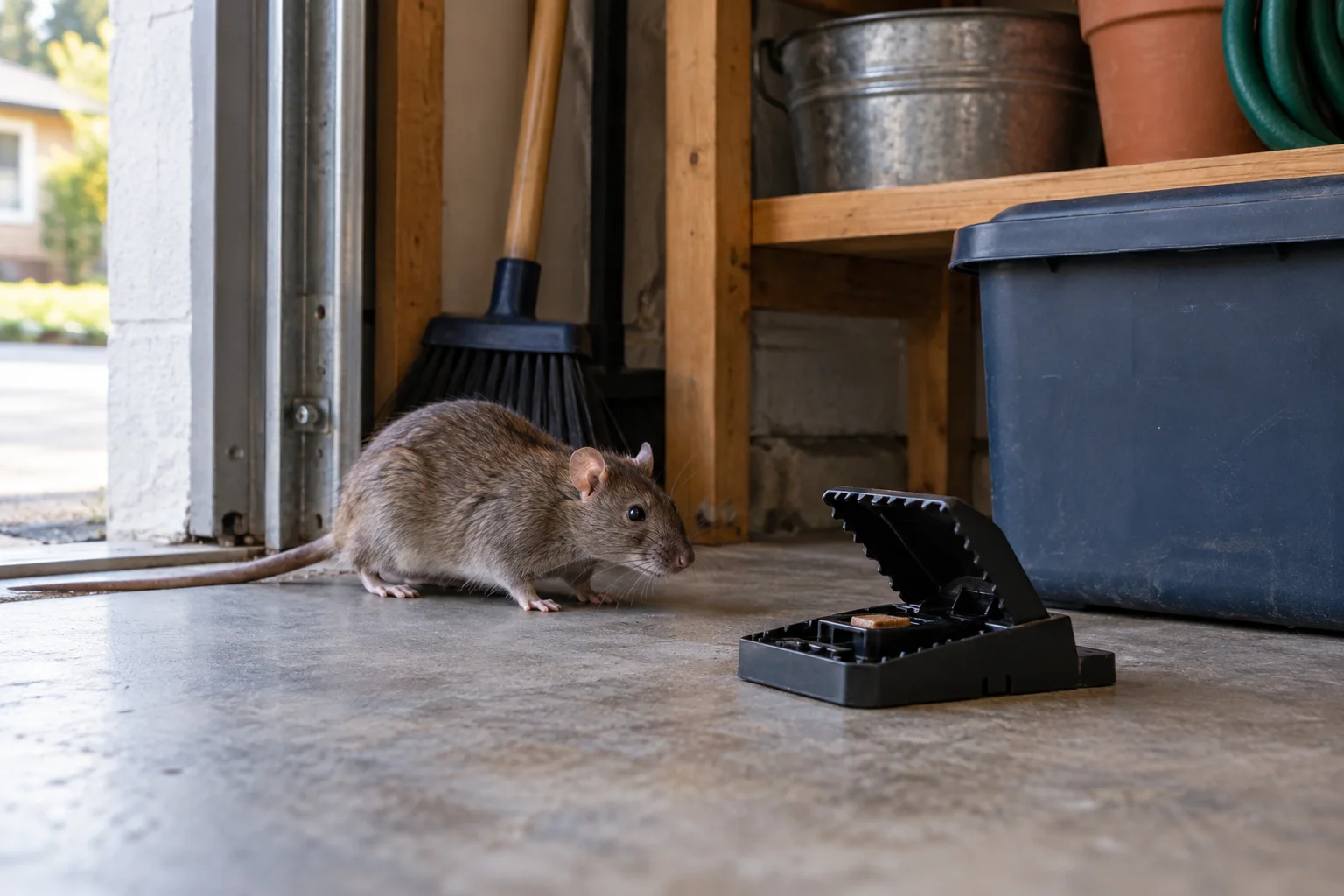
CDC recommends traditional snap traps for reducing rodent populations around homes and says traps should be kept out of reach of children and pets. Choose a rat-sized trap, read the manufacturer’s instructions, use a small amount of bait, and place it on a documented travel path rather than in the middle of a room. CDC describes setting the baited end against a wall so the trap forms a T with the wall, matching the way rodents prefer protected edges.
Rats can be cautious around unfamiliar objects, so CDC recommends prebaiting an unset trap until bait is taken before setting it. Check traps daily and dispose of captures promptly using safe cleanup methods. Do not use glue traps or unmonitored live traps. If the problem is in a ceiling, wall, duct, electrical area, or another place where equipment cannot be safely checked, call a qualified professional instead of placing improvised controls.
Keep poisons within their strict limits
Rodenticides are pesticides, not a casual fallback when a trap is ignored for a night. EPA states that bait stations and products must be used according to label directions and kept away from children, pets, and wildlife. Do not make homemade poisons, mix cleaners or pesticides, or place loose bait in a wall, attic, or other place where a carcass may be inaccessible. The label controls the target, placement, amount, and protective requirements.
If a persistent infestation needs more than inspection and trapping, a professional can assess the species, route, and local requirements. That may be especially important in a rental, a multifamily building, a home with pets or children, or a property where wildlife can reach control equipment. A safe removal plan is judged by whether it protects people and non-target animals while actually reducing fresh rat evidence, not by how aggressive the product sounds.
Remove food, water, and shelter at the same time
Rats remain where resources are easy to reach. Store pantry goods, feed, and pet food in durable closed containers; clean spills; keep garbage covered; correct water leaks; and reduce clutter and dense ground cover near the building. CDC recommends controlling food, water, and hiding places as part of rodent prevention. These changes make a trap or professional removal plan more effective because the property offers fewer alternatives to the controlled point of capture.
Outdoor conditions matter as well. Keep garbage containers clean and closed, do not leave pet food overnight, remove fallen fruit, and make foundation edges and stored items easier to inspect. None of these actions is a substitute for repairing an opening. They help prevent a new rat from being rewarded once the previous animal is removed. Think of removal as a coordinated change in access and resources, not a single device on the floor.
Close the route and verify the result
After active removal, repair verified openings with durable materials appropriate to the building feature. CDC lists metal, hardware cloth, cement, and metal sheeting among repair options for larger holes. Do not block a necessary vent, drain, combustion-air opening, or utility service without knowing its purpose. A qualified trade professional may be needed for roof, electrical, plumbing, HVAC, or structural details.
Continue monitoring for fresh droppings, gnawing, or reopened gaps after repair. CDC says the absence of captures and new signs over time is a useful indication that trapping has worked. Keep notes on where evidence appeared and what was repaired. If signs persist, revisit the full route rather than adding more products: exterior attraction, entry point, indoor travel path, and inaccessible spaces. The effective end point is a rodent-resistant building with no fresh activity.
Set a limit on do-it-yourself work
Stop and call for help if the work would require entering a dangerous crawl space, roof, electrical panel, duct, sewer, or wall cavity. Professional help is also appropriate for extensive activity, repeated failure after repairs, or any situation where children, pets, or wildlife could reach controls. A careful boundary is part of a safe removal plan, not an admission that the homeowner has failed.
Ask a provider to explain the evidence, the planned method, which openings will be repaired, and how the result will be verified. A good plan is concrete enough to review: it connects current signs to access, removal, cleanup, and repair. It does not rely on a mystery product or a promise to make rats disappear without resolving the building conditions.