
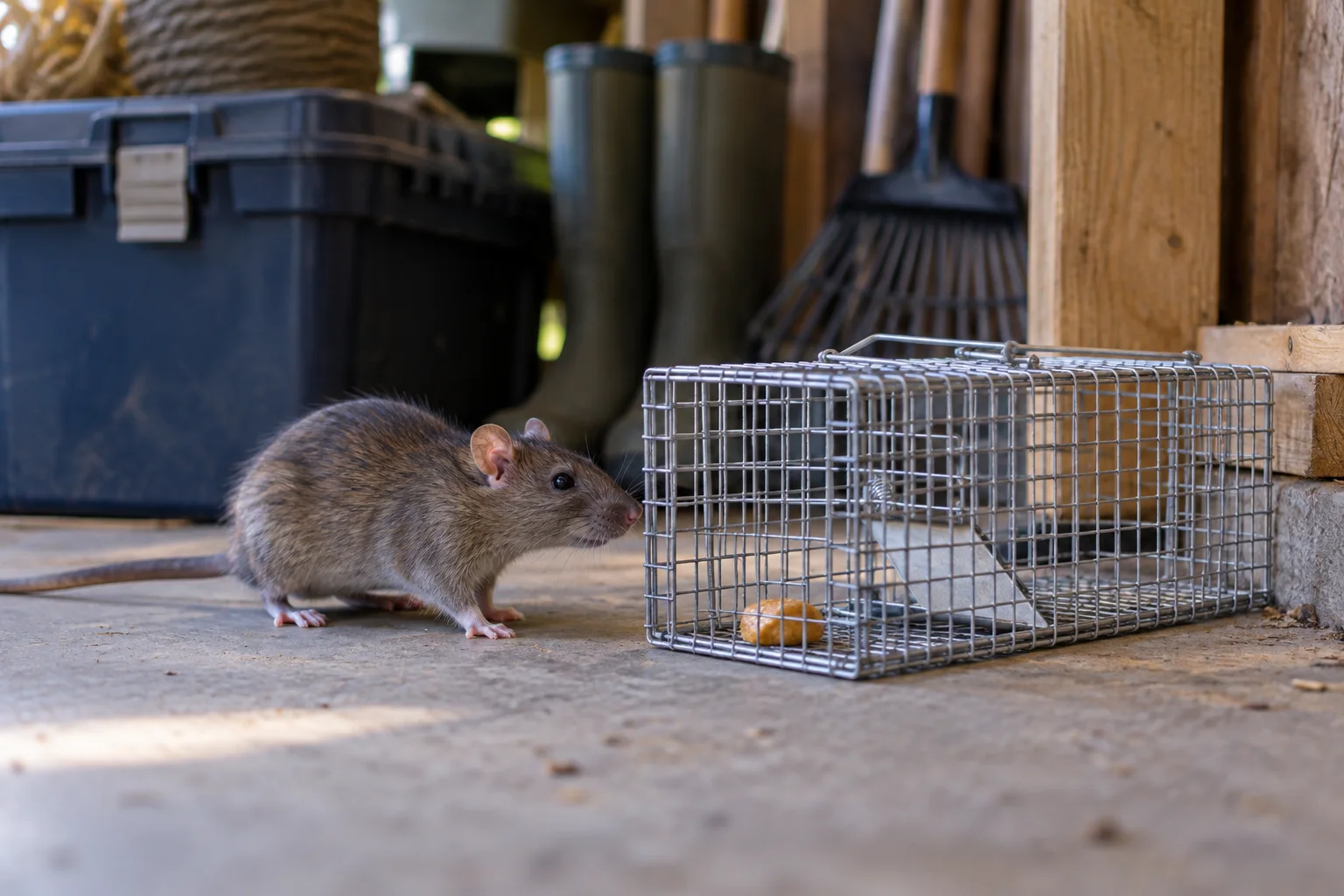
AI-generated illustration
Confirm the route before placing traps
Trapping works best when it follows evidence. Look for fresh droppings, gnaw marks, food damage, rub marks, nest material, or a repeated travel path. CDC recommends placing traps in areas where rodents or their signs have been observed, including protected spaces behind appliances and near suspected entry points. Do not begin with a trap in the open center of a room; rats tend to use cover and edges rather than cross exposed space unnecessarily.
Check inside and outside for how rats are getting in before setting equipment. CDC makes this the first trapping step because captures alone do not prevent reinfestation. Map the likely path from outdoor shelter or food to the entry point and indoor evidence. This also helps distinguish a ground route from an attic or roof route, which affects where a rat-sized trap can be placed and checked safely.
Choose and prepare a rat-sized snap trap
Use a trap designed for rats and read the manufacturer’s instructions before setting it. CDC recommends traditional snap traps for household rodent reduction and cautions that traps and bait must stay out of reach of children and pets. Use a small amount of bait on the bait pan. A large portion gives the animal more opportunity to feed around the trigger and creates a mess that is difficult to interpret.
Place the trap against a wall with the baited end closest to the wall so it forms a T, as CDC describes. This aligns the trigger with a protected travel edge. In places where children, pets, or non-target animals may reach the trap, use a protected placement or seek professional help. Do not set traps on unstable elevated surfaces, close to electrical hazards, or where a person may step on them in the dark.
Prebait cautious rats before setting
Rats may avoid unfamiliar objects. CDC suggests prebaiting: put bait on an unset trap until it has been taken, then set the trap. This short step lets the rat encounter the equipment as part of its route. It is particularly useful when evidence is fresh but a newly placed trap remains untouched. Prebaiting is not leaving food out indefinitely; it is a controlled way to test whether the location is active and accepted.
While prebaiting, reduce competing food. Secure pet food, pantry goods, feed, and garbage, then clean spills along the route. If bait disappears from an unset trap but no capture follows after it is set, inspect the placement and mechanism rather than simply adding more bait. If bait is untouched while fresh signs occur elsewhere, move to the actual route. The purpose is to make the trap a controlled point of contact, not a feeding station.
Check and handle traps on schedule
Check traps daily and deal with any capture promptly. CDC notes that rats may take several days to approach new traps and advises resetting until activity stops. Keep a simple record of the location, bait condition, and capture. This shows whether a trap is on an active route or whether the evidence has moved. Do not leave a captured animal in place as a marker for other rats, and do not handle a carcass with bare hands.
For a dead rodent, CDC recommends gloves, wetting the rodent and surrounding material with disinfectant, bagging it, then placing that bag in a second bag before disposal in a covered garbage can. Clean reusable traps according to guidance before setting them again. Do not dry sweep droppings or nest material near the trap. Safe handling keeps a routine trapping task from becoming a cleanup exposure.
Finish with exclusion and verification
Trapping is complete only when fresh signs have stopped and the route has been repaired. Reinspect the location where evidence first appeared, then check the exterior opening, nearby food sources, and any elevated or ground routes that connect to the building. Repair gaps with durable materials suited to the feature and preserve necessary ventilation, drainage, and utility functions. A trap can remove an animal; it cannot rebuild a damaged vent screen or seal a pipe penetration.
Continue monitoring for fresh droppings, gnawing, or new entry damage after the last capture. CDC says a week without new signs or captures is a useful benchmark, but the building still needs routine inspection. If signs persist, do not respond with improvised poisons or more random traps. Reassess the path, correct missed entry points, and get professional help for inaccessible, electrical, plumbing, roof, or structural concerns.
Know when the plan needs help
Call a qualified pest professional when traps cannot be placed or checked safely, fresh signs continue after a careful trapping effort, or the route is concealed in an attic, wall, duct, or crawl space. Bring your record of sightings, trap checks, and repairs. It lets the inspection start with evidence instead of a broad product recommendation.
A contractor or trade professional may also be needed for a roof gap, damaged vent, service penetration, plumbing defect, or electrical damage. Trapping solves only the animal portion of the problem. The finished plan needs a safe route repair and a way to verify that the same building feature no longer admits rats.