
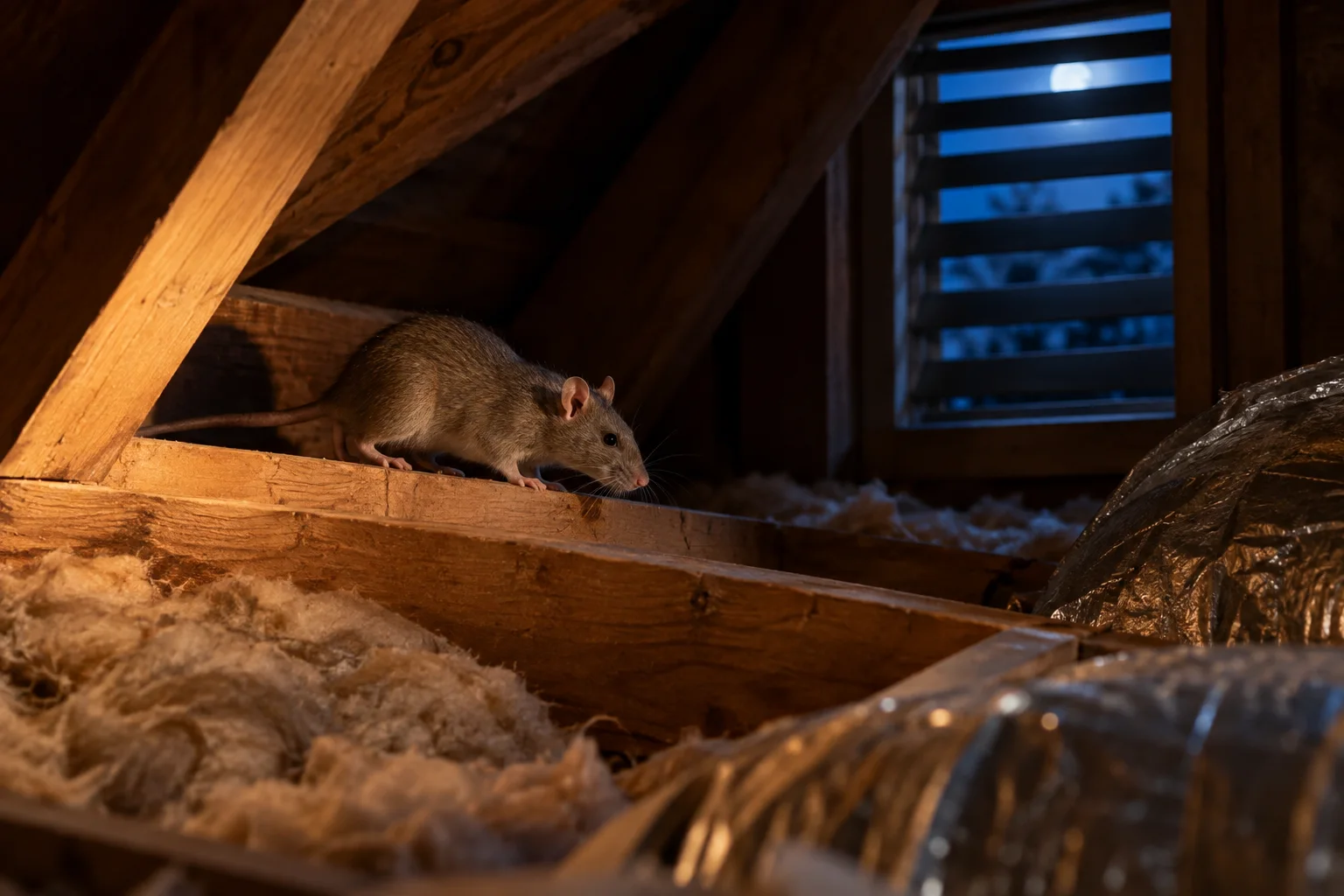
AI-generated illustration
A sound alone cannot identify a rat
Scratching, scurrying, tapping, or gnawing at night can suggest rodent activity, but a sound does not identify the animal on its own. Pipes, ducts, shifting building materials, insects, birds, and other wildlife can produce similar noises. Start a brief log: room, time, sound type, weather, and whether it repeats. This is more useful than moving from room to room trying to pinpoint a noise that may be traveling through framing.
Look for evidence that supports the sound. UC IPM lists noises from attics or drop ceilings among signs of rat activity, alongside droppings, nests, gnawing, smudge marks, burrows, and food damage. The combination matters. A scratching sound near a ceiling plus fresh attic droppings is more meaningful than a single unexplained tap. Do not cut into a wall or ceiling based only on sound; inspect accessible areas and the exterior route first.
Notice when and where it occurs
Rats are often more active when a home is quiet, which can make nighttime sounds noticeable. Record whether the noise is over a ceiling, behind a kitchen wall, under the floor, near a garage, or along a roofline. A repeating sound near food storage may point toward a different route than a sound near an eave or attic vent. Time patterns can also help a professional compare your observations with likely travel routes.
Do not assume the sound source is directly above or behind the point where you hear it. Wood framing and ducts carry noise. If activity occurs near a light fixture, electrical panel, furnace, water heater, or damaged ceiling, avoid opening the area or placing a trap there without professional guidance. Safety comes before confirmation. A useful inspection follows the building path from outdoor access to an accessible interior sign.
Check the exterior before opening finishes
Walk the exterior in daylight and look for roofline gaps, loose soffits, unscreened vents, openings around pipes and cables, damaged door sweeps, foundation gaps, and vegetation or wires that connect to the structure. CDC recommends checking these areas for rodent entry. Photograph suspected openings from a stable position. This step often reveals a simpler repair than cutting into a wall where the sound was heard.
Use a ladder or roof access only when you can do so safely and have the right skills. Do not work close to energized utility lines or climb in poor weather. A pest-exclusion professional or roofer can inspect high points and identify whether a screen, flashing repair, or another building repair is needed. Noise can lead you to the right question, but the physical opening is what must be solved.
Inspect accessible indoor signs safely
If an attic, crawl space, basement, or cabinet is safely accessible, look for fresh droppings, gnaw marks, shredded material, food damage, or tracks. Use a light and take photographs. Do not dry sweep or vacuum rodent waste; CDC advises wet cleanup methods to avoid stirring contaminated particles. Avoid tight, hot, flooded, or electrically hazardous spaces. An inspection should gather evidence, not turn a suspected rat noise into an injury or contamination problem.
If fresh signs support a rodent diagnosis, place protected traps only on documented travel routes and away from children and pets. CDC recommends traps near areas where rodents are seen or where nesting material, droppings, urine, nibbled food, or gnaw marks appear. A random trap placed under the loudest sound is less likely to help. The correct location is the route, not merely the acoustic echo.
Fix the route and monitor the change
After removal activity is managed, repair confirmed entry gaps and reduce food, water, and shelter conditions around the building. Recheck the same room and exterior features after the repair. If the sound stops but fresh evidence continues elsewhere, the route may have shifted or another opening may exist. If the sound continues without any rodent evidence, reconsider other building or wildlife causes rather than escalating rodent-control products.
Keep the record for a follow-up inspection: times, photos, trap results, fresh signs, and repairs. It helps a professional distinguish a missed entry point from a different problem. The aim is not to recognize a rat by sound like a recording. It is to connect a repeatable noise to evidence, close the route safely, and verify that fresh rodent signs have ended.
Escalate urgent building signs
Treat a noise as an urgent building issue when it accompanies a burning smell, electrical flicker, water leak, a sagging ceiling, or visible damage around a service. Turn away from do-it-yourself rat work and contact the appropriate emergency or trade professional. A rodent may be involved, but a building hazard needs its own response. Do not wait for better proof of the animal before addressing an active safety concern.
Once the hazard is stabilized, return to the evidence trail. Ask the professional to document any gnawing, opening, or contamination they observe, then arrange exclusion and cleanup as needed. Separating the immediate building repair from the rodent investigation prevents a serious defect from being delayed by an uncertain diagnosis.