
AI-generated illustration
Start with evidence, not a search frenzy
A sudden persistent odor, flies, a pet focusing on one spot, or a discovered nest can suggest a dead rodent, but none identifies an exact location by itself. Note when the problem began, which rooms are affected, and whether the odor changes with ventilation. Check accessible, low-risk places first: behind stored items, in garages, near exterior doors, beneath accessible sinks, and around trap locations. Avoid crawling into a tight void or opening a wall merely because the smell is strongest there.
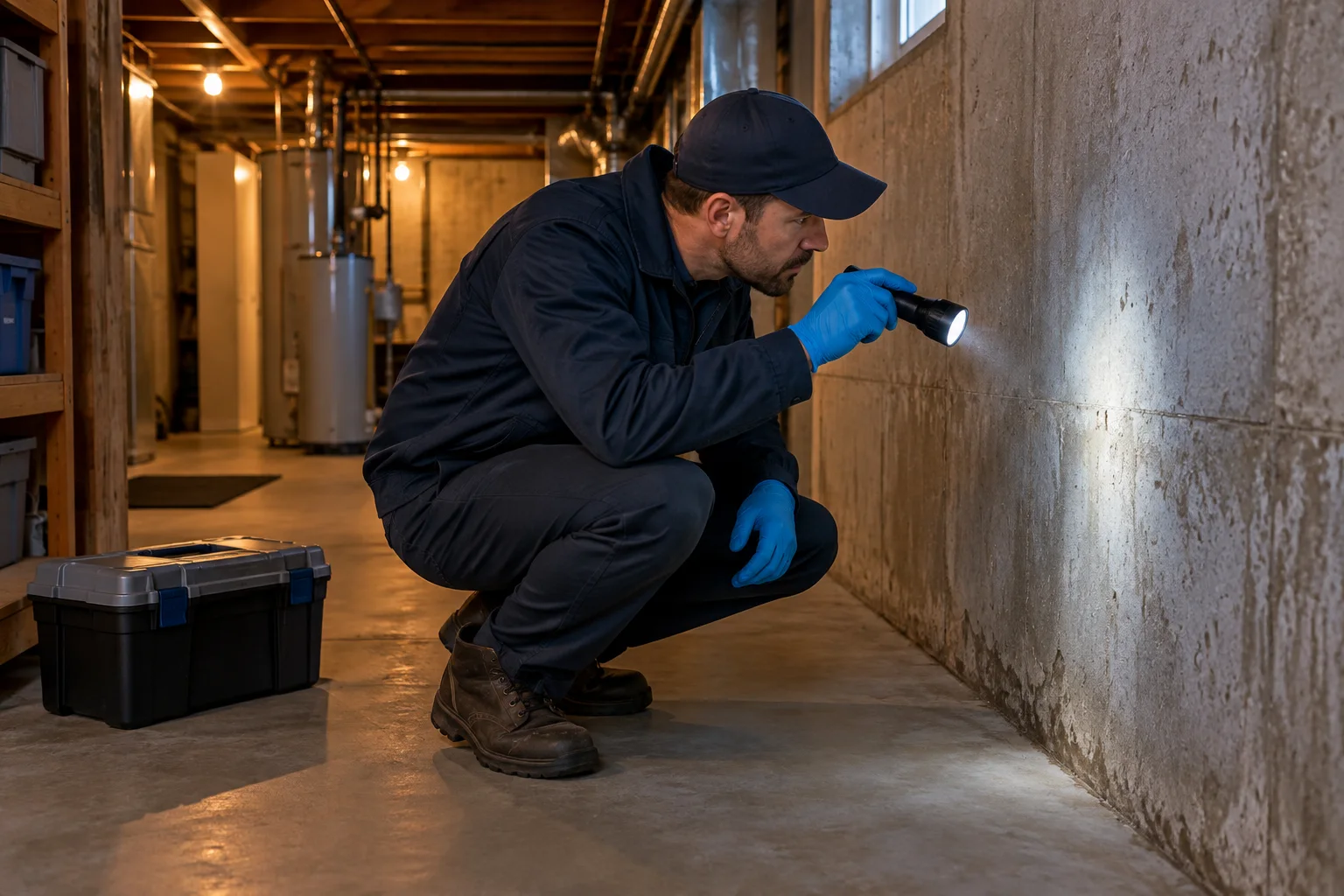
A focused inspection protects the house as well as the person doing it. Look for an accessible carcass, droppings, nesting material, or a route that explains how a rat reached the space. Take photographs before moving evidence. Do not use fragrance, bleach, smoke, or loose powder to mask an odor while you investigate. Those products can make the area harder to assess and do not remove a carcass or correct the route that brought rodents indoors.
Decide whether the location is safe to reach
An accessible rat on a floor, shelf, or reachable attic surface can often be removed using public-health cleanup guidance. A carcass in a wall, ceiling, duct, electrical compartment, under fixed flooring, or a water-damaged area is different. Do not reach through a sharp opening, disturb exposed wiring, or enter a cramped space with uncertain footing. The right question is not how quickly the rat can be found; it is whether retrieval can occur without creating a fall, electrical, or contamination hazard.
If the source appears to be in a building system, call the right trade. A pest professional can help locate and remove rodents, while a contractor, electrician, HVAC technician, or plumber may be needed when access involves their system. Ask who will open and close the finish, remove the carcass, clean accessible contamination, and inspect the entry route. This keeps a small problem from becoming a damaged wall with no plan for restoration.
Remove an accessible carcass safely
CDC directs people to wear rubber or plastic gloves, spray a dead rodent, nest, and nearby area with disinfectant, and let it soak for the stated contact time or five minutes. This wet method limits disturbance of rodent material. Do not dry sweep or vacuum nearby droppings. Gather bags, paper towels, and disinfectant before you begin so you do not walk through the house with contaminated gloves looking for supplies.
Place the rat, nesting material, and disposable cleanup materials into a plastic bag, tie it closed, then put it in a second bag and seal that bag. CDC advises placing the double-bagged material in a covered garbage can that is regularly emptied, or checking with the state health department for other disposal guidance. Wash gloved hands before removing gloves, then wash bare hands. If the rat was caught in a reusable trap, clean that equipment according to the manufacturer and CDC guidance before reuse.
Clean the surrounding location
The carcass may be only one part of the evidence. Wet and remove droppings, urine, and nest material without creating dust, then clean hard surfaces according to the disinfectant label. CDC notes that visibly contaminated exposed insulation should be bagged for removal. Cardboard, paper, and other porous items with obvious contamination may not be worth saving, while hard plastic, glass, and metal containers can often be cleaned and disinfected. Separate the cleanup decision from the impulse to save every stored item.
For extensive contamination, a long-vacant structure, or numerous nests and carcasses, stop and get public-health or professional advice. CDC calls for additional precautions in heavily infested buildings. A strong odor alone does not prove a heavy infestation, but piles of droppings, many dead rodents, or a large contaminated attic do change the scale of the job. An appropriate cleanup plan is safer than treating a large contaminated space like a small garage corner.
Find and close the route afterward
After cleanup, inspect the nearby building features and the exterior route. Check door sweeps, foundation gaps, vents, service penetrations, roofline openings, and food or shelter conditions around the house. A dead rat may have entered weeks earlier, but a usable opening remains a future invitation. CDC recommends checking both inside and outside for rodent entry points and sealing gaps with durable materials suitable to the opening.
Keep a short record of where the rat was found, what was cleaned, and what was repaired. Recheck the same area for fresh droppings, gnawing, or new odor rather than assuming the problem is resolved because the carcass is gone. If evidence continues, work from the outside access route inward and get help for concealed areas. A successful dead-rat removal ends with a clean accessible space and a repaired route, not simply an empty bag.
When an odor needs a second assessment
A remaining odor after safe removal does not automatically mean another carcass is hidden. Soft materials, an overlooked nest, plumbing issues, dampness, or contaminated storage may need separate attention. Reinspect the accessible area methodically after it is cleaned and aired. If the odor persists but no evidence is visible, do not keep adding air freshener or drilling speculative holes. A professional can locate a concealed source without turning a cosmetic concern into unnecessary structural damage.
Use the new information to decide the next step. A confirmed concealed carcass may justify a small, controlled access opening; a damp or damaged building feature may need another trade. Whatever the source, return to rodent exclusion after diagnosis. A home becomes easier to maintain when each observation leads to a specific repair instead of a cycle of masking odors and guessing at hidden animals.