
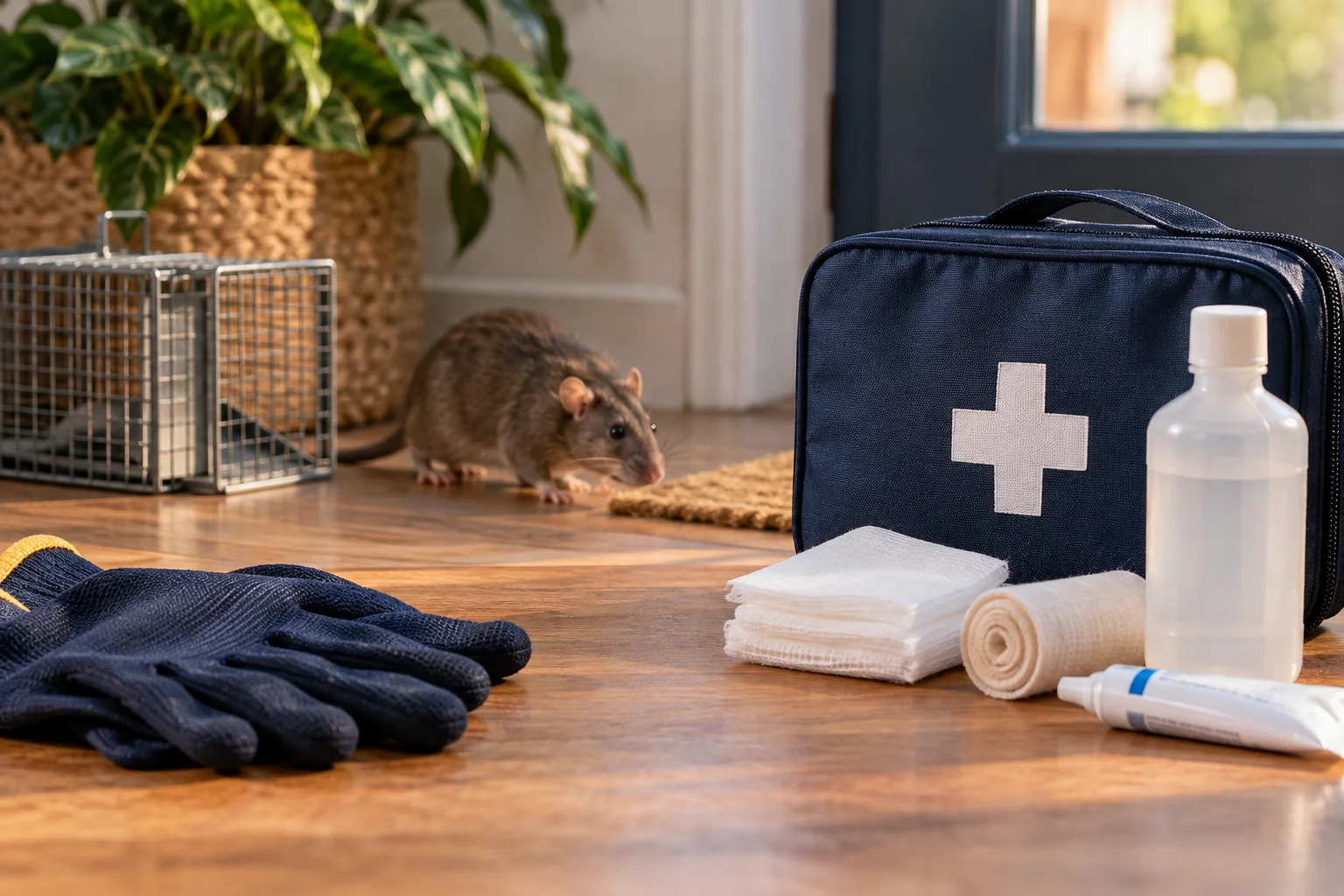
AI-generated illustration
Treat a rat bite as a health issue
A rat bite can look small and still deserve prompt attention. Teeth can leave a puncture that is easy to underestimate, and a bite may introduce germs into broken skin. The useful response is calm and practical: get away from the animal, take care of the wound, and arrange medical advice. Do not try to catch, handle, or identify a wild rat after the bite. That can lead to another injury and does not make the wound safer.
Whether the rat was wild, a pet, or an animal seen around a building, tell the clinician what happened. Note where the bite occurred, when it happened, whether it broke the skin, and whether saliva, dirt, or rodent droppings were present. If you know whether the animal was a pet or wild, include that detail. A photo of the wound taken after cleaning can be useful, but it is not a substitute for an examination.
Start with gentle cleaning
Wash your hands first if you can do so without delaying care. Then rinse the bite gently with clean running water and wash the area with soap. The goal is to remove surface contamination without aggressively scrubbing or digging into the wound. CDC guidance for bites and scratches from wild animals calls for immediate washing with warm, soapy water, and its rat-bite-fever guidance says a rat bite should be promptly cleaned and disinfected.
After rinsing, apply light pressure with a clean cloth or gauze if it is bleeding. Keep the injured area still and elevated when practical. A clean, loose covering can protect it while you get help. Do not seal a puncture shut at home, cut away tissue, or pour harsh chemicals into it. If bleeding will not stop with steady pressure, the wound is deep or gaping, or you can see deeper tissue, seek emergency care right away.
Get medical advice promptly
Contact a healthcare professional promptly after a rat bite, even if the mark seems minor. They can examine the location and depth, clean the wound as needed, assess your health history, and decide what follow-up is appropriate. This is especially important for bites on a hand, face, foot, or over a joint, because those areas can be harder to assess and use normally. It also matters more when the person bitten is a young child, older adult, pregnant, or has a weakened immune system.
Bring your vaccination history if you have it, or say if you are unsure. Animal bites are among the wounds clinicians consider when reviewing tetanus protection, and the right decision depends on the wound and the individual’s vaccination history. That review is a clinician’s job; do not guess based on the wound’s appearance or take leftover medicine. A bite visit is also the right place to discuss any local public-health questions tied to the animal or setting.
Know the urgent warning signs
Go to urgent or emergency care now for uncontrolled bleeding, severe pain, loss of movement or feeling, a visibly deep wound, or an injury near the eye. Get prompt medical help if the bite area becomes increasingly red, warm, swollen, painful, or starts draining, or if red streaking develops. Fever or feeling suddenly unwell after any animal bite also warrants timely evaluation. These signs do not identify the cause on their own, but they are reasons not to wait and see.
Tell the clinician clearly that there was rat contact. Rat-bite fever is uncommon, but CDC says people with compatible symptoms after contact with rodents should seek care immediately. Early symptoms can resemble a flu-like illness, including fever, headache, vomiting, muscle aches, or joint pain; a rash can also occur. Symptoms may begin after the original bite has started to heal, which is why recording the exposure and mentioning it at a later visit matters.
Watch the wound and your overall health
Follow the care instructions you receive and keep the area clean. Check it in good light rather than repeatedly pressing on it. Notice whether pain is easing or increasing, whether swelling changes, and whether normal movement returns. A bite that appears quieter on the surface can still need reassessment if pain, function, or general symptoms worsen. If you develop a fever, rash, joint pain, vomiting, or other illness after a rat bite or other rat contact, tell the healthcare provider about both the symptoms and the exposure.
Avoid giving home medical advice to another person based on how your own bite looked. Wounds differ by depth, location, contamination, and the person’s health history. The same caution applies to pet-rat bites: an animal that appears healthy cannot be used to rule out infection risk. A clear account of the exposure, prompt professional evaluation, and attention to changing symptoms are more useful than trying to diagnose the wound at home.
Make future encounters less likely
After the immediate health issue is addressed, think about the circumstance that led to contact. Do not handle a rat with bare hands, including a rat that appears injured, trapped, or dead. Keep children and pets away from an animal until it can be handled safely by the appropriate local service. CDC advises people not to touch dead wildlife with bare hands and to call animal control for removal, a sensible precaution around unknown remains as well.
If the bite happened while moving stored items, working in a shed, or cleaning a garage, pause that activity until you have a safer plan. Wear suitable protective equipment for cleanup, wash hands after contact with rodent areas, and avoid turning an encounter into a close inspection. Prevention matters, but it comes after medical follow-up: a bite is not merely a pest problem. It is a wound and an exposure worth reporting accurately to a healthcare professional.