
AI-generated illustration
Treat droppings as evidence, not a laboratory test
Droppings can show that an animal has used a place, but a homeowner should not need to touch, crush, or closely inspect them to decide what to do next. Their condition changes with time, moisture, diet, and the surface underneath. A single pellet in a garage may have been tracked in or may be old; repeated deposits along a wall, behind a refrigerator, or beside stored feed tell a more useful story about travel and shelter.
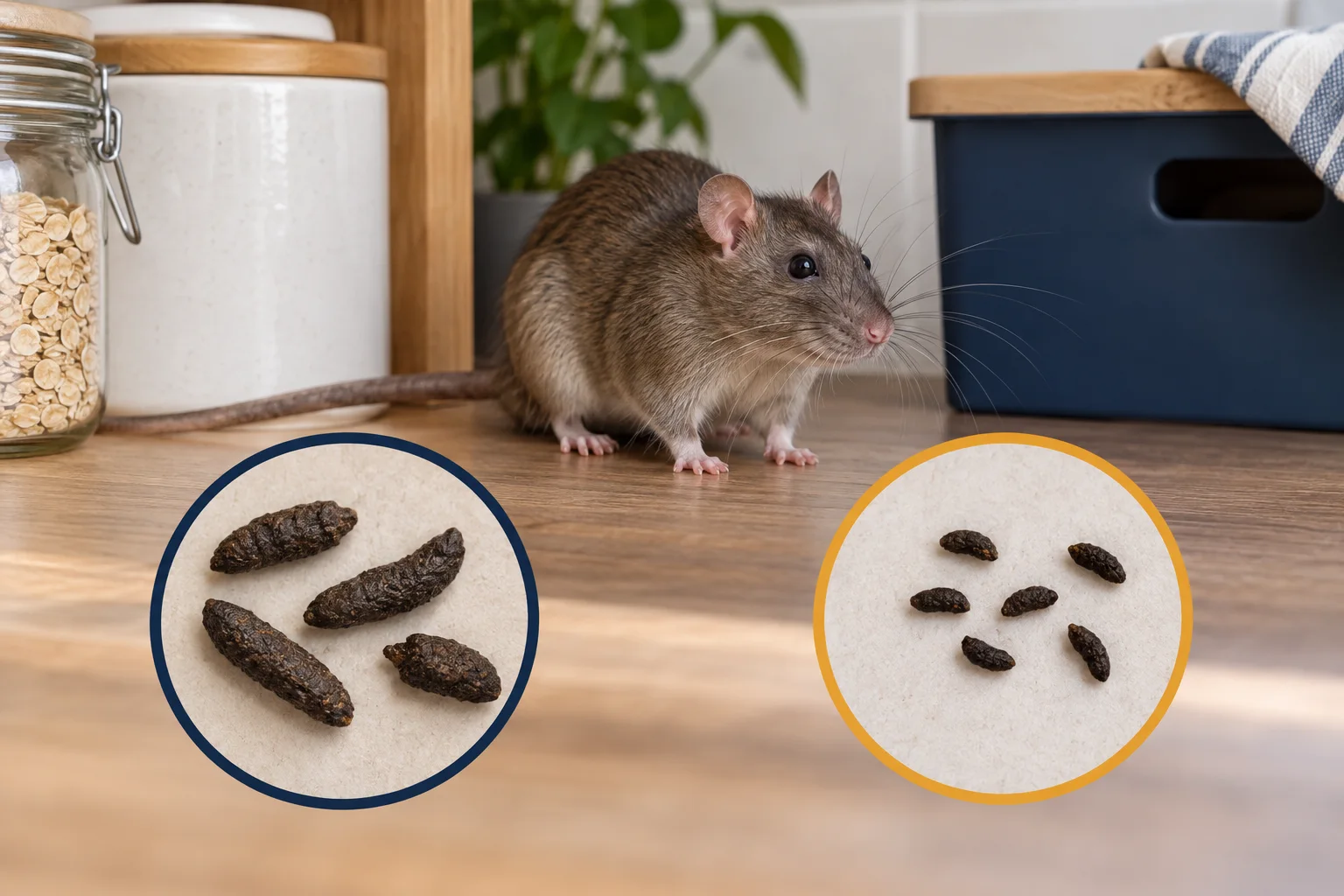
Size is often used as a first clue. Rat droppings are generally larger than house-mouse droppings, and roof-rat and Norway-rat droppings can differ in shape, but appearance overlaps and photographs distort scale. The safer conclusion is often simply rodent activity. Pair the droppings with other signs: gnaw marks, smudge marks, a burrow, elevated runways, entry gaps, or a rat seen at dusk. That combination directs control without pretending a pellet alone identifies species or disease.
Read location as carefully as shape
Where droppings appear can be more informative than trying to identify every end shape. UC IPM lists rat droppings around pet-food dishes, bins, attics, garden areas, and recycling as signs worth investigating. Norway rats often use lower areas and burrows; roof rats commonly travel above ground and may use attics, shelves, overhead lines, and dense vegetation. Those are tendencies, not a permission slip to skip inspection of the rest of the structure.
Map the evidence before cleaning it away. Note the room, height, nearby food or water, and whether there is an opening or concealed route nearby. A line behind appliances may point toward a wall void; signs on a high storage shelf may point toward climbing access; droppings outside by a compost bin may reveal a food source without proving indoor entry. This map makes follow-up inspections more efficient and avoids the unhelpful claim that every dark pellet comes from the same animal.
Do not dry-sweep an identification sample
CDC says not to vacuum or sweep rodent urine, droppings, or nesting materials because dry disturbance can send tiny droplets into the air. That applies even if the purpose is only identification. Put on rubber or plastic gloves, wet the material with an EPA-registered disinfectant or the CDC bleach solution, allow the stated contact time, and lift it with paper towels. Dispose of the towels in a covered garbage container that is emptied regularly.
For a small amount on a hard surface, CDC’s sequence continues with mopping or sponging the area using disinfectant, cleaning gloves before removal, and washing hands afterward. Do not use the cleanup to create a homemade specimen collection. If a health department, clinician, property manager, or pest professional needs information, a clear photograph taken before cleanup from a safe distance and a note about location are usually more useful than keeping dried material around.
Fresh-looking does not equal medically dangerous
New, dark, moist-looking droppings can indicate recent activity, while old droppings often become dry and dull. But light, humidity, diet, and the substrate alter that appearance, so it cannot date activity precisely. Likewise, people cannot determine a particular infection from the color, odor, or shape of droppings. CDC advises contacting a healthcare provider if a recent illness may be related to rodent exposure and explaining the exposure; the visual finding itself is not a medical diagnosis.
This distinction is important for calm decision-making. A few old pellets after a previous infestation call for careful cleanup and monitoring. Frequent new signs in food storage, a child’s play area, or a room with heavy contamination call for quicker source control and possibly professional help. In both cases, avoid fear-based assumptions. The practical response comes from the amount of contamination, the location, and whether current rodent activity is continuing.
Separate feces from other household clues
Not all small dark debris is feces. Insect frass, seeds, deteriorated foam, lizard droppings, and bat guano can be confused with rodent evidence. Bat or bird material in a roosting area needs different precautions and may involve wildlife rules. If you cannot tell what the material is, do not handle it bare-handed or use a dry vacuum merely to settle the question. Photograph the scene, note the setting, and seek local professional or public-health guidance when the amount is substantial or the species question changes how cleanup should be done.
Urine deserves its own response. It may create a stain or odor without leaving a pellet next to it, while droppings can remain after urine odor fades. Food damage tells a third part of the story. Keeping these clues separate prevents two bad conclusions: that an odor proves droppings are present, or that cleaned droppings prove there is no other contamination. Inspect the whole small area around the evidence instead of treating one clue as the entire infestation.
Use the finding to guide the next inspection
After wet cleanup, remove the conditions that made the location useful. Secure food and pet feed, empty standing water where appropriate, reduce clutter near walls, and look for the nearby gap, damaged screen, or pipe penetration. Recheck the exact sites where droppings were found. New material after cleaning is evidence of continuing access; no new evidence is encouraging but should be considered alongside exterior inspection and any control work.
A feces article should not make the homeowner choose a species before acting. The immediate action is safe cleanup and source investigation. Species-level identification may matter for a larger program, especially when burrows, overhead travel, or native wildlife are involved, but the basic facts remain: do not aerosolize the material, do not diagnose disease by sight, and do not mistake a clean-looking floor for a sealed building.