
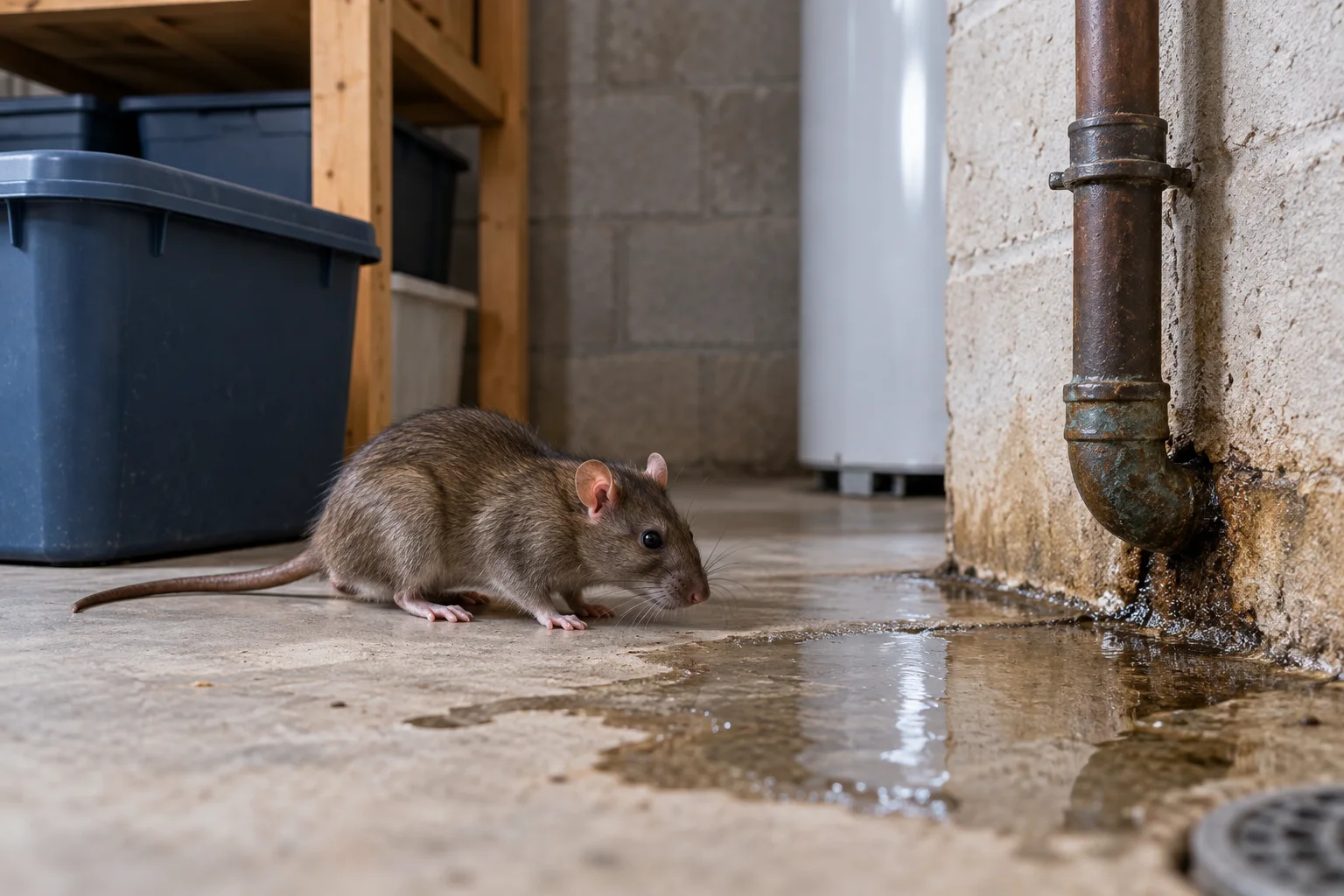
AI-generated illustration
What a urine odor can and cannot tell you
A sharp, stale, ammonia-like odor near a wall, cabinet, or stored belongings can be a useful clue, but it is not proof that rats are present. Urine odor changes with moisture, ventilation, age, and the material that absorbed it. A damp subfloor or insulation can hold an odor after the animal has gone. Cat litter, plumbing leaks, old cleaning products, and some building materials can also create confusing smells. Treat odor as a reason to inspect, not as an identification test or a diagnosis of a health hazard.
Look for a pattern that supports the clue. Fresh droppings, rub marks, chewed food packaging, nesting material, openings near pipes, or nighttime activity make a rodent source more plausible. A smell restricted to the base of a toilet, laundry standpipe, or sink cabinet may instead call for a plumbing inspection. Do not put your face into a void, crawlspace, or cabinet to investigate. Good light, a mirror or phone camera used from outside the opening, and an orderly inspection are safer than trying to smell the source closely.
Make the area safe before cleaning
Do not sweep, brush, or vacuum dry rodent urine, droppings, or nest material. CDC explains that dry disturbance can put tiny contaminated droplets into the air. Keep people and pets away from the area, open doors and windows where that is practical, and leave the space while it airs out. CDC advises ventilating homes and outbuildings for 30 minutes before cleanup. Put on rubber or plastic gloves before touching contaminated surfaces or objects.
Gather paper towels, bags, a household disinfectant labeled for that purpose, and ordinary cleaning supplies for the finish work. If choosing a bleach solution, CDC gives one part household bleach to nine parts water and says to make it fresh. Follow the disinfectant label instead when it gives a different contact time or surface limitation. Never improvise mixtures of bleach and other products. The goal is to wet and remove contamination from a surface, not to fill an enclosed room with strong fumes.
Use a wet-removal method on hard surfaces
Spray the suspected urine and any nearby droppings until they are very wet. CDC says to allow five minutes, or the time on a disinfectant label, before lifting the material with paper towels. Put the used towels into a covered garbage container that is emptied regularly. Afterward, mop or sponge hard surfaces with disinfectant, including the floor, cabinet base, or counter that was affected. Wash gloved hands before taking gloves off, then wash bare hands with soap and warm water.
This sequence matters because a deodorizer alone does not remove residue and a dry first pass can create dust. It also keeps the task proportionate. A small spot on washable tile may only need careful wet cleanup and a check for the entry route. A room with widespread staining, piles of droppings, nests, or contaminated insulation is a different project. CDC calls for additional precautions with heavy infestations; a qualified cleanup or pest professional can assess access, protective measures, and materials that cannot be cleaned in place.
Handle fabrics, insulation, and belongings by material
Hard, nonporous items can usually be cleaned and disinfected according to the product label. Move boxes or containers from a contaminated shed or garage outdoors into a well-ventilated area before sorting them. Work so dust does not blow toward your face. Cardboard, paper, untreated wood, and fabric are harder because urine can soak in and the item may not tolerate a disinfectant. Do not soak electronics, books, or upholstered furniture simply because an odor is present; assess whether they were actually contaminated and whether professional restoration advice is warranted.
Exposed insulation with urine or droppings is not a surface to vacuum clean. CDC directs homeowners to place contaminated exposed insulation in plastic bags for removal. That is also a cue to find the access route before replacing it. An odor can return when damp air reactivates residue in a wall or ceiling, but repeatedly spraying fragrance through the room only hides that signal. Record where the odor is strongest, look above and below it, and correct the route or nest site before deciding whether a building material needs removal.
Keep the health response factual
Rodents can contaminate their surroundings, but a smell by itself does not establish that anyone has an infection. CDC advises speaking with a healthcare provider if a recent illness may be connected to rodent exposure and telling the provider about that exposure. That is more useful than trying to match a household odor to symptoms online. Seek prompt medical advice after a bite or if someone who had meaningful exposure becomes ill and is concerned about it, especially when a clinician needs the exposure history to evaluate the situation.
Avoid turning a cleanup article into a promise that one product makes every surface safe. The correct method depends on the surface, extent of contamination, and product directions. Do not dry vacuum to make a space look clean quickly, and do not use a home fogger to chase an odor. If the affected location is an air duct, inaccessible wall cavity, or a heavily contaminated attic or crawlspace, arrange an appropriate inspection rather than opening materials blindly.
End the odor by ending the activity
Cleaning is only one half of the response. Remove accessible food, secure pet food and garbage, and inspect the nearby building edge for gaps around utility penetrations, doors, vents, and damaged screens. UC IPM notes that rats leave smudge marks on beams, rafters, pipes, and walls and may nest in attics, walls, ceilings, or cabinets. Those physical signs help locate the route more reliably than odor alone.
After cleanup, use the same places as checkpoints: the cabinet floor, sill, storage shelf, or pipe chase where evidence appeared. New wet spots, droppings, or gnawing indicate current activity; a slowly fading odor without new evidence may be old residue or a material that needs closer assessment. That distinction prevents two common mistakes: treating a past stain as an active infestation, or treating a strong fragrance as proof the problem has been solved.