
AI-generated illustration
Heat is not a control method
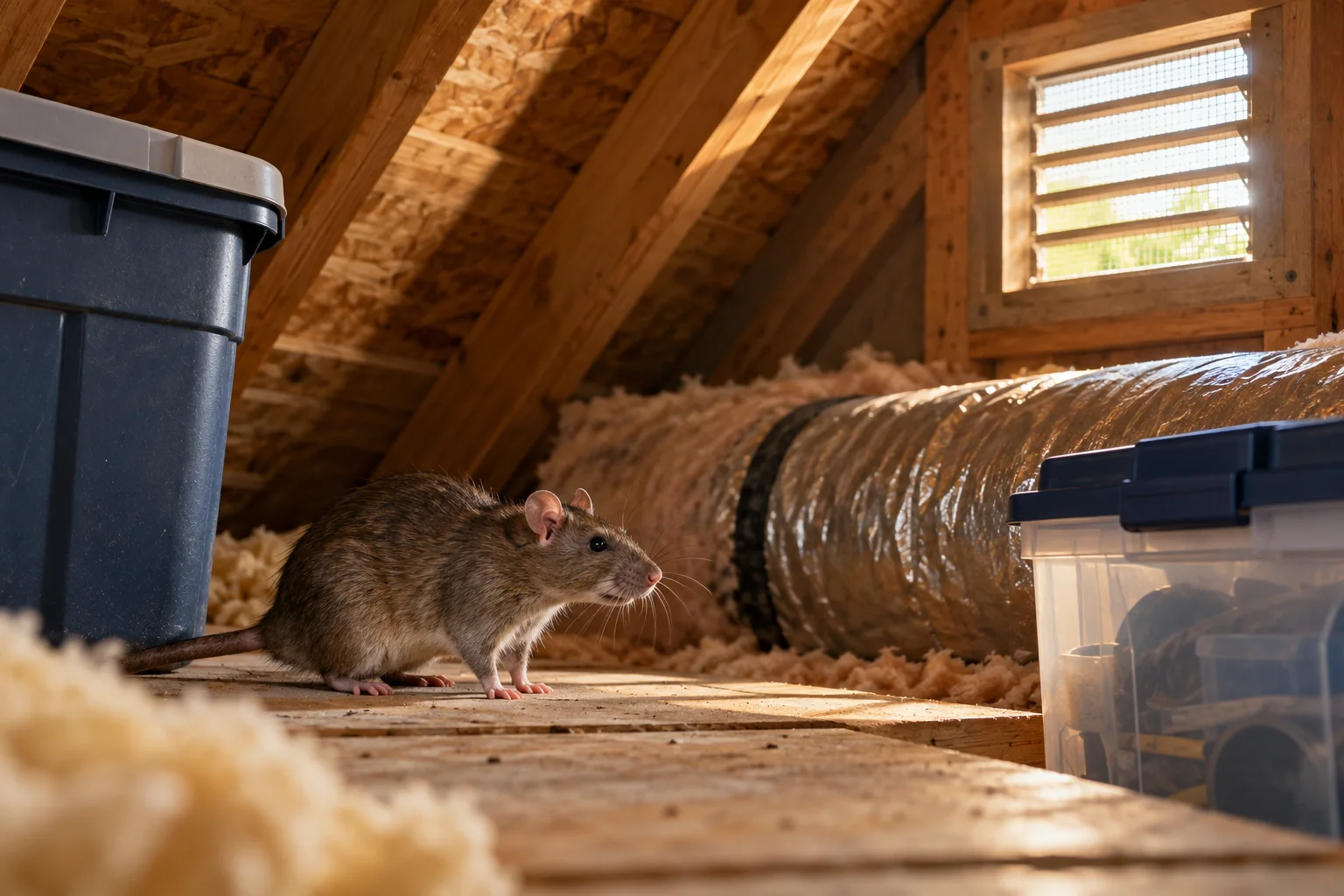
A hot attic can be hard for a person to enter, but heat alone does not make it uninhabitable for every rat. The roof deck and upper air may be very hot while shaded edges, insulation, wall voids, soffit connections, plumbing chases, and lower rooms form cooler microclimates. A rat can also move at a different time of day or leave the attic to forage. For that reason, a thermometer reading from one accessible point is not a reliable test of whether rats are present. Treat a hot attic as evidence that access must be planned safely, not as evidence that an infestation will end when summer arrives.
Look for patterns, not one noise
Rats are generally most active when people are less active, and sound travels through framing. Scratching over a bedroom may originate along a nearby wall or ceiling route rather than directly above the ceiling spot. Document the time, location, and type of sign before moving insulation or cutting a hole. Useful supporting signs include fresh droppings, gnawing, disturbed insulation, damaged food storage nearby, smudge marks, or a repeated route outdoors. Do not diagnose from a sound alone: squirrels, birds, insects, and building movement can create confusing evidence. A careful inspection should say what was seen, what was inferred, and which areas could not safely be entered.
Identify likely access routes
For an upper-space problem, inspect the building from outside inward. Roof rats are agile climbers and UC IPM notes that they commonly favor attics, walls, false ceilings, and cabinets. Look at soffits, eave and attic vents, gaps at roof-to-wall transitions, damaged screens, loose trim, pipe and cable entries, and branches or climbing vegetation that meet the structure. Do not climb a ladder or walk a roof merely to investigate a suspicion. Ground photographs or binoculars can document a defect for a qualified inspector. An opening must be repaired without blocking required ventilation, drainage, combustion air, or a roof system detail.
Plan safe attic access
Heat makes a rushed inspection a poor one. Choose a safer time, tell another person where you are working, use stable lighting, and stop if heat stress, uncertain footing, exposed wiring, or contamination makes the task unsafe. Ceiling drywall is not a walking surface. A technician should use the existing safe access route and avoid compressing or scattering insulation simply to search. Do not use household fans, smoke, strong odors, or chemicals as an improvised way to force animals out. Those actions can introduce hazards and still do not identify the entry route. The objective is good evidence and safe repair, not a dramatic reaction to an attic noise.
Separate the animal inspection from questions about cooling the attic. Ventilation changes, powered fans, and roof alterations should be assessed for the building itself, including moisture movement and combustion safety where relevant. A pest inspection does not establish that the attic needs a new ventilation system. If access is too hot or restricted, request exterior photographs and a return visit under safer conditions instead of accepting an unsupported diagnosis from an inaccessible space.
Remove and exclude in sequence
A repair plan should account for rats that may already be inside. Closing a suspected opening without monitoring can leave an animal in a cavity and shift the problem to a difficult location. Ask how removal, device checks, and exclusion will be sequenced, and ask which openings are confirmed versus possible. UC IPM recommends sanitation, structural exclusion, and population control together. Keep food, pet feed, fruit, and refuse from supporting activity near the building, but do not mistake sanitation for a way to remove an animal already nesting overhead. If a control device is used, it must be placed and monitored appropriately and protected from children, pets, and non-target animals.
Clean after the activity stops
Insulation may conceal waste, nests, food caches, and damaged wiring. Do not dry sweep or vacuum rodent waste. CDC guidance advises wetting waste with disinfectant and following the product instructions before removal. Whether insulation can remain depends on its condition and the extent of contamination; a fragrance or fogging treatment cannot remove waste or a dead animal. Get a written scope that states which areas will be cleaned, which material will be removed, how debris will be contained, and what replacement work is included. Electrical damage requires an electrician, and roof or ventilation defects may require the relevant building trade.
Verify across changing conditions
After repairs, retain photos, inspection notes, and a record of any new signs. A quiet hot afternoon is encouraging but not a final test because activity can shift with time of day, weather, and access conditions. Recheck accessible locations and the exterior routes that were repaired. If signs return, compare them with the documented work: the cause may be a missed entry point, a failed repair, a newly damaged screen, or a different animal. The practical conclusion is that rats can use a building with a hot attic when it provides sheltered microclimates and an access route. The lasting response is safe inspection, targeted removal, durable exclusion, and verification over time.
Keep monitoring locations consistent so observations can be compared. Record whether evidence appears beside a repaired vent, at an interior access hatch, or near a different roof transition. Repeated signs in the same place are more informative than an isolated noise elsewhere. Discuss the follow-up interval with the provider and ask what finding would justify changing the removal or repair plan.