
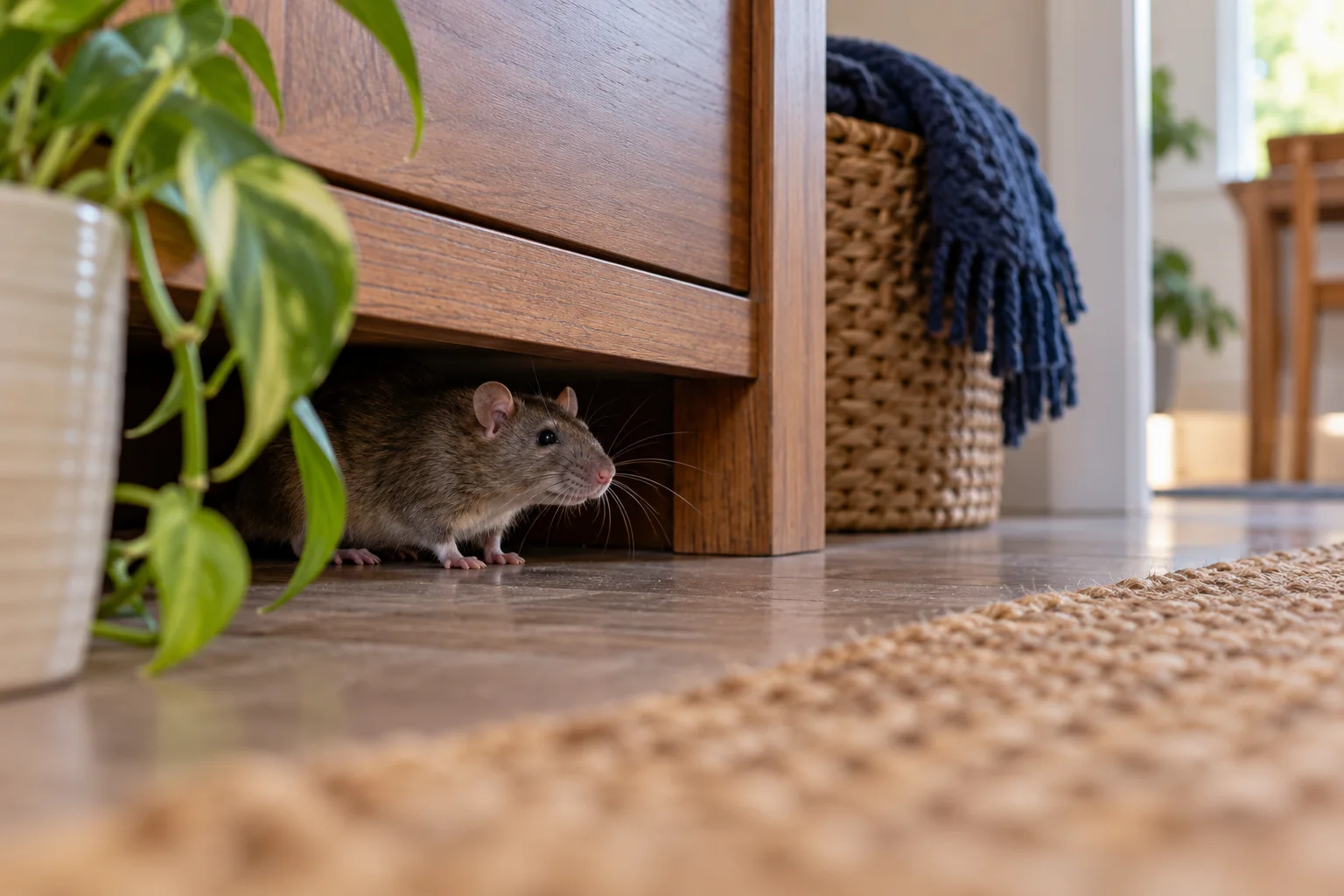
AI-generated illustration
Rats often avoid open exposure
Rats frequently use cover, edges, darkness, and quiet periods, which is why homeowners may find signs before seeing an animal. UC IPM notes that rats are mostly active at night and use protected pathways, while CDC identifies droppings and gnaw marks as common early evidence. A lack of daytime sightings does not prove there is no problem, but it also does not prove every sound is a rat. Look for a pattern of evidence rather than chasing a brief glimpse.
Their avoidance behavior is practical for the animal: open spaces expose it to people, pets, and predators. In a home, this can mean travel behind appliances, along walls, through attic or crawl spaces, under clutter, or inside wall voids. Do not respond by blocking every exit or trying to flush a rat with noise, smoke, or chemicals. That can drive it into a harder-to-reach place and leave the entry route unresolved.
Evidence is more reliable than a sighting
Inspect protected edges in daylight. Look behind stored items, along cabinets, near food storage, around pet bowls, beneath sinks, at garage edges, in attic access areas, and outside around vents, bins, and utility gaps. Note droppings, gnaw marks, nests, rub marks, food damage, and burrows. Take photographs and record dates. This creates a map of how a rat is using the property without requiring you to see it face-to-face.
Do not put hands into dark holes, reach behind appliances without safe access, or climb onto a roof based on a noise. A route can include electricity, plumbing, sharp materials, or unstable surfaces. If evidence is near a panel, furnace, water heater, roofline, or duct, use a qualified professional. A cautious inspection protects the person doing it and gives the repair team useful information.
Hiding places are often created by people
Cardboard piles, stored fabric, open feed bags, cluttered garages, dense shrubs, firewood, bins against a wall, and unused equipment create cover. Remove or organize these items so the perimeter and floor edges are visible. UC IPM recommends reducing food, shelter, and access. This does not mean moving a large contaminated pile quickly. If droppings or nests are present, use the wet cleanup method or obtain professional help before disturbing material.
Pet food, birdseed, garbage residue, fallen fruit, and compost can support the same hidden route. Secure food in tight containers and clean spills. A rat may hide during daylight but return reliably at night if the resource remains. Making the property less rewarding is more effective than trying to make it noisier or brighter. It also lets you tell whether a fresh sign is new because the surrounding area is no longer cluttered.
Avoid frightening devices and unsafe chases
Ultrasonic devices, strong smells, banging, and lights may make a rat pause, but UC IPM says rats become accustomed to repeated frightening devices and that repellents do not solve a rat problem for more than a short time. Do not use smoke, ammonia, mothballs, or household chemicals in walls or attics. These can create exposure risks and do not repair a gap, remove food, or provide a monitored outcome.
Do not send a dog or cat into a rat hiding space. A pet can be bitten, encounter parasites, or come into contact with poison or traps. Keep pets and people away from active areas and use a controlled removal method. A calm plan is safer than a confrontation in a bedroom, garage, or attic where the animal has more hiding places than you have visibility.
Use protected traps based on travel routes
For confirmed rats, CDC recommends traditional rat-sized snap traps. Place them where signs show travel and where they can be checked daily, keeping them out of reach of children and pets. CDC recommends placing the baited end close to a wall so the trap forms a T shape. This recognizes that rats favor protected edges rather than open rooms. Do not hide a trap in a wall or cavity where you cannot know whether it worked.
Rats may avoid a newly placed object. CDC recommends pre-baiting an unset trap until bait is taken, then setting it. Use this as a test of a documented route, not as a reason to leave food around a room indefinitely. Do not use glue or live traps. If activity is high, elevated, or inaccessible, a pest professional can place and monitor equipment without creating a fall, electrical, or pet-safety problem.
Close the route after activity stops
Once there are no fresh signs or captures for a week, repair the exterior routes found during inspection. Check doors, garage seals, vents, eaves, crawl-space panels, roofline screens, and utility penetrations. Use durable materials suited to the feature; UC IPM warns rats can chew through foam, plastic, wood, and caulk. Do not seal a necessary drain, chimney, or appliance vent without professional guidance.
Continue to keep food secured and hiding cover reduced. If new signs appear, do not conclude that the rat is becoming 'bolder.' Reassess the exterior route, food source, and repair. Rats hide because concealed routes work. A maintained property gives them fewer of those routes and gives a homeowner the evidence needed to act before an occasional hidden visitor becomes an established infestation or spreads through the building. This also helps distinguish a new route from an old stain or sound.