
AI-generated illustration
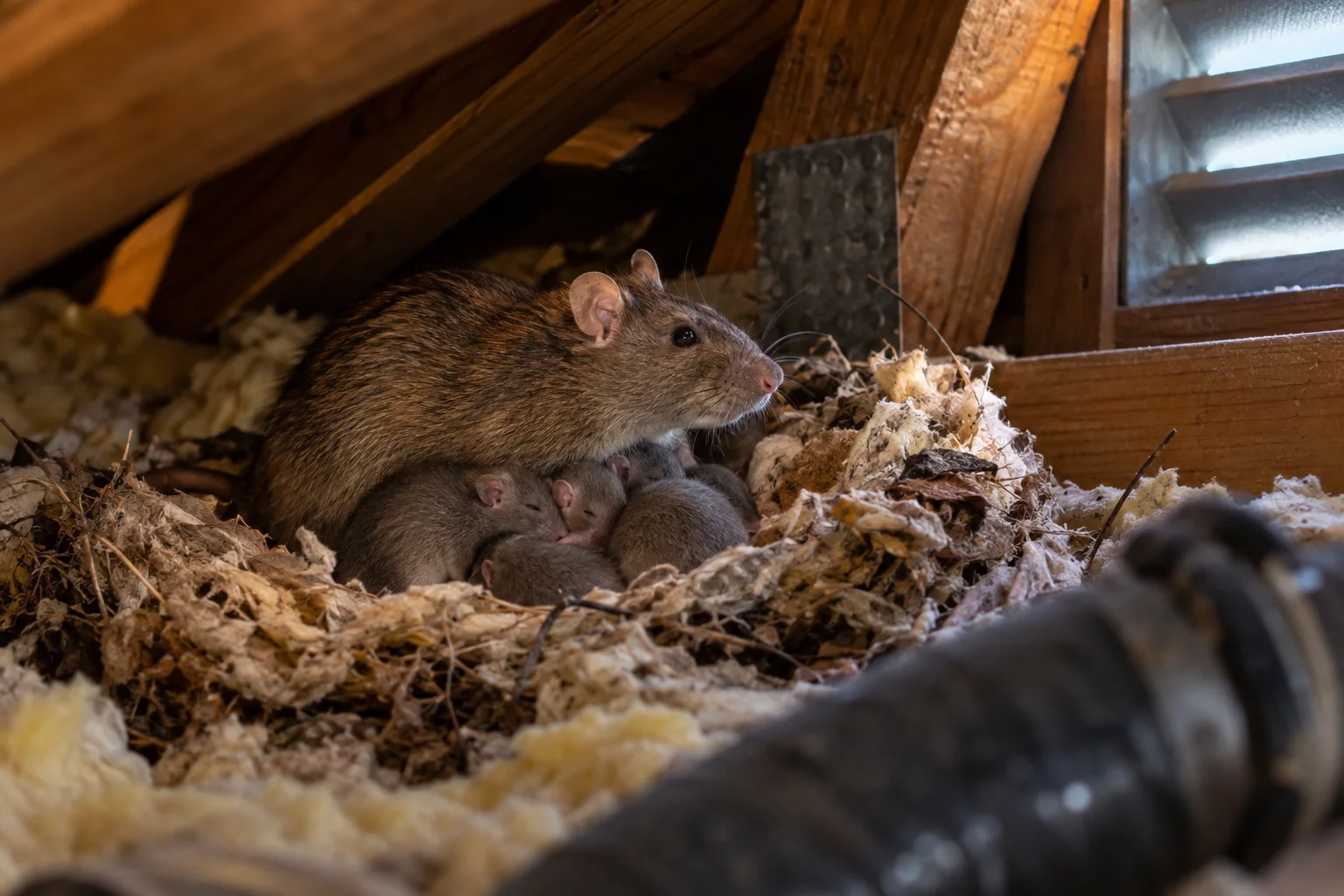
An attic can provide nesting cover
An attic is quiet, warm in parts of the year, protected from weather, and often filled with insulation or stored material that can be pulled into a nest. UC IPM notes that roof rats commonly favor elevated enclosed spaces indoors, including attics, walls, false ceilings, and cabinets. That makes an attic a plausible place for a rat to nest and raise young. It does not mean every pile of insulation is a nest or that every nighttime attic sound means there are babies.
Look for a pattern before deciding what you have found: fresh droppings, shredded material gathered in one spot, gnawing, rub marks, and a repeated exterior route at an eave or vent. Take photographs from a safe position and avoid pulling apart the material. An attic has fall, electrical, and contamination hazards, and disturbing a nest can send animals into another cavity without solving how they entered.
Do not assume a nest is inactive
Old nesting material can remain after rats leave, while fresh material may indicate ongoing activity. A neat-looking pile is not enough to tell. Check whether nearby droppings are fresh, whether bait disappears from a monitored unset trap, whether noises recur, or whether an exterior opening has new gnawing. Keep notes for several days rather than relying on one inspection. This gives a professional a much clearer picture of whether removal must precede exclusion.
Do not seal the first roof gap you find while rats may still be in the attic. Trapping an adult or young animal inside can lead to chewing, odors, or activity in an inaccessible wall. CDC recommends identifying how rodents entered and trapping rats that remain before final exclusion. A planned sequence protects the house better than a quick patch over the most visible hole.
Inspect the space without creating a second problem
Enter only if the attic has safe access, stable walking surfaces, usable lighting, and no obvious damaged wiring or structural issue. Stay on framing or a designated walkway, never on the ceiling between joists. Do not probe insulation with bare hands. From a stable position, photograph affected areas and look for chewed wiring, duct damage, concentrated waste, and daylight at the roofline. If the space is cramped, heavily contaminated, or electrically questionable, stop and arrange an inspection.
CDC says not to sweep or vacuum rodent urine, droppings, or nesting materials because dry disturbance can put contaminated particles into the air. A nest with widespread waste requires more than a household cleanup. Heavy infestations call for extra protective equipment and may require a qualified cleanup contractor. This is especially important in an attic where loose insulation can hold contamination and be difficult to remove safely.
Remove active rats in protected, accessible places
For confirmed rats remaining inside, CDC recommends traditional rat-sized snap traps. Placement should follow evidence and allow daily checks: a protected route in an accessible attic area may be suitable, while a trap pushed loose into insulation or a sealed wall is not. Keep traps and bait away from children, pets, and non-target animals. Rats can be wary of unfamiliar equipment, so an unset pre-baited trap can help establish whether a route is active before it is set.
Do not use glue or live traps. CDC advises against those methods because a scared captured rodent can urinate, increasing exposure risk. Do not scatter poison or repellents through an attic. They can leave a carcass in an inaccessible void and do not repair the route. Roof access, high attic areas, and multiple signs of activity are sensible reasons to have a pest professional manage removal and coordinate it with exclusion.
Clean the nest only after activity is controlled
For limited accessible waste, CDC directs people to wear gloves, wet droppings and nesting material thoroughly with disinfectant, let them soak for five minutes or the label time, and use paper towels to pick them up. Place dead rodents, nests, and used traps in a sealed bag and then a second sealed bag for disposal in a covered container. Wash gloved hands before removing gloves and wash bare hands afterward. Do not carry exposed waste through the living space.
Contaminated exposed insulation needs special attention. CDC advises bagging exposed insulation contaminated with urine and droppings for removal, but widespread loose insulation is a professional job. Do not rake through it in search of every pellet. An insulation or remediation contractor can remove affected material without spreading dust, while an electrician can inspect gnawed wiring and a roofer can repair a compromised roof feature. Coordinate those jobs so the entry is fixed after removal.
Make the attic hard to use again
After there are no captures or fresh signs, repair confirmed exterior routes. Examine attic and roof vents, eaves, chimney features, utility penetrations, and roof-to-wall joints. Use screening or other durable material appropriate to the feature, but preserve ventilation and drainage. UC IPM notes that rats can chew soft materials, so foam or caulk alone may not last. Have high or complex repairs performed by the right trade professional.
Reduce the approach routes as well. Trim branches and climbing vegetation that reach the roofline, secure garbage and feed, and keep outdoor storage from creating covered travel paths near the house. A week without new signs or captures is a useful CDC milestone, but continue periodic attic checks after storms or roof work. A nest becomes a one-time cleanup when the route, food, shelter, and entry defect are all addressed.