
AI-generated illustration
Rats are adaptable omnivores
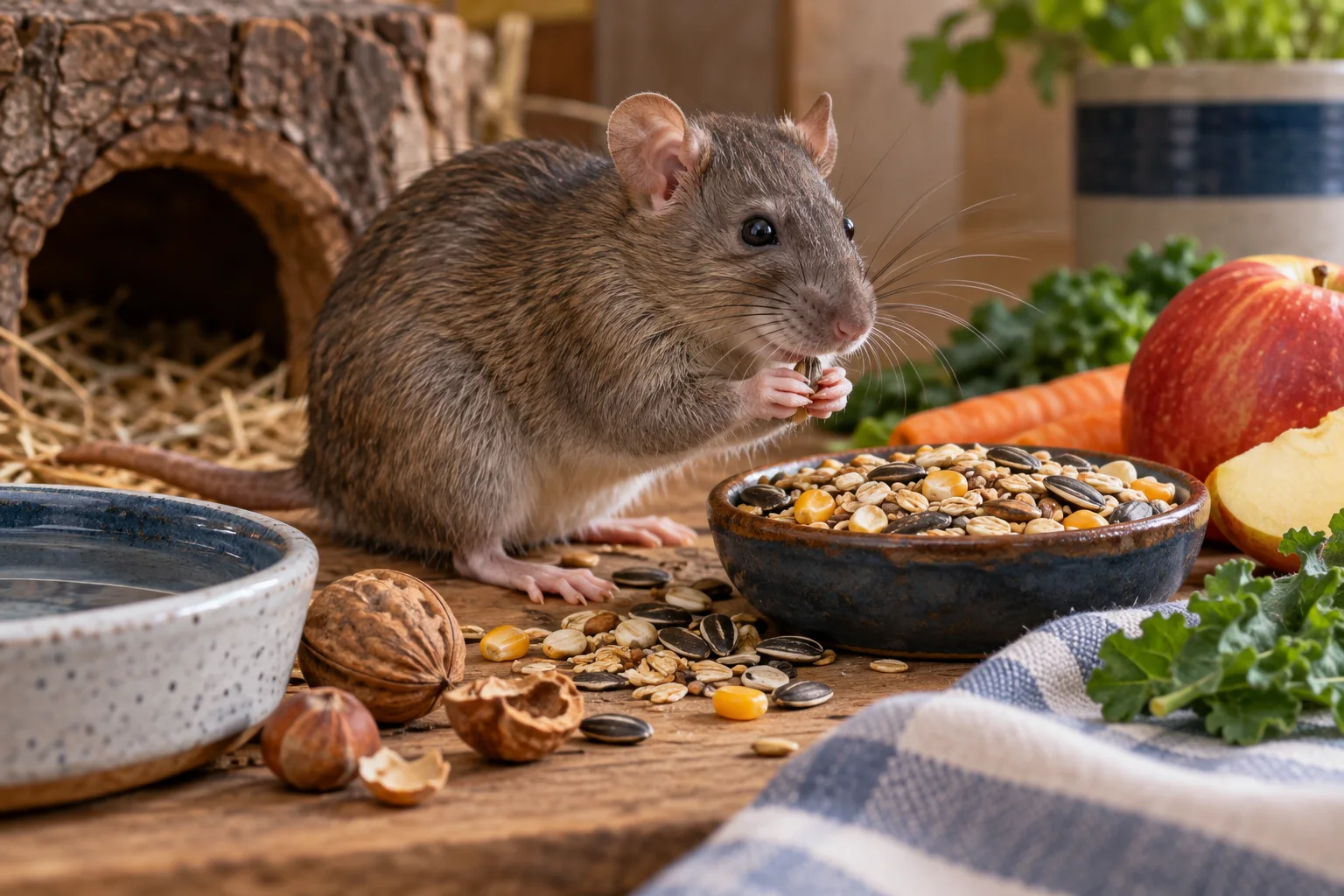
Rats do not depend on one food such as cheese, grain, or garbage. Their natural and urban diets change with the resources available. UC IPM describes roof rats as eating a wide variety of foods, with preferences that can include fruits, tree nuts, berries, slugs, snails, young birds, and eggs. Norway rats also consume varied foods and often use cereal grains, meats, fish, nuts, fruits, and readily available food waste. Adaptability is a major reason a tidy-looking property can still support them.
This diet does not mean every rat eats every item or that one food always makes the best bait. A rat uses what is dependable, protected, and easy to reach. A fruit tree can feed an animal in one yard while a neighbor's pet food or dumpster provides food in another. The useful homeowner question is: what does this property repeatedly offer, and how does a rat reach it without exposure?
Roof rats and Norway rats may forage differently
Roof rats are agile climbers and may feed in trees or elevated vegetation. UC IPM notes their preferences for fruits and nuts and describes them traveling along fences and utility lines. A hollowed fruit left on a tree or feeding damage high in a canopy can be more relevant than a ground-level garbage can. It may also indicate a route toward an attic vent or eave if branches and vines connect to the structure.
Norway rats are often associated with lower-level food sources such as garbage, feed, compost, basements, and burrows. They can use a wide range of waste and may stay near a nest when food is close. These distinctions are useful inspection clues, not promises. Both species can use human food, pet food, birdseed, and fallen fruit. Look at the evidence on your property rather than deciding from a general diet list.
Household food can become a reliable resource
Open bags of pet food, loose birdseed, garbage residue, compost with accessible scraps, grease around grills, food in a car, and crumbs behind appliances can all become routine food sources. UC IPM recommends keeping indoor and outdoor food, including garbage, in containers with tight-fitting lids and feeding pets only the amount they will eat at one meal. These steps reduce reward without depending on a rat's supposed favorite food.
Clean spilled food promptly and inspect storage systems rather than assuming a closed cabinet is enough. A chewed bag or droppings near a shelf should lead to food disposal or safe cleaning and a check of nearby entry gaps. Do not leave a large bait pile to compete with food sources. If trapping is necessary, use a small amount of bait on a protected trap in a documented route after the larger food supply is secured.
Gardens and trees need prevention, not panic
Fruit trees, vegetable gardens, and nut trees can be part of a rat's foraging range. Collect fallen fruit, harvest ripe produce, keep compost contained, and reduce dense vegetation that gives rats cover. Do not assume every nibbled tomato or fallen citrus peel proves a rat; other wildlife can cause similar damage. Look for droppings, tracks, gnaw marks, burrows, and travel routes before selecting a control method.
Avoid putting unprotected traps or poison around a garden where pets, birds, and wildlife may encounter them. If a persistent rat population needs intervention, use methods appropriate to the location and local rules. A professional can help distinguish rats from squirrels or other wildlife and identify a route that does not require turning a productive garden into a pesticide site. Food-source management is often the most durable first step.
Diet affects bait choice, but not the whole plan
CDC names chunky peanut butter or mutton fat as examples for snap-trap bait, and UC IPM lists several foods that can attract rats. A small bait is meant to draw an animal onto a trigger, not feed it. If a rat is cautious, CDC suggests pre-baiting an unset trap until the bait is taken. Match the bait to a documented route and use a rat-sized traditional snap trap for rats, kept away from children and pets.
Do not assume that a food that works in one setting will work at every property. A rat with access to a full feed bag may ignore peanut butter; a roof rat feeding in fruit trees may use a different route from a Norway rat near garbage. Remove competing food before judging a trap. The diet information helps you ask better questions, but exclusion and sanitation remain the long-term control work.
Make food access difficult year-round
Secure garbage, feed, seed, and pantry goods; move pet bowls indoors after meals; clean grills; pick up fallen fruit; and store compost in a way that does not offer easy access. Trim dense vegetation, remove clutter near walls, and inspect entry points. A rat that has less food and cover outside is less likely to test a door sweep, vent screen, or utility gap at night.
After activity stops, keep the routine in place. A quiet week without fresh signs or captures is useful, but seasonal harvests, outdoor gatherings, and changed storage can create a new food opportunity. Natural diet is not a fixed menu. It is an explanation for why a building and yard need regular maintenance: rats take advantage of what is there every day.