
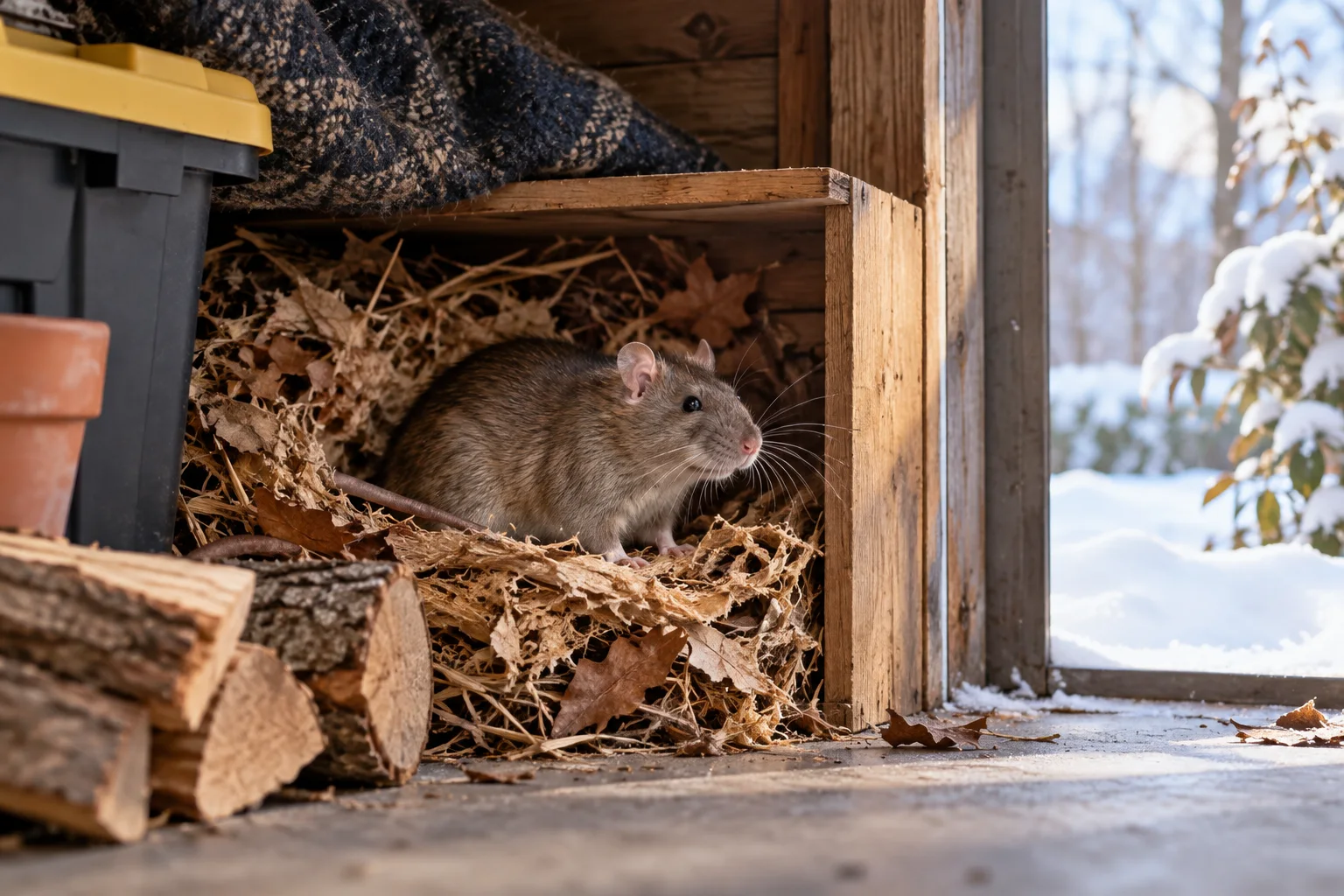
AI-generated illustration
Rats stay active through winter
Rats do not hibernate. They need food, water, and shelter throughout the year, so cold weather does not put an infestation on pause. What often changes is where people see them. A rat that foraged in an open yard during mild weather may spend more time under a deck, in a garage, along a foundation, or in a wall cavity when conditions turn cold and wet. That change can make a problem feel sudden even when an outdoor route has existed for some time. It also explains why a homeowner may hear movement in an attic or ceiling after a cold snap while seeing little activity outside. Winter is a reason to inspect more carefully, not a reason to assume the animals will disappear on their own.
Why the hibernation idea persists
People often associate fewer visible animals with hibernation. That inference is understandable, but it overlooks how much rat activity happens near cover and after dark. In winter, rats may use stored food, travel along protected edges, and reduce unnecessary exposure to rain, wind, and predators. A trash area can look quiet at midday even though it supports activity overnight. Likewise, a warm building may be more valuable than an exposed burrow, but a rat outdoors does not need to enter a house simply because temperatures fall. The useful question is whether the property offers an opening and reliable resources. Look for fresh signs rather than trying to read behavior from a single daytime sighting.
Winter clues worth documenting
Start with practical evidence. Note damaged food or feed containers, fresh droppings in a protected area, gnawing near a door or utility penetration, disturbed insulation, new grease marks, or a repeatable sound. Photograph the location before cleaning it. A sound in one room can travel through framing and may not pinpoint an animal directly above it, so compare it with other observations. Outside, inspect where pipes and cables enter, the edges of garage doors, damaged vent covers, loose access panels, and gaps beneath siding or trim. Look safely from the ground for roofline damage and branches that touch the structure. Avoid climbing or entering a hot, contaminated, or uncertain attic merely to confirm a suspicion.
Food, water, and shelter still matter
Season does not replace basic prevention. Store pet food, bird seed, and pantry goods in durable containers; keep refuse managed; remove fallen fruit where applicable; and correct leaks that create a dependable water source. These measures do not remove a rat already inside, but they make the site less rewarding and help reveal whether control measures are working. Do not scatter poison or rely on a strong smell as a winter solution. A bait product is governed by its label and cannot repair a gap. Indoor poisoning can also leave a carcass in a difficult cavity. If trapping or pesticide use is considered, choose a monitored plan that protects children, pets, and non-target animals and includes a clear inspection of access points.
Coordinate exclusion with removal
Sealing is important, but the sequence matters. Closing a route without considering animals that may already be inside can create activity in an inaccessible space. A provider should be able to explain which openings are confirmed, which are suspected, how the property will be monitored, and when each repair will be made. Repairs must also preserve ventilation, drainage, combustion-air openings, and other building functions. Foam alone is not a universal rodent barrier, and a patch that cannot be inspected may fail unnoticed. For a roof, electrical, plumbing, or structural issue, the appropriate trade may need to complete part of the work. Treat rat control as building maintenance with follow-up, not a one-time winter product purchase.
Verify the result over time
A warm spell or one quiet night does not prove that winter activity has ended. Keep a dated record of fresh signs, trap checks if traps are used, completed repairs, and changes in waste or storage practices. Once conditions are corrected, the absence of fresh evidence over a meaningful period is more useful than counting old droppings or hearing one unexplained sound. If activity returns, the record helps distinguish a missed opening from a new defect or a different animal. Winter does not make rats dormant, but it can make the routes between outdoor shelter and a home easier to notice. A careful response now can reduce the chance that the same access route remains available when spring conditions change.
Use the season to improve maintenance
Winter weather can reveal defects that were easy to overlook in dry conditions. Rain may show a loose vent cover, wind can expose a failing door sweep, and bare landscaping can make travel routes beside a foundation easier to see. Use those observations to schedule durable repair work, but do not block a vent, drain, or combustion-air opening without understanding its purpose. A reliable repair resists rodent access while preserving how the building is meant to manage water and air. Keep photographs of the finished work and note the material and location. If activity shifts after a repair, this record is more useful than guessing whether rats “learned” a new route. It gives an inspector a clear place to begin and helps prevent the same seasonal question from turning into a repeating household problem.
A practical standard
Make the next decision from fresh evidence and safe access, not from weather alone.