
AI-generated illustration
Mostly nocturnal does not mean invisible by day
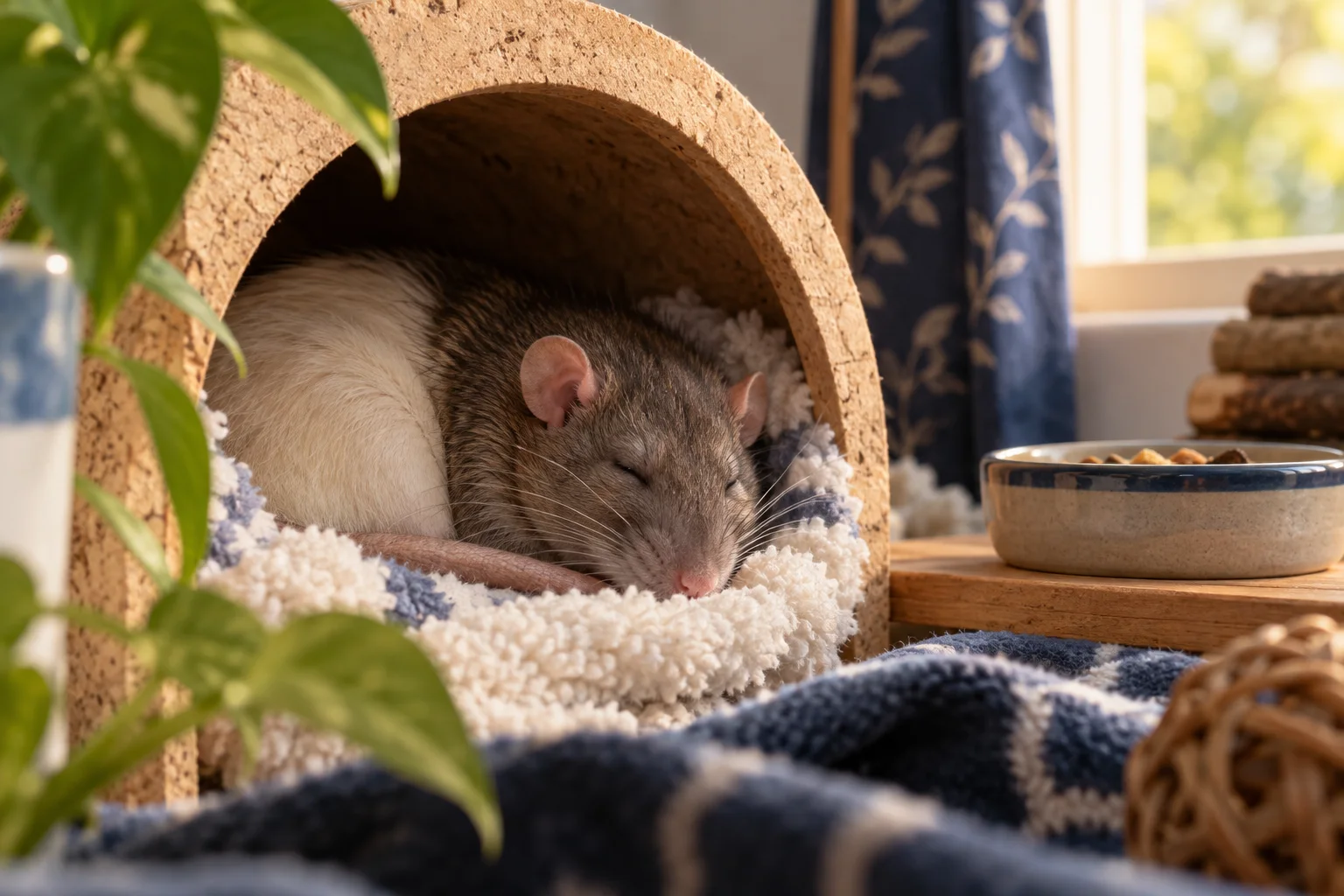
Rats are generally most active at night. UC IPM describes them as mostly active after dark, when they travel between shelter, food, water, and familiar routes. Daytime can therefore be a period of rest or reduced movement, often in a burrow, wall void, basement, attic, crawlspace, dense vegetation, or other protected space. The exact schedule can change with food availability, disturbance, weather, building activity, and the safety of the route.
A rat seen in daylight is not automatically sick, starving, unusually aggressive, or evidence that a neighborhood has a particular number of animals. It may have been disturbed, traveling between close resources, using a quiet route, or simply active when conditions suited it. Treat the sighting as a useful location clue. Record where it appeared, what it approached, and where it went, then inspect for food, cover, and entry conditions nearby.
Resting places tell more than the clock
A daytime inspection should focus on shelter. Norway rats often use burrows, ground-level debris, foundations, garbage areas, and basements. Roof rats may use more elevated cover and building spaces. Either species can use accessible voids. Look from a safe position for burrow openings, dense vegetation, clutter, loose panels, gaps around utilities, damaged door seals, and routes between an outdoor resource and the building.
Do not poke into a burrow, reach into stored materials, or chase a visible animal into a wall. That can expose a person to bites, contamination, unstable debris, or a different wildlife species. Photograph conditions from a safe distance and arrange a qualified inspection where access is limited. The animal's resting site may be hidden, but a map of repeated sightings often identifies the route that needs repair or cleanup.
Daytime behavior changes the monitoring plan
Because rats often move at night, a camera or trap check scheduled only during the day can miss the useful period of activity. Place monitoring tools where they can record or intercept a verified route without exposing children, pets, or non-target wildlife. Check devices frequently and record the time of results. A log can show whether activity clusters near garbage set-out, a particular food source, an appliance leak, or a period when a garage door remains open.
Do not infer too much from silence in daylight. A quiet attic at noon does not prove that a night sound came from nowhere, and a daytime sighting does not prove an infestation is large. Compare sound observations with physical signs such as fresh droppings, gnawing, food damage, or camera footage. Multiple forms of evidence make it possible to act without guessing how many animals are hidden.
Respond to the conditions, not a dramatic interpretation
Secure food, feed, seed, and garbage; clean spills; manage standing water or leaks; reduce clutter and dense ground cover; and inspect exterior openings. These changes matter whether a rat was seen at 2 p.m. or 2 a.m. They make a property less rewarding and reveal new signs more readily. In shared or rented spaces, document the conditions and report building-level defects to the party responsible for repair.
If a rat is indoors, coordinate removal with exclusion so animals are not trapped in inaccessible areas. CDC recommends traditional snap traps and advises against glue traps and live traps. Use commercial rat-sized equipment in protected, monitored locations if you are able to manage it safely, or hire a qualified provider. Avoid loose poison, smoke, flooding, and homemade devices. Each can create more risk without resolving the route.
Follow-up gives the clearest answer
After repairs and removal work, monitor over repeated days and nights. Fresh signs after a quiet period may reveal a missed opening, a new defect, or a food source that remains available. A period with no fresh droppings, captures, damage, or camera activity is more meaningful than one daytime inspection. Keep the notes until the plan is clearly complete.
If a rat appears injured, trapped, or is an uncertain species, do not handle it. Local wildlife or animal-control guidance may differ, particularly for native rodents. The useful lesson is simple: rats often rest during the day, but their schedule is flexible. Daylight is best used to inspect the environment they need, not to turn a single sighting into a diagnosis that the evidence cannot support.
Use a daytime sighting to test a route
Weather and site changes can shift when or where a rat moves. Heat, heavy rain, vegetation work, demolition, and repeated disturbance may expose an animal or redirect it. Note whether the sighting occurred near a door gap, food source, burrow, or cover strip, then return later for a safe daylight inspection. That produces a route hypothesis that can be checked rather than a claim about the animal's health.
Daylight is also the sensible time to repair a door sweep, remove clutter, or arrange work in a location that would be unsafe to inspect at night. Recheck the route afterward and make sure the repair preserves normal drainage and ventilation. A current record of physical signs is more useful than relying on a general rule about nocturnal behavior.