
AI-generated illustration
Rats are not strictly nocturnal
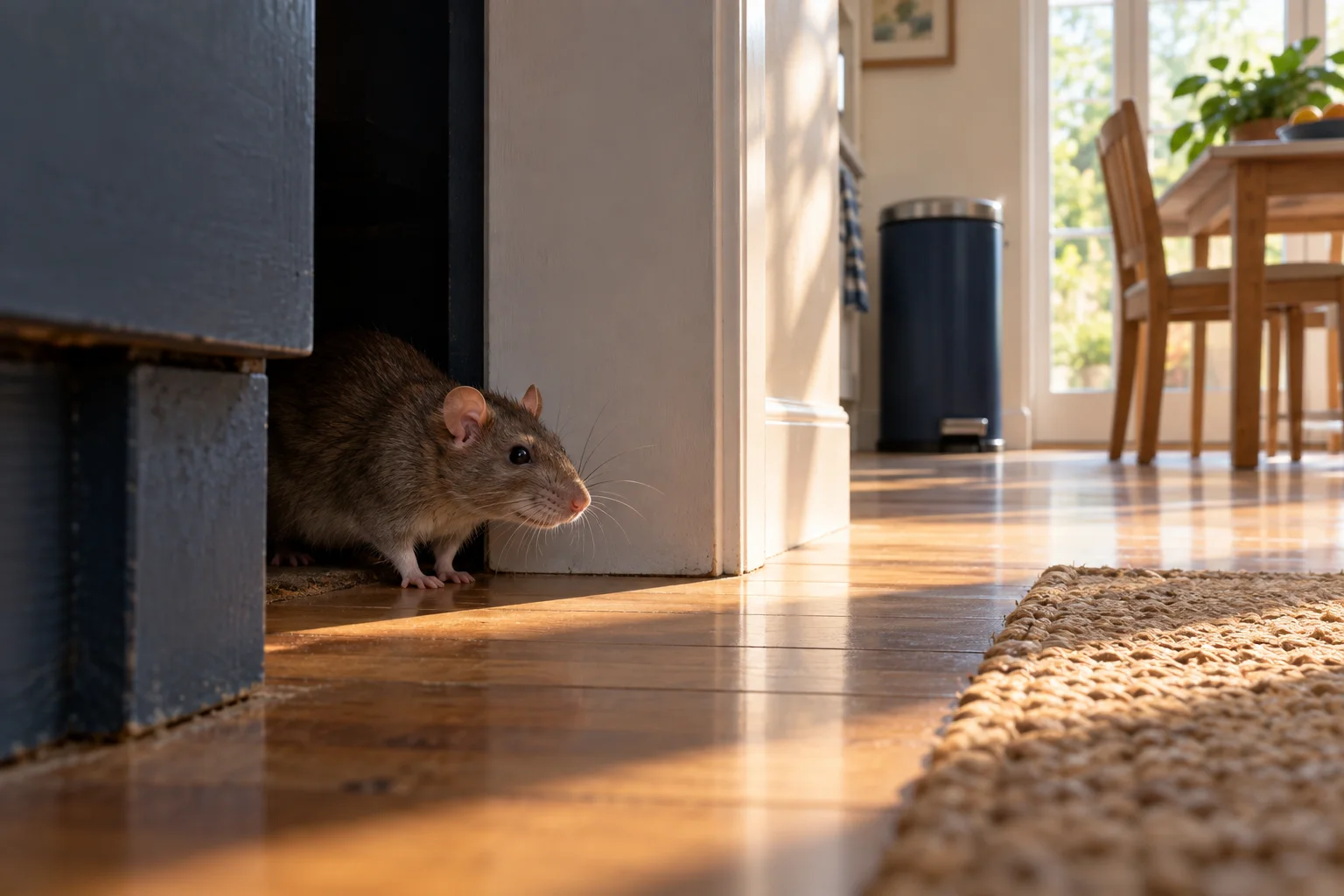
Rats are often more active during darker, quieter periods, but they can appear in daylight. UC IPM describes rats as mostly active at night, which is different from saying they never emerge in light. Food availability, disturbance, shelter, construction, weather, predator pressure, and the route itself can affect when an animal is seen. A daytime rat is evidence of activity, but it does not by itself measure population size or prove disease.
Do not react by chasing the rat, spraying chemicals, or assuming it is desperate or aggressive. Note the location, time, nearby food or cover, and direction of travel. A rat crossing an open sidewalk may be moving between hidden sites; one feeding repeatedly near an overflowing bin points to a resource problem. The observation becomes useful when it leads to an inspection of food, shelter, and entry points.
Daylight can make routes easier to see
A daytime sighting can reveal a burrow, fence route, branch connection, garage gap, trash source, or utility opening that is hard to notice at night. From a safe distance, look where the animal went after it was disturbed. Do not follow it into a crawl space, under a deck, or onto a roof. Photograph the area and inspect in daylight for droppings, gnaw marks, rub marks, damaged screens, and protected routes into a building.
Check both ground and elevated paths. Roof rats can use shrubs, trees, fences, pipes, and upper openings; Norway rats may use burrows, foundations, and low-level cover. The type of route matters more than the light level of the sighting. A rat seen at noon near a fruit tree may be a roof-rat clue, while one beside a garbage bin and foundation gap may point toward lower-level activity. Do not treat either as a final species identification.
Food and disturbance change behavior
A reliable food source can make a rat appear at times people notice. Garbage, birdseed, pet food, fallen fruit, feed, outdoor grills, and food waste in a car or garage can support repeated visits. Construction, landscaping, flooding, demolition, and heavy cleanup can also disturb cover and redirect rats. CDC notes rodents move in search of food, water, and shelter after disruption. Address the resource and route rather than trying to interpret a sighting as an animal personality trait.
Secure food in tight containers, clean spills, remove outdoor pet food after meals, pick up fallen produce, and keep bin lids closed. Reduce dense vegetation and clutter around walls so rats have fewer concealed paths. These measures help whether the animal is seen by day or night. They also make new evidence easier to spot because a clean route does not hide droppings or gnawing as easily as a cluttered one.
Inspect before choosing a control method
A sighting outside does not always mean a rat is indoors. Look for a connecting gap at doors, vents, utility penetrations, crawl spaces, eaves, or roofline screens before setting equipment. If fresh indoor signs are present, CDC recommends traditional rat-sized snap traps in protected, accessible locations where rats travel. Keep them away from children and pets, and check them daily. Do not set traps randomly in outdoor open areas where wildlife can encounter them.
Rats may be cautious around unfamiliar traps, so CDC recommends pre-baiting an unset trap until bait is taken. Use that only where evidence shows an indoor or protected route. Do not use glue or live traps, which CDC advises against, and do not treat a daytime sighting as a reason for loose poison. If the route is high, in a wall, near utilities, or inside a shared building, professional inspection is safer.
Repair the route after activity is gone
Once there are no fresh signs or captures for a week, repair verified openings with durable materials appropriate to the feature. UC IPM warns that rats can chew foam, plastic, wood, and caulk. A tight door sweep, sound vent screen, fitted utility seal, and maintained roofline reduce the chance that an outdoor rat can turn a daylight route into an indoor infestation. Do not block working vents, drains, or appliance exhausts without professional guidance.
Continue monitoring the original sighting area after garbage days, storms, landscaping work, or changes to food storage. A return sighting is an opportunity to reassess the resource and route, not a reason to panic. Rats may come out in light, but prevention is the same at any hour: remove the reward, expose the pathway, and keep the building closed.
Use daylight sightings for better records
Record the date, time, weather, location, activity, and direction of travel. If the issue is on a public street, park, school, or shared property, a specific record can support an appropriate complaint to the local agency. In New York City, for example, NYC Health asks 311 reports to include a description and address. Other communities have different systems, so use the official local channel rather than expecting a universal response.
For a private property, the same record helps a pest professional, landlord, or contractor compare a sighting with physical evidence. Daylight does not change the safety rules: avoid direct contact, clean waste with the wet method, protect pets, and use qualified trades for electrical, plumbing, roof, or HVAC issues. The value of the sighting is that it gives you a chance to see the route clearly and correct it.