
AI-generated illustration
Cold is not a simple preference test
Rats do not choose a home site by temperature alone. A cold shed with food, cover, and a hidden entrance can be more useful than a warm open yard with none of those resources. A heated attic can be attractive, but its value comes from enclosure, nesting material, and access as well as warmth. The practical question for homeowners is not whether rats 'like' cold; it is what resources a particular location provides during changing weather.
Climate also affects species and local habitat. UC IPM describes roof rats as favoring warm climates and coastal ecosystems, while Norway rats are widespread and often associated with lower, burrowing areas. That does not permit a remote diagnosis. Both can use buildings, and local conditions matter. A homeowner in a cold region should still inspect an attic, garage, wall void, and food-storage area rather than assuming a roof rat pattern or a winter die-off.
Shelter makes temperature less decisive
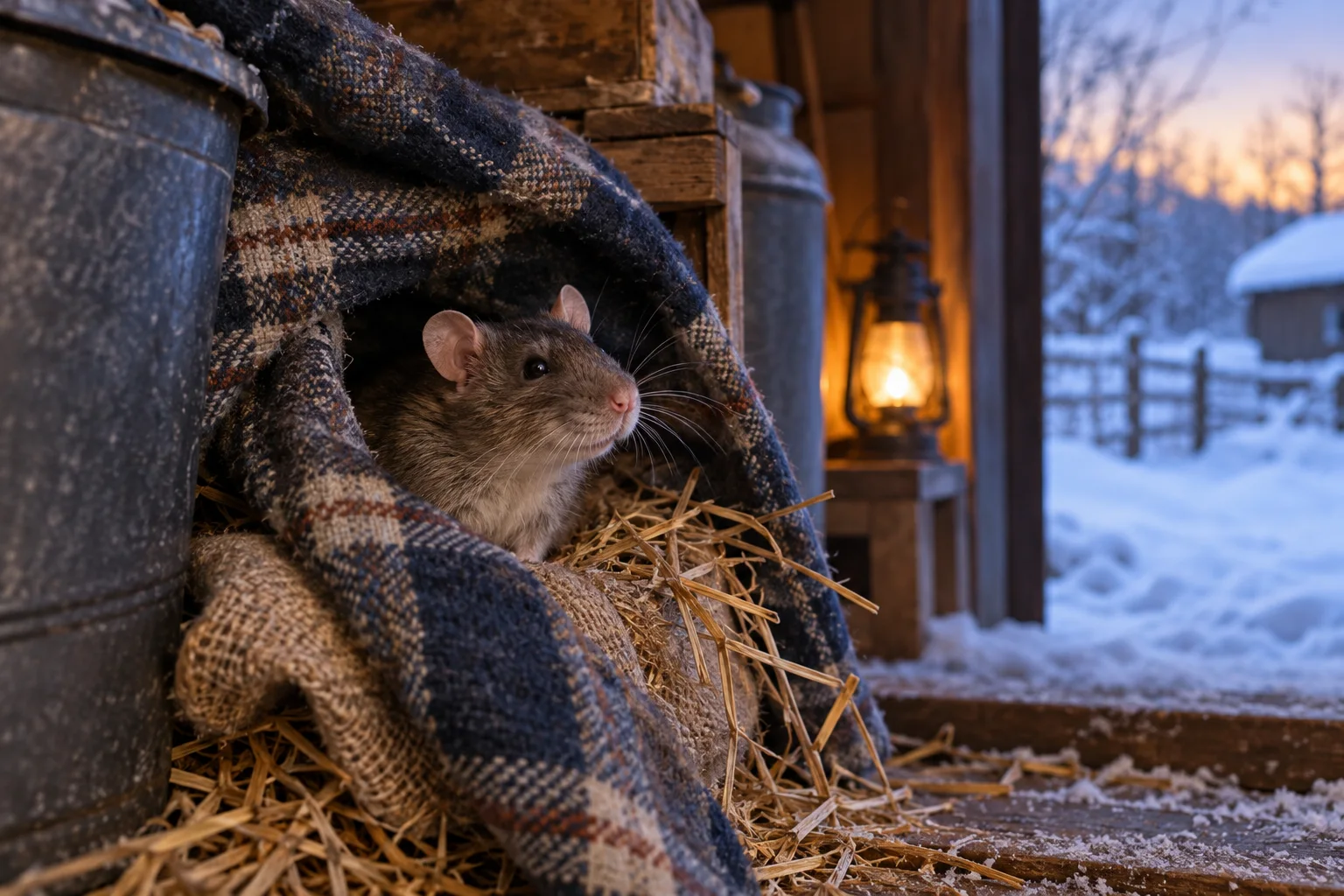
Insulation, wall cavities, crawl spaces, garages, sheds, brush piles, dense vegetation, and stored materials let rats avoid direct exposure to weather. This is why a winter sighting can occur near a house even when the yard appears inhospitable. A rat does not need to live in an open snowbank to remain active; it can travel between protected places and food sources. The same principle applies in extreme heat, when shaded, ventilated, or insulated spaces can be useful.
Reduce protected cover near the building so the exterior route is easier to see. Move stored materials away from walls, thin dense vegetation, keep garbage and feed secured, and repair obvious gaps. Do not strip a landscape bare merely because winter arrived. Instead, remove the concealed connections between a food source, a sheltered path, and a building defect. This creates a property that is less useful in any season.
Food and water determine whether rats stay
Rats can use a wide variety of food. UC IPM identifies garbage, animal feed, fruits, and other household food sources as part of their management context. In a cold period, birdseed, pet food, feed storage, compost, and garbage can become especially obvious regular resources. Secure them in suitable containers, clean spills, and remove fallen fruit or nuts. A well-fed rat has a reason to continue exploring even when outdoor conditions are unpleasant.
Water can be present in leaks, pet bowls, drains, condensation, or protected irrigation areas. The goal is not to make a property completely dry; it is to repair leaks and stop avoidable standing-water or food conditions next to shelter. Check garages, carports, and utility rooms, where a small water source can go unnoticed. If you find fresh droppings after safe cleanup, treat that as evidence of current use and inspect the nearest resources and entry point.
Know the local pattern, then inspect the house
A local extension office, public-health department, or pest professional can explain which rat species and seasonal patterns are common in your area. That context helps with inspection but does not replace it. Roof-rat activity may direct attention to elevated vegetation and roofline gaps; Norway-rat activity may direct attention to foundations, burrows, garbage, and lower-level access. Either pattern can overlap at a property with accessible food and structural wear.
Inspect doors, garage seals, vents, crawl-space panels, utility penetrations, eaves, and roof features. UC IPM notes that rats can chew through soft materials such as foam and caulk, so repair a verified gap with a durable material appropriate to the feature. Do not block a functional vent or drain to make a quick cold-weather repair. Use a roofer, plumber, HVAC technician, or electrician where the opening involves a building system.
Use removal only when activity is confirmed
Do not put traps or pesticide out solely because temperatures dropped. Look for fresh droppings, gnawing, nests, or a repeat sighting that shows current activity. CDC recommends traditional rat-sized snap traps in areas where rodents travel and says traps and bait should be kept away from children and pets. If rats are cautious, an unset pre-baited trap can show whether a route is active before it is set.
Do not use glue or live traps, and do not assume repellents will create permanent avoidance. If trapping does not resolve a confirmed infestation, CDC says an EPA-registered bait station or professional help may be considered. A bait product is not a climate-control tool; it must be used exactly as labeled and only where access can be controlled. For an inaccessible roofline, wall, or duct, professional inspection is safer.
Make seasonal checks routine
Weather changes can loosen screens, shift door seals, damage roof edges, and change where food is stored. Reinspect after storms, snow, landscaping changes, and utility work. Look for fresh activity in the same protected areas where rats could avoid weather. A simple log of locations and dates helps reveal whether a recurring winter problem is really one damaged door or vent that was never fully repaired.
Cold places alone do not attract or repel rats with certainty. A property becomes attractive when it offers a protected route, food, water, and a gap into a building. Maintaining the exterior, protecting resources, and acting on fresh evidence gives homeowners control across climates. It also avoids the unhelpful cycle of waiting for weather to solve a problem that only repair and sanitation can address.