
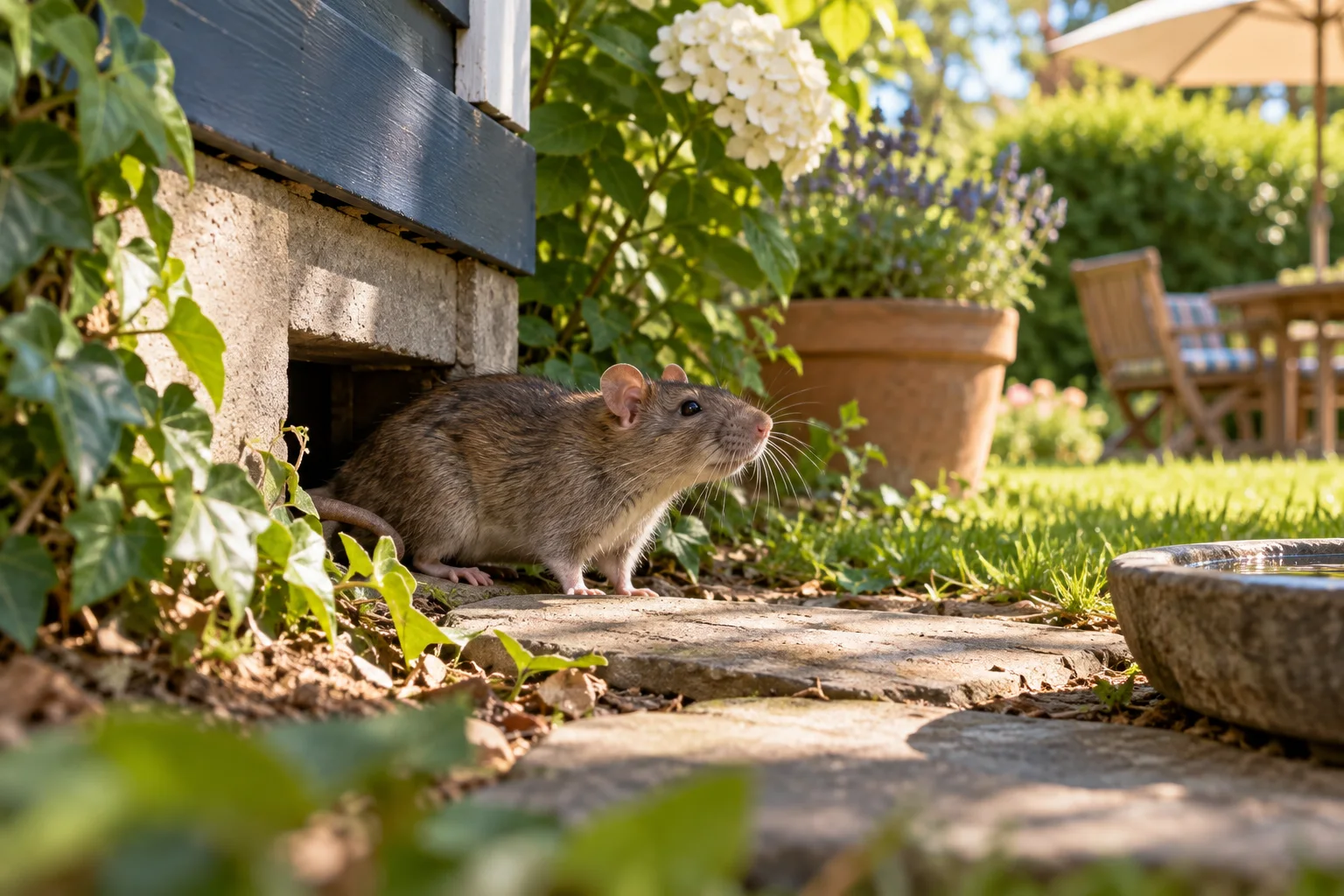
AI-generated illustration
Summer changes routes, not the need for control
Rats do not vanish when weather warms. They continue seeking food, water, shade, nesting cover, and protected travel routes. A homeowner may see them less because outdoor vegetation is dense, daytime activity is hidden, or the animals use a different part of the property. A quiet attic in summer is not proof that an old entry route has closed. Inspect fresh evidence rather than assuming the season solved the problem.
Different species and regions show different patterns. UC IPM describes roof rats as often living and nesting in shrubs, trees, or dense vegetation and favoring elevated indoor spaces, while Norway rats are often more ground-oriented and associated with burrows. Summer landscaping can support either kind of route. Use local observations—burrows, roofline signs, food damage, and tracks—rather than a general calendar claim.
Outdoor food can be abundant
Fruit and nut trees, gardens, birdseed, grills, compost, garbage, pet food, and animal feed can become reliable summer resources. UC IPM recommends collecting fallen fruit and keeping food sources in tight containers. Pick up produce that drops, harvest ripe crops promptly, clean grill residue, and do not leave pet bowls or feed outside overnight. These tasks reduce the reason rats travel across the yard after dark.
Water also matters during hot weather. Repair irrigation leaks, outdoor faucet drips, and standing-water conditions where practical. Do not try to remove every water source from a usable property; focus on avoidable leaks and food spills close to shelter. A rat using a garden or carport may be visiting several resources, so a new bird feeder, open compost, and an overflowing bin can be more important than a single hose bib.
Shade and cover hide evidence
Dense shrubs, climbing vines, woodpiles, stacked pots, ground-level storage, and debris provide shade and protected runways in summer. Thin vegetation enough to see the building perimeter, move stored items away from walls, and check below decks and sheds. UC IPM recommends thinning dense plantings and separating shrubs from buildings. The objective is not to erase a yard; it is to expose routes that connect food and cover to a building opening.
Check branches and vines that reach a roof or upper wall. Roof rats are agile climbers, and an elevated route may lead to eaves, soffits, or attic vents. Do not prune around power lines or climb onto a roof to investigate. Use ground-level inspection tools and contact a qualified tree professional, utility, roofer, or pest-exclusion professional for unsafe access. Summer heat is not a reason to take ladder risks.
Buildings remain valuable shelters
A garage, attic, crawl space, wall void, shed, or carport can remain useful in summer because it offers protection and nesting material, even if it is not the warmest place on the property. Inspect door sweeps, garage seals, foundation and utility gaps, vents, eaves, roof screens, and crawl-space panels. UC IPM warns that rats can chew foam, plastic, wood, and caulk, so a soft filler alone may not close a route.
Do not block a required vent, drain, or appliance exhaust while making a summer repair. The building feature must still manage ventilation, moisture, and safety. A durable, fitted repair may need a roofer, HVAC technician, plumber, electrician, or carpenter. Photograph the opening before and after work and recheck it after storms, heat movement, and summer maintenance projects that can shift screens or seals.
Respond to current signs, not weather
Fresh droppings, new gnaw marks, nesting material, food damage, or repeat sightings justify a current inspection and removal plan. CDC recommends checking how rodents entered before trapping those that remain. For confirmed indoor rats, use rat-sized traditional snap traps in protected, accessible locations where signs show travel. Keep them out of reach of children and pets and check them daily. Do not use glue or live traps.
Rats can be cautious about unfamiliar objects, so CDC suggests pre-baiting an unset trap until bait is taken. Do not put unprotected traps in a garden, around a pool, or under a car where wildlife or pets may encounter them. For elevated, roofline, wall, or duct activity, professional placement is safer. A summer control effort should be short, monitored, and paired with the repair that prevents a fall return.
Keep a summer maintenance rhythm
Check outdoor food sources after gatherings, harvests, and garbage collection. Inspect the perimeter after storms, irrigation work, and landscaping changes. Keep a note of sightings and fresh signs so you can see whether activity clusters around a particular tree, bin, garage edge, or roof feature. This is more useful than trying to decide where all rats go in summer as a species-wide question.
When temperatures change again, continue the same fundamentals: secure food, reduce cover, repair entry points, and monitor after removal. Rats use the resources a property provides in every season. A maintained yard and building envelope prevent summer activity from becoming an attic, garage, or kitchen problem later in the year, especially after outdoor conditions and food availability change. Schedule a quick inspection after garden harvest, vacation absences, and outdoor gatherings, when overlooked food waste and moved storage may have created a new hidden route. If fruit trees or gardens are productive, inspect them more often and promptly collect damaged produce so nightly feeding does not become a routine.