
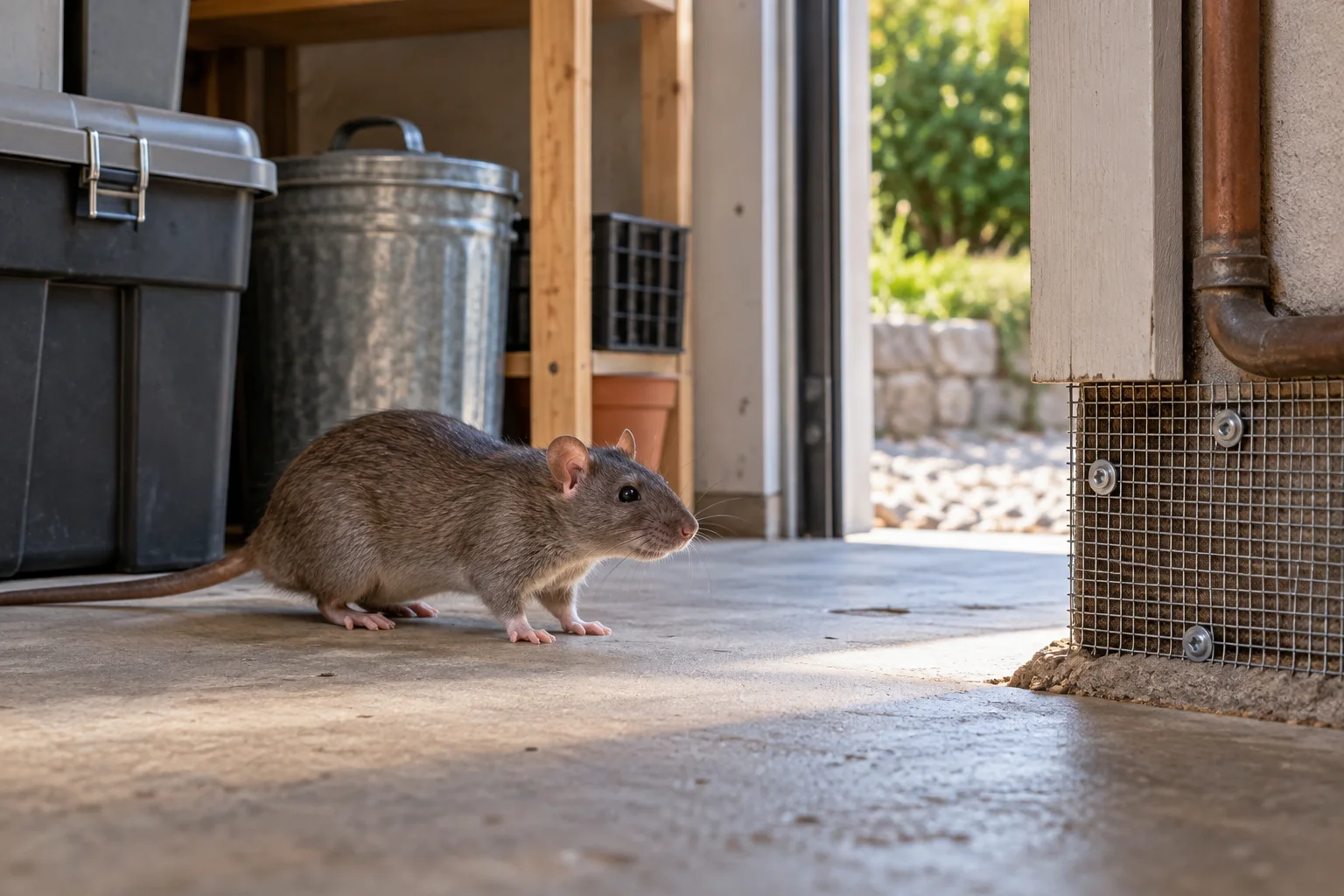
AI-generated illustration
Fast should mean fewer repeat visits
The fastest-looking response—spraying a scent, scattering poison, or sealing the nearest gap—can prolong a rat problem if it ignores the route and food source. A quicker reliable plan begins by confirming activity, protecting people and pets, and working in the right order. A rat removed from a house with an open door sweep, accessible feed, and a wall route is usually not the end of the problem.
Start with an immediate safety pass. Keep people and pets away from a live rat, nest, droppings, or active equipment. Remove open food and pet bowls from the affected area. Do not catch a rat with bare hands or dry-sweep waste. Photograph fresh evidence and note its location. This takes little time and prevents a hurried action from spreading contamination or driving the animal into an inaccessible space.
Find the active route before buying products
Inspect inside and outside on the same day if possible. Look for fresh droppings, gnawing, nesting material, rub marks, damaged screens, door gaps, utility penetrations, garage edges, crawl-space access, vents, and roofline features. CDC recommends finding how rodents got in before trapping rats that remain. A clear route lets you choose a trap location and plan the final repair rather than trying every aisle in a hardware store.
The fastest inspection is not the shortest walk. Follow the evidence chain: food or cover outside, a pathway toward the building, an opening, then an interior travel route. If the evidence is in a wall, high attic, duct, electrical area, or plumbing chase, call the appropriate professional early. A fall, wiring, ventilation, or water problem is slower and more expensive than getting a proper inspection first.
Use a monitored removal method
For confirmed rats, CDC recommends traditional rat-sized snap traps. Place them in protected travel areas where evidence exists, out of reach of children and pets, and check them daily. CDC advises positioning the baited end near a wall to form a T. Rats can be wary of new objects, so CDC also suggests pre-baiting an unset trap until bait is taken. This may seem slower than setting everything at once, but it provides evidence of an active route and prevents random placement.
Do not use glue or live traps; CDC advises against them because frightened rodents can urinate. Do not scatter loose poison or use homemade mixtures. EPA says consumer poison products are ready-to-use bait stations, and labels govern where and how they may be used. A pesticide may be considered only for persistent infestations when its access controls, inspections, and non-target risks can be managed. If you need a result quickly but cannot check equipment daily, hire a professional rather than leaving traps or bait unattended.
Clean and repair in the right sequence
After a catch or once activity ends, clean accessible waste with gloves and the CDC wet method. Wet droppings or nesting material thoroughly with disinfectant, allow the stated contact time, and wipe it up; do not vacuum or sweep dry material. A dead rodent should be disinfected, bagged, double bagged, and disposed of according to local rules. Heavy contamination, insulation, ducts, and wall cavities are not quick household cleanup jobs.
Then make the lasting repair. Use a durable solution appropriate to the opening: a door sweep, properly screened vent, fitted metal barrier, flashing, or a correctly sealed utility penetration. Do not block a drain, chimney, appliance exhaust, or other functional feature. If rats may remain inside, coordinate removal and final sealing rather than trapping them in a void. A repair is fast only if it stays repaired.
Remove the reasons the property stays attractive
Secure garbage, pantry food, pet food, birdseed, compost, and feed. Clean grill residue and spills, remove fallen fruit, and reduce dense cover or stored materials against exterior walls. These changes take effect immediately because they remove a predictable meal and hiding route. They also make new activity easier to see. A trap in a cluttered yard with open feed often works harder than a trap in a property with no easy rewards.
Avoid spending time on unproven shortcuts such as fragrance devices, mothballs, ultrasonic claims, or a pet used as a hunter. They do not repair the building or create a clear stopping point. The fastest plan is observable: fewer food sources, a documented route, protected traps where evidence shows travel, and a repair that removes the path.
Know when fast means calling help
Call a qualified professional promptly for multiple indoor routes, significant contamination, a shared building, a high roofline, a wall or duct route, or possible electrical damage. Ask what evidence supports the diagnosis, how removal equipment will be protected and checked, how carcasses will be handled, and which entry points will be repaired. Those questions keep speed from becoming a one-visit sales promise with no follow-through.
Continue monitoring until there are no fresh signs or captures for a week. If signs persist, revisit the route and food source instead of repeating the same treatment. A qualified inspection may also distinguish rats from mice, squirrels, birds, or equipment noise before a homeowner pays for the wrong control work. The fastest way to get rid of rats is not a single product. It is a short, disciplined sequence that turns a live-animal problem into a repaired building and a property with no reliable food or shelter.