
Rat removal in San Jose, CA
Start with the signs. Get a plan for your property.
Help with rats
in San Jose.
For a rat problem in San Jose, CA, call 408-550-6660. Describe the property, where you have noticed activity, and any removal or repair work already attempted.
Confirm coverage for your exact address, current availability, and inspection pricing when you call. A city listing describes a service contact; the map below does not identify a business office.
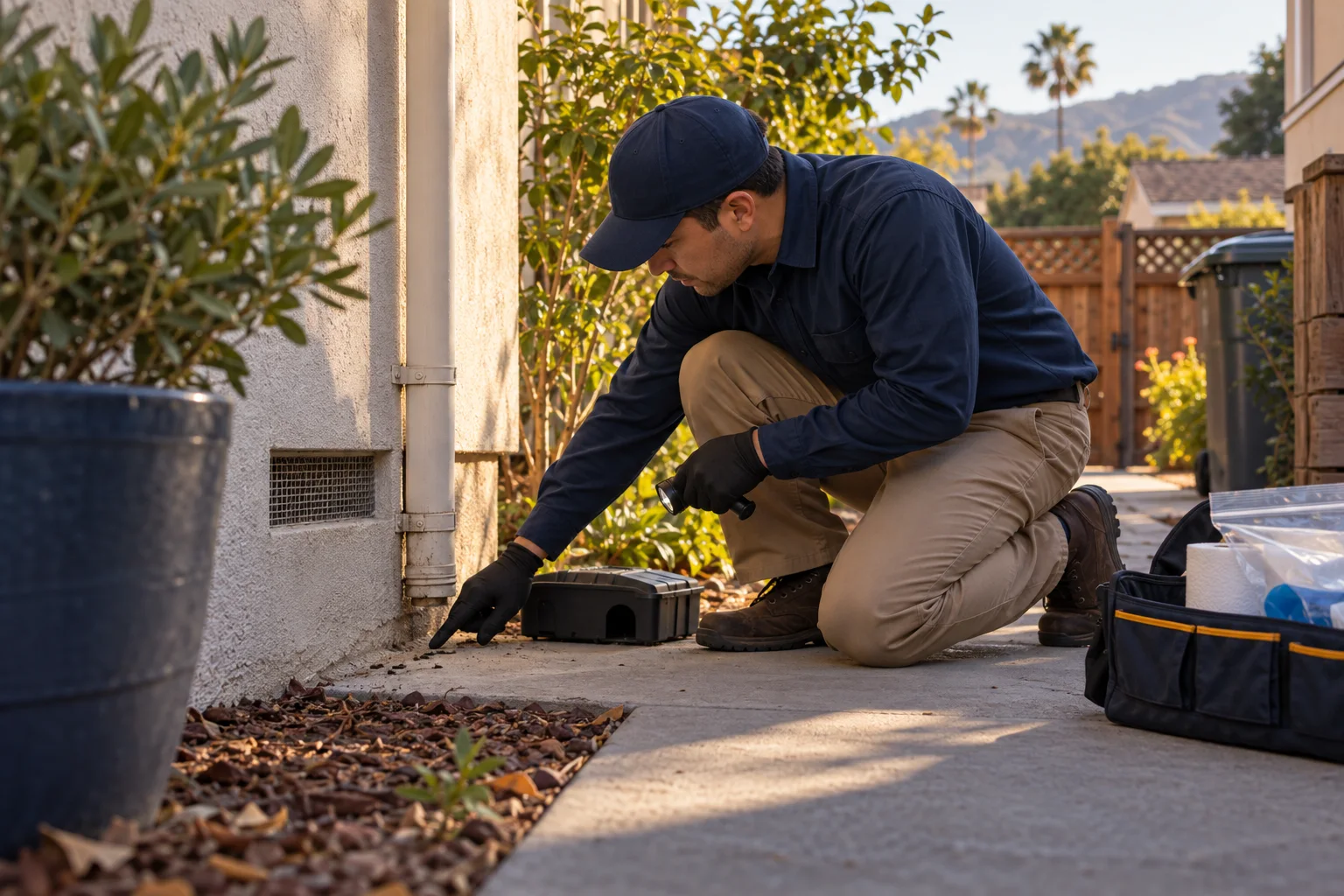
San Jose rat trapping: let signs choose the placement, not the bait alone
A strongly scented food may seem like the decisive part of rat trapping, yet bait cannot compensate for a device placed away from a travel path. For a San Jose property, begin with signs that show where activity is occurring, then choose a protected placement that can be checked.
A hypothetical bait-first mistake
Imagine a San Jose homeowner placing several heavily baited traps in the center of a garage because that seems convenient. This is a hypothetical scenario, not a completed job. If the signs are actually along a wall behind stored items or on an elevated route, the bait may not draw an animal across open space. More bait can also add food without making the placement more precise.
UC IPM recommends placing traps in secluded travel areas supported by droppings, gnaw marks, or damage. It notes that roof-rat traps may need above-ground placement, while other locations can be close to walls and behind objects. The useful choice follows the evidence and protects children, pets, and other non-target animals from contact with the device.
Decision point: where does the evidence say the route is?
Look for accessible signs from a safe distance and record their locations before moving storage. Use only a small amount of any selected trap bait, and do not leave unprotected products where pets or children can reach them. Do not place devices on a roof, utility line, or unstable elevated surface without an appropriate safe-access plan.
Ask: “What signs support this exact placement, and how will the device be protected and checked?” The answer should identify whether the route is low or elevated, specify a protected location, and explain what will happen if new evidence appears elsewhere. It should also include the entry point or food source that needs attention so trapping is part of a broader prevention effort.
Local practical detail
Santa Clara County Vector Control District provides rodent information for residents. Map signs by garage, attic, landscape edge, or waste area to make any local guidance more specific.
Illustrative example and AI-generated image; not a report of a completed service visit.
Further local guidance: UC Statewide IPM Program: Rats · Santa Clara County Vector Control: Rodents
Plan the inspection
Scratching overhead, a damaged food container, or droppings near storage can point to different routes through a building. Record the affected room and the time you notice activity. Mention whether the property has an attic, crawl space, attached garage, or shared wall so the inspection can account for connected spaces.
A useful proposal should identify suspected entry points, explain how animals will be removed and monitored, and describe the repairs intended to prevent a return. Keep cleanup and damage repair in the conversation; neither is automatically included in a trapping visit.
When you call 408-550-6660
- Confirm service at your San Jose address.
- Explain fresh signs and how long they have continued.
- Mention children, pets, or areas that cannot be safely accessed.
- Ask what inspection, follow-up, exclusion, and cleanup will cost.
San Jose area map
City-area reference map. Confirm your service address by phone. Open San Jose in Google Maps.