
Rat removal in Richmond, CA
Start with the signs. Get a plan for your property.
Help with rats
in Richmond.
For a rat problem in Richmond, CA, call 925-478-4254. Describe the property, where you have noticed activity, and any removal or repair work already attempted.
Confirm coverage for your exact address, current availability, and inspection pricing when you call. A city listing describes a service contact; the map below does not identify a business office.
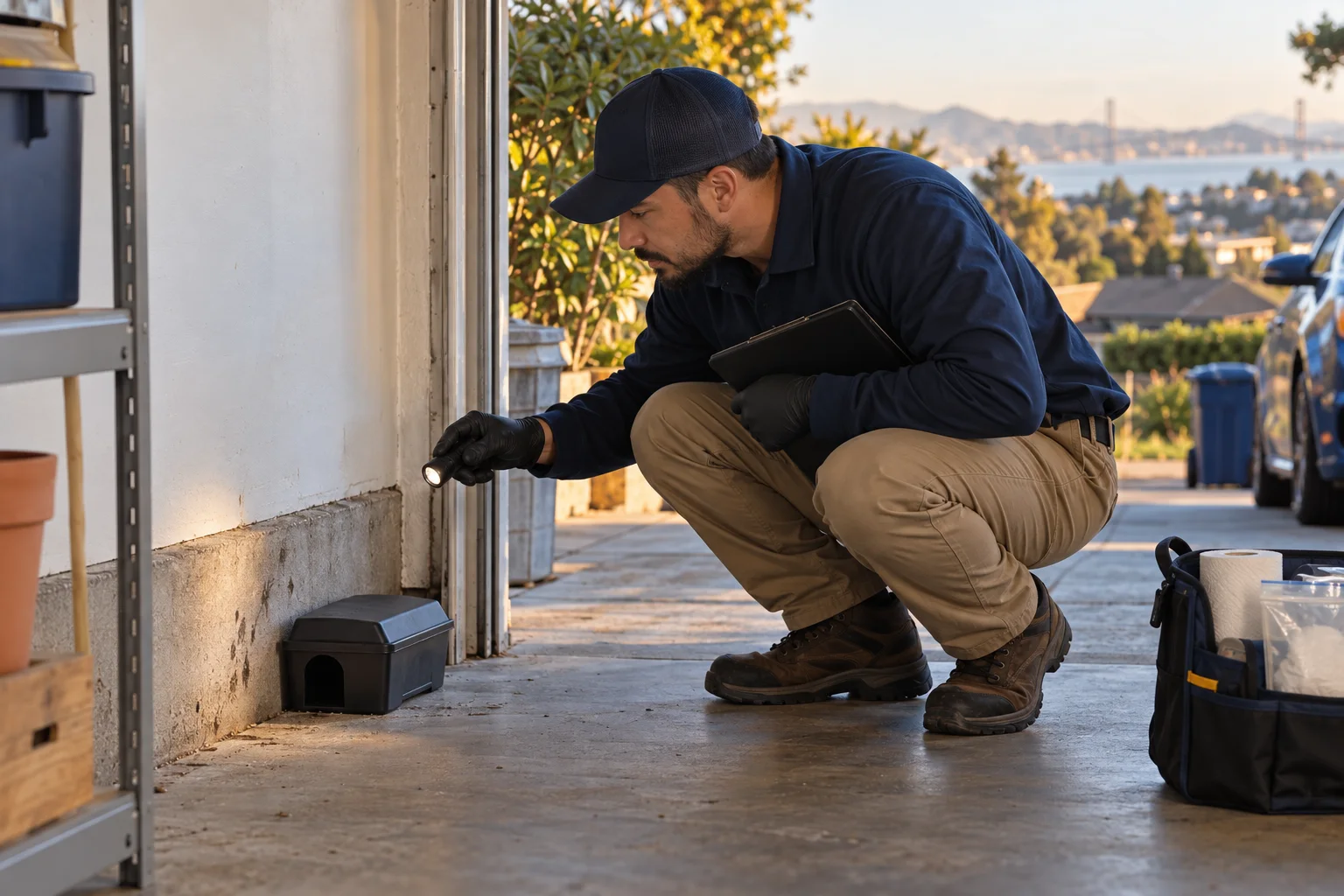
Richmond rat trapping: investigate a quiet trap before moving it
A trap that remains untouched does not prove that there are no rats, and it does not automatically mean the bait is wrong. In Richmond, the more useful question is whether the device is on an active travel route and whether the signs nearby are current enough to guide placement.
A hypothetical unused-trap situation
Imagine a Richmond resident who places a trap behind garage storage after finding old droppings, then sees no activity for several days. This is a hypothetical example, not a completed job. Moving the trap repeatedly or changing bait each night may make it harder to learn whether the original signs were old, the route has shifted, or the device is simply outside the animal’s regular path.
UC IPM notes that rats tend to avoid unfamiliar objects and new foods at first, sometimes for days or weeks. It also emphasizes that placement can matter more than the trap style. The next step is to compare the trap with fresh gnawing, droppings, smudge marks, or other evidence, rather than treating a lack of capture as an invitation to scatter more devices.
Decision point: what evidence would justify a new location?
Keep any device inaccessible to children and pets. Avoid reaching behind appliances, into a wall void, or under heavy storage without a safe view of the area. If you move boxes, note the condition of the floor and wall first so new marks can be compared with older ones.
Ask: “Which current signs show this is still a travel lane, and where would you relocate the device if it is not?” A good answer identifies a specific protected location and explains what will be monitored. It should also include an access-reduction step, such as addressing an exterior opening or storage condition, so the response does not depend solely on repeated trapping.
Local practical detail
Contra Costa Mosquito and Vector Control District provides local rodent prevention information. Note whether signs are at a structure, refuse area, or shared exterior edge before seeking service.
Illustrative example and AI-generated image; not a report of a completed service visit.
Further local guidance: UC Statewide IPM Program: Rats · Contra Costa Mosquito and Vector Control District: Rodents
Plan the inspection
Scratching overhead, a damaged food container, or droppings near storage can point to different routes through a building. Record the affected room and the time you notice activity. Mention whether the property has an attic, crawl space, attached garage, or shared wall so the inspection can account for connected spaces.
A useful proposal should identify suspected entry points, explain how animals will be removed and monitored, and describe the repairs intended to prevent a return. Keep cleanup and damage repair in the conversation; neither is automatically included in a trapping visit.
When you call 925-478-4254
- Confirm service at your Richmond address.
- Explain fresh signs and how long they have continued.
- Mention children, pets, or areas that cannot be safely accessed.
- Ask what inspection, follow-up, exclusion, and cleanup will cost.
Richmond area map
City-area reference map. Confirm your service address by phone. Open Richmond in Google Maps.