
Rat removal in Tucson, AZ
Start with the signs. Get a plan for your property.
Help with rats
in Tucson.
For a rat problem in Tucson, AZ, call 520-999-2121. Describe the property, where you have noticed activity, and any removal or repair work already attempted.
Confirm coverage for your exact address, current availability, and inspection pricing when you call. A city listing describes a service contact; the map below does not identify a business office.
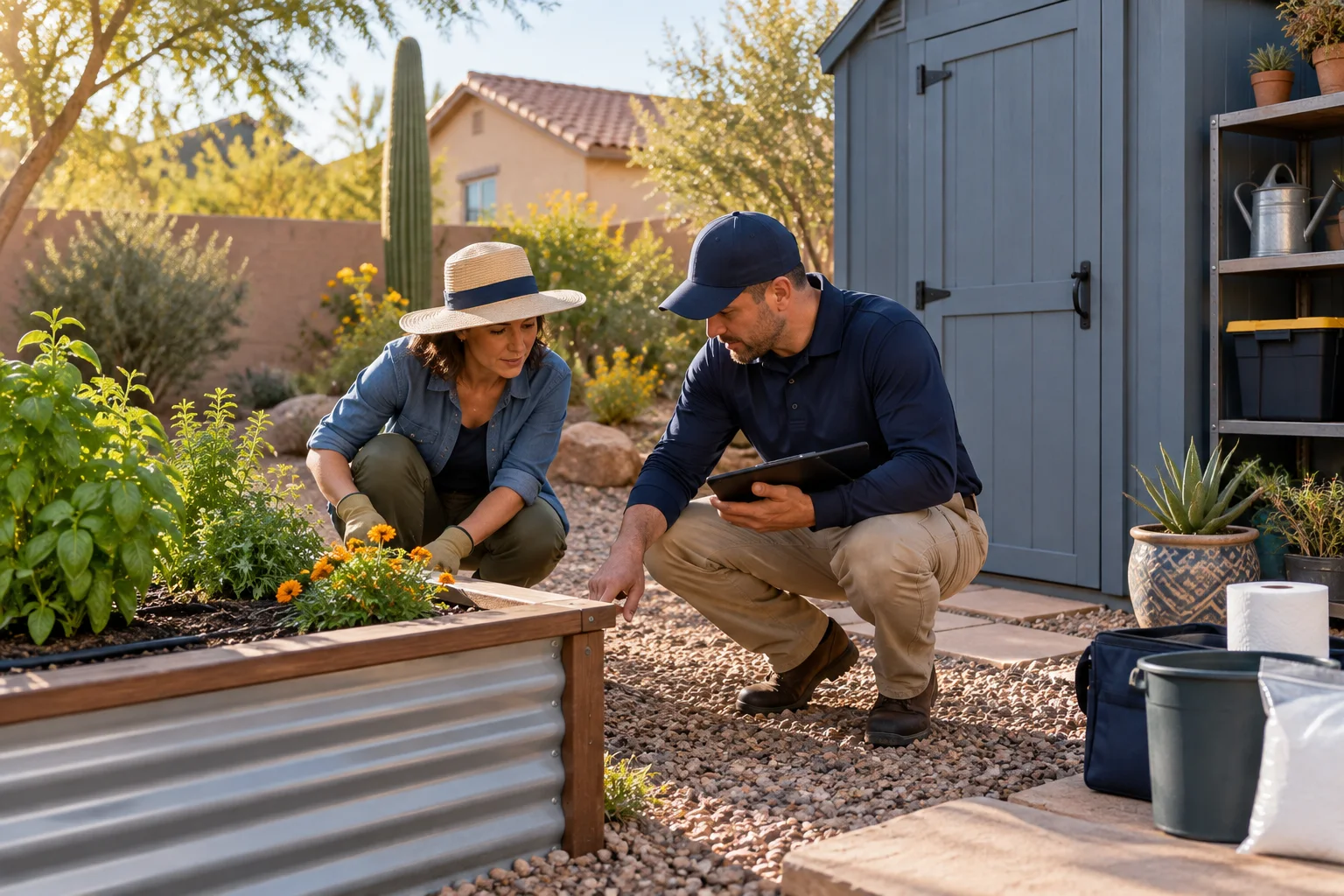
Tucson garden rat concerns: make the yard easier to read
Garden damage can be frustrating, but a chewed tomato or scattered seed does not prove which animal caused it. For a Tucson yard, the practical first decision is whether the evidence forms a repeatable pattern that connects food, cover, and a route toward the house or another structure.
A hypothetical raised-bed question
Imagine a Tucson gardener finding partly eaten fruit near raised beds and noticing an opening under a storage shed. This is a hypothetical scenario, not a completed job. Removing every plant or changing the entire garden at once would make it harder to learn what is happening. Instead, an assessment could compare the shed edge, compost storage, fallen produce, fence lines, and branches that approach a wall or roofline.
University of Arizona Cooperative Extension recommends prompt disposal of fallen fruits, nuts, and seeds and pruning so branches do not touch walls or roof lines. Those measures can reduce access without treating one feature as the sole cause. Start with the features that create a concealed route or leave food available, then record what changes before making further landscape decisions.
Decision point: which change tests the suspected route?
A focused visit begins with simple observations: where fresh marks appear, whether an opening under the shed is active, and whether there is a continuous path from vegetation to a structure. Do not put hands into burrows or gaps, and do not disturb a nest or unknown animal. Keep outdoor food and waste secured while the situation is assessed.
Ask: “If we change one accessible yard feature first, what evidence will tell us whether it was part of the route?” The answer should name the feature, such as fallen fruit, an overgrown connection, or unsecured storage, and set a time for follow-up observation. It should also distinguish routine yard maintenance from building exclusion so each job has a clear owner.
Local practical detail
Pima County Vector Control treats rodents as a public-health vector concern. For a Tucson address, preserve evidence around food, shelter, and access and use county guidance for a public condition.
Illustrative example and AI-generated image; not a report of a completed service visit.
Further local guidance: University of Arizona Cooperative Extension: How to Identify and Discourage Roof Rats · Pima County: Vector Control
Plan the inspection
Scratching overhead, a damaged food container, or droppings near storage can point to different routes through a building. Record the affected room and the time you notice activity. Mention whether the property has an attic, crawl space, attached garage, or shared wall so the inspection can account for connected spaces.
A useful proposal should identify suspected entry points, explain how animals will be removed and monitored, and describe the repairs intended to prevent a return. Keep cleanup and damage repair in the conversation; neither is automatically included in a trapping visit.
When you call 520-999-2121
- Confirm service at your Tucson address.
- Explain fresh signs and how long they have continued.
- Mention children, pets, or areas that cannot be safely accessed.
- Ask what inspection, follow-up, exclusion, and cleanup will cost.
Tucson area map
City-area reference map. Confirm your service address by phone. Open Tucson in Google Maps.