
Rat removal in Columbus, OH
Start with the signs. Get a plan for your property.
Help with rats
in Columbus.
For a rat problem in Columbus, OH, call 614-502-7677. Describe the property, where you have noticed activity, and any removal or repair work already attempted.
Confirm coverage for your exact address, current availability, and inspection pricing when you call. A city listing describes a service contact; the map below does not identify a business office.
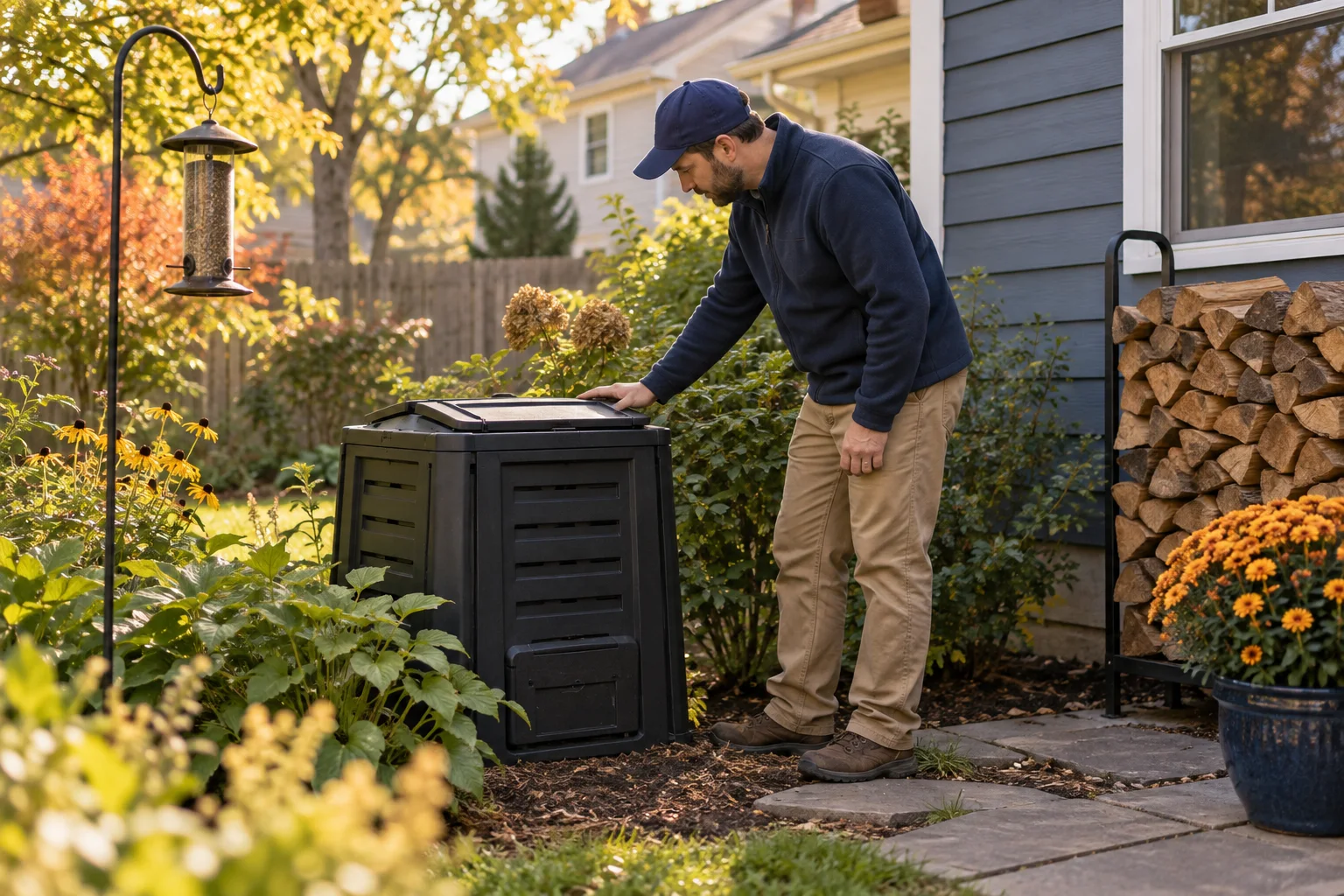
Columbus compost prevention: inspect the bin and its surroundings
Compost can be a useful garden practice, but the container, inputs, and nearby food sources determine whether it creates an avoidable rodent condition. Columbus Public Health's urban-agriculture guidance requires compost to be rodent-proof and gives detailed advice on acceptable composting practices within the city.
Example scenario: a backyard compost bin
Imagine a Columbus gardener seeing scattered material beside an open compost pile near a bird feeder and stacked firewood. The material may have been moved by wind or another animal. Photograph the pile and nearby storage, close or repair the compost container, and identify whether meat, oily food, pet waste, or exposed scraps have been added before changing the rest of the yard.
Columbus Public Health advises using closed compost containers or rodent-proof construction, avoiding meat, fish, cheese, oils, pet waste, and cat litter, and keeping compost away from bird feeders, pet food, garbage, fruit trees, woodpiles, sheds, and brush piles. Those city-specific details provide a useful sequence for narrowing the conditions at one garden site.
Make the compost correction measurable
Record the bin condition, materials removed, nearby food source, and distance to a shed or woodpile. Do not reach into the pile without appropriate protection or place a device where it may affect pets or wildlife. A structural repair should keep the compost contained while preserving its intended use.
After the compost and surrounding attractants are corrected, check the same ground edge for fresh visible signs. A Columbus gardener can then decide whether the issue was tied to an exposed compost condition or whether an accessible building opening needs a separate inspection.
Illustrative example and AI-generated image; not a report of a completed service visit.
Further local guidance: Columbus Public Health: Growing Food in Columbus
Plan the inspection
Scratching overhead, a damaged food container, or droppings near storage can point to different routes through a building. Record the affected room and the time you notice activity. Mention whether the property has an attic, crawl space, attached garage, or shared wall so the inspection can account for connected spaces.
A useful proposal should identify suspected entry points, explain how animals will be removed and monitored, and describe the repairs intended to prevent a return. Keep cleanup and damage repair in the conversation; neither is automatically included in a trapping visit.
When you call 614-502-7677
- Confirm service at your Columbus address.
- Explain fresh signs and how long they have continued.
- Mention children, pets, or areas that cannot be safely accessed.
- Ask what inspection, follow-up, exclusion, and cleanup will cost.
Columbus area map
City-area reference map. Confirm your service address by phone. Open Columbus in Google Maps.