
AI-generated illustration
There is no single nationwide household rule
Whether and how you may trap a rat can depend on the state, city, property type, species, equipment, and method used. A rule for nuisance wildlife is not always the same as a rule for commensal rats inside a structure. Local pesticide rules, tenant agreements, building codes, and animal-control rules may also apply. Do not treat a video, retailer display, or another homeowner's experience as legal advice for your address.
Start by identifying the actual situation: a rat indoors, an outdoor burrow, a shared apartment building, a commercial property, a protected wildlife species that may be mistaken for a rat, or a professional service. The answer may change with each. Your state wildlife, agriculture, environmental, public-health, or pest-control agency can explain relevant local rules, and a city or county can explain local code requirements. Keep any advice in writing where practical.
Identify the animal before choosing the method
A roof rat, Norway rat, mouse, woodrat, squirrel, or another small mammal may require a different approach. UC IPM notes that native woodrats can resemble pest rats and have furry tails, while commensal rats have mostly hairless, scaly tails. Do not assume any small animal in an attic is a rat. A species mistake can turn ordinary pest work into unlawful handling of wildlife or lead to equipment that does not fit the animal.
Use photographs, droppings, tracks, nesting material, and route patterns to guide identification. If the animal is uncertain, ask a qualified local professional rather than setting a device that could catch non-target wildlife. Do not use traps outdoors where birds, pets, or other animals can reach them. A legal method on a protected private indoor route may be inappropriate or prohibited in a public area, yard, park, or shared access space.
Check local rules before live capture or release
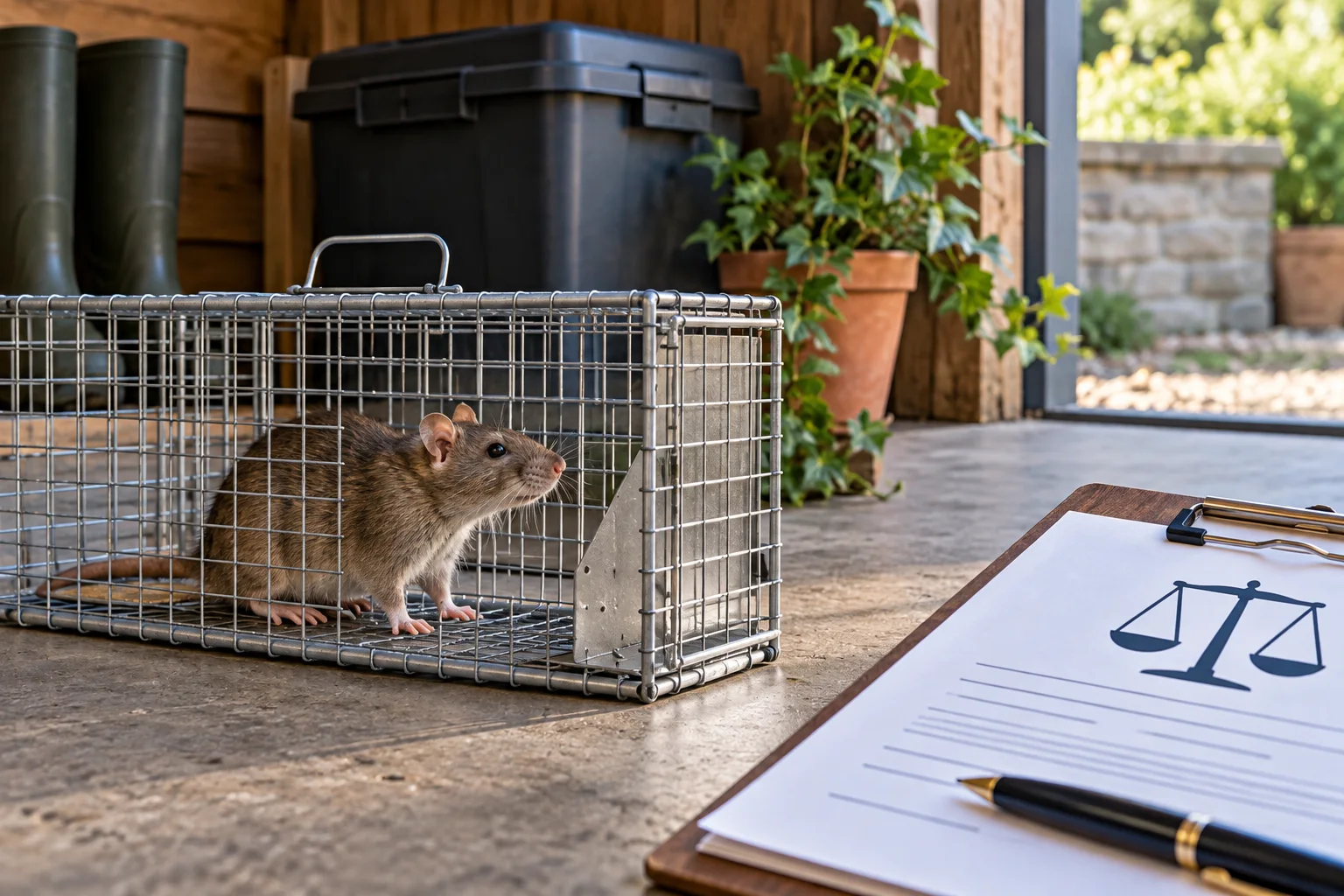
Live capture is often presented as the simple legal alternative to killing, but it creates its own obligations. Release rules can restrict where an animal may be moved, when it must be released, or whether relocation is allowed at all. UC IPM advises that nonprofessionals should not use live trapping for rats and notes that trapped rats may need to be humanely euthanized or released immediately at the capture area in its context. That is not a universal rule, so confirm local requirements.
Do not drive a trapped rat to a park, vacant lot, or another neighborhood assuming distance solves the problem. The animal may be prohibited from release there, may return or create a problem elsewhere, and its original entry route remains open. If you have already caught a rat alive, keep people and pets away and contact a local pest professional or animal-control resource for direction. Do not transport it loosely or handle it with bare hands.
Pesticide rules are separate from trap rules
A product label is legally binding directions for pesticide use. EPA says consumer rodenticide products are ready-to-use bait stations with the bait secured inside; loose consumer pellet bait is not permitted. Read the whole label before purchase and again at placement. It controls target species, location, protection from children and pets, inspection, storage, and disposal. A homeowner's ability to buy a product does not authorize using it anywhere or modifying the station.
Commercial, multi-unit, public, and agricultural properties can have additional licensing or application requirements. New York City, for example, states that only New York State-licensed professionals may apply pesticides in commercial and multiunit buildings and public spaces. Other jurisdictions differ. Do not place loose bait in a wall, drain, burrow, or public area because someone online said it works. Contact the relevant local authority or licensed professional when the rules or setting are unclear.
Use equipment responsibly on your own property
For a confirmed indoor rat, CDC recommends a traditional rat-sized snap trap placed where signs show travel and kept out of reach of children and pets. Read the manufacturer instructions, check the trap daily, and do not set it in a place where a catch cannot be removed. CDC advises against glue and live traps because frightened rodents may urinate, increasing exposure risk. Even a lawful device can be irresponsible when it is placed where a child, pet, or wildlife can access it.
Do not set traps on another person's property, in common areas, or on public land without permission and knowledge of local rules. If you rent, check the lease and notify the owner or manager about the infestation and building defects. In a condominium or shared building, a trap in one unit may not address a shared wall, trash area, or utility route. Document the activity and coordinate the repair rather than creating a new dispute over equipment placement.
Legal control is also durable control
A lawful trapping effort should be paired with exclusion, sanitation, and safe cleanup. Secure food and garbage, reduce clutter, and repair verified gaps after active animals are removed. Do not seal an active route while rats may still be inside; this can create a trapped animal or an odor in a wall. CDC recommends checking how rodents entered before trapping those that remain. A week without fresh signs or captures is a useful point to finish repairs.
If the route involves a roof, electrical equipment, sewer, air duct, or a protected area, hire an appropriately licensed professional. Save records of the inspection, product label, trap checks, and repairs. They can help answer a landlord, regulator, or insurer question later. Legal does not mean merely avoiding a fine; it means using a method that is appropriate to the property, protects non-target animals, and actually ends the entry problem.